Best Kids Ride On Toy Battery Buying Guide 2026 – Reviews & Safety
🔋 Best Kids Ride On Toy Battery The Ultimate 2026 Buying Guide
Don’t let a dead battery ruin the fun. There is perhaps no greater heartbreak for a child than a sunny afternoon brought to a halt by a dead electric car. Whether you are dealing with a sluggish Power Wheels or a stalled Peg Perego, finding the right replacement kids ride on toy battery is the only way to get the fun back on track.
In 2026, the market has evolved with high-capacity upgrades and lithium conversions. We have analyzed specifications and safety features to help you choose the perfect power source to revive your child’s favorite vehicle.
🏆 How We Ranked These Batteries
Trust is paramount when buying electrical components. Our 2026 evaluation methodology for finding the best kids ride on toy battery focuses on six non-negotiable standards:
🛡️ Safety First: We prioritized thermal fuses and compliance with CPSC safety guidelines.
💪 Durability: Batteries must withstand vibrations and bumps typical of outdoor play.
🔌 Compatibility: Ensuring fitment for major brands like Peg Perego and Uenjoy.
⚡ Capacity (Ah): Prioritizing batteries that offer equal or higher run-time than stock.
💰 Value for Money: Balancing the cost against the expected lifespan (cycles).
📦 Availability: Selecting models that are consistently in stock for fast delivery.
📚 More Resources from Our Blog
Before you buy, you might want to read our related articles:
Learn how to replace your ride-on battery safely and easily.
Schumacher Electric 12V Battery (TB4)
3️⃣ Why This Product
The Schumacher Electric TB4 is widely recognized as one of the most reliable aftermarket solutions for parents needing a kids ride on toy battery. Schumacher is a legacy brand in the battery space. This unit solves the common “connector anxiety” problem because it comes with the specific harness needed for many popular ride-ons, avoiding complex rewiring.
4️⃣ Best For
Ideal for parents who own Peg Perego vehicles (like John Deere tractors or Polaris RZRs) and want a high-quality replacement that costs less than the OEM part.
Uenjoy has become a massive brand, but finding a specific kids ride on toy battery for these imports can be tricky. The AJC Battery is marketed as a compatible replacement for Uenjoy 2-seaters. It solves the issue of finding the correct form factor for the battery compartment in these specific vehicles.
4️⃣ Best For
Best for owners of Uenjoy, Best Choice Products, or similar imported 12V vehicles who need a standard F1/F2 terminal battery.
5️⃣ Key Features
Specs: 12 Volts, 7 Amp-Hours (7Ah).
Tech: Absorbent Glass Mat (AGM) technology.
Fitment: Exact OEM replacement size for Uenjoy.
Durability: Impact-resistant case material.
The Good
✅ Perfect fit for Uenjoy trays
✅ Cost-effective replacement
✅ Spill-proof design
✅ Reliable starting power
The Bad
❌ No wiring harness included
❌ Standard capacity (not an upgrade)
The SafeAMP® replacement stands out because it addresses the most frustrating part of buying a kids ride on toy battery: the connector. Many modern ride-ons utilize a “Red 2-Pin” connector. SafeAMP has pre-installed this, making it a true plug-and-play solution without wire stripping.
4️⃣ Best For
Best for parents who want zero DIY work. Designed for vehicles utilizing the proprietary red 2-pin quick connector system found in many modern SUVs.
5️⃣ Key Features
Connector: Pre-installed Red 2-Pin plug.
Type: 12-Volt rechargeable SLA battery.
Safety: Leak-proof design.
Installation: Instant plug-and-play.
The Good
✅ No tools required
✅ Solves connector compatibility issues
✅ Dedicated toy battery brand
✅ Good cycle life
The Bad
❌ Only for red connector cars
❌ Slightly higher price for convenience
Welcome to 2026. The CXZCXZ represents the modern evolution of the kids ride on toy battery. This is a Lithium-Ion (Li-ion) battery offering 24V of power. It solves the issue of weight and charging time—lithium weighs significantly less than lead-acid, improving vehicle speed.
4️⃣ Best For
Best for DIY enthusiasts upgrading cars to 24V for more speed, or replacing a dead battery in a high-performance drift kart. Learn more in our Power Wheels modding guide.
5️⃣ Key Features
Tech: 24V 7Ah Lithium-Ion configuration.
Charging: Includes specialized 2A Fast Charger.
Safety: Built-in BMS (Battery Management System).
Weight: Significantly lighter than lead-acid.
The Good
✅ Fast charging capability
✅ Lightweight improves speed
✅ Long lithium lifespan
✅ Includes required charger
The Bad
❌ Requires 24V motor (not for 12V!)
❌ More expensive upfront
Sometimes, you just want the original. The Peg Perego Official 12V is the OEM kids ride on toy battery. It guarantees perfect fitment and safety compliance for John Deere and Polaris toys. Using an official battery ensures you aren’t voiding any manufacturer warranties.
4️⃣ Best For
Best for purists who value peace of mind over price and want the exact part that came with the vehicle when it was new.
5️⃣ Key Features
Authenticity: Official Peg Perego product.
Design: Includes signature Blue Case and handle.
Install: Pre-wired proprietary connector.
Capacity: 12V 12Ah high-capacity sealed battery.
The Good
✅ Guaranteed 100% fitment
✅ Easiest drop-in installation
✅ Includes protective case
✅ High resale value
The Bad
❌ Most expensive option
❌ Older lead-acid technology
The Impact Battery offers a compelling proposition: why replace when you can upgrade? This kids ride on toy battery offers 15 Amp Hours (15Ah) compared to the standard 12Ah. This solves the problem of “short playtimes,” allowing your child to drive longer between charges.
4️⃣ Best For
Best for kids who use their vehicles heavily—driving over grass, gravel, or hills—where the extra capacity translates to meaningful extra fun.
5️⃣ Key Features
Upgrade: 15Ah Capacity (25% more than standard).
Kit: Complete replacement kit.
Build: High-impact resistant case.
Performance: Deep cycle capable.
The Good
✅ Longer run time per charge
✅ Better value per Amp-Hour
✅ Robust construction
✅ Great for multi-child families
The Bad
❌ May require swapping fuse harness
❌ Slightly heavier
Buying a replacement kids ride on toy battery isn’t as simple as grabbing a generic AA. Here is what you need to know to make a smart purchase:
1. Voltage is Non-Negotiable
If your car is 12V, you must buy a 12V battery. Putting a 24V battery in a 12V car will destroy the motors instantly. Putting a 6V battery in a 12V car simply won’t move it.
2. Amp Hours (Ah) = Gas Tank
Think of Voltage as the engine size and Amp Hours (Ah) as the fuel tank. You can upgrade the Ah. Moving from 7Ah to 9Ah or 12Ah gives longer driving time without damaging the car.
3. Connector Types Matter
Peg Perego: Blue clip. Power Wheels: Grey/Orange plug. Generic: F2 spade or Red 2-Pin. Always check your old battery connector before ordering.
🏆 Best Overall Pick
Schumacher Electric 12V Battery (TB4)
It strikes the perfect balance between quality, safety, and price. For the vast majority of parents needing a 12V replacement, this is the safest and most logical buy.
On average, a lead-acid battery lasts 1 to 3 years. To extend its life, never leave it discharged for long periods and store it indoors during freezing winter months.
2. Can I put a higher voltage battery in my child’s car?
Generally, no. Installing a higher voltage (e.g., 24V in a 12V car) will burn out the motors. However, you can safely install a battery with higher Amp Hours (Ah) for longer run time.
3. Why is my new battery not holding a charge?
Even a new battery needs a full initial charge (usually 14-18 hours) before first use. Also, check your charger; often the battery is fine, but the wall charger has failed.
4. Are lithium batteries safe for ride-on toys?
Yes, if they come with a Battery Management System (BMS) and are used with the correct charger. Never charge a lithium battery with a lead-acid charger.
5. How do I dispose of the old battery?
Lead-acid batteries are toxic but recyclable. Do not throw them in the trash. Take them to a local auto parts store or check Call2Recycle for locations.
🚀 Best Kids Ride On Toys Near Me The Ultimate 2026 Buying Guide
Stop driving from store to store. We know the struggle: you search for “kids ride on toys near me” hoping to find the perfect gift, only to find empty shelves or beat-up floor models at the local big-box store.
In 2026, the smartest parents aren’t hunting locally—they are ordering the specific, high-rated models that local stores rarely stock. For more on selecting the right play equipment, check out our guide on choosing outdoor toys. Whether you need a magical fairy coupe, a working excavator, or a high-speed drift cart, we have curated the ultimate list of top-tier ride-ons available for fast delivery directly to your driveway.
🏆 How We Ranked These Toys
You want safety and value. Our 2026 evaluation methodology for finding the best kids ride on toys near me focuses on six non-negotiable standards:
See these ride-on toys in action before you decide!
Little Tikes Fairy Cozy Coupe (Amazon Exclusive)
3️⃣ Why This Product
The Little Tikes Fairy Cozy Coupe is a magical upgrade to an American icon. We feature this prominently in our kids ride on toys near me guide because it solves a major parenting headache: buying toys that kids outgrow too fast. With its removable floorboard, you can push your 18-month-old safely, then remove the floor to let your 4-year-old scoot themselves. If you are interested in how toys impact growth, read our post on toys that grow with your child.
4️⃣ Best For
Perfect for parents seeking kids ride on toys near me for toddlers (18m–5y) who love fantasy, sparkles, and outdoor adventures.
5️⃣ Key Features
Grow-with-me Design: Removable floorboard transitions from parent-push to kid-powered.
Fantasy Details: Features a fairy crown and glittery finish (Amazon Exclusive).
Maneuverability: Front wheels spin 360 degrees for easy turns.
Convenience: High seat back with cup holders for juice boxes.
The Good
✅ Extremely durable double-walled plastic
✅ High resale value
✅ Easy to wipe clean
✅ Grow-with-me versatility
✅ Magical fantasy appeal
The Bad
❌ Assembly can be tricky (requires patience)
❌ Stickers may peel in heavy rain
❌ Not electric-powered
Got a kid who loves construction sites? The CAT Excavator Push Car transforms your backyard into a work zone. This is a top result for kids ride on toys near me because it offers interaction—the digging arm actually works! It’s not just a ride; it’s an activity center on wheels.
4️⃣ Best For
Ideal for active toddlers who want to “help” with yard work. If your search for kids ride on toys near me is for a construction lover, this is the winner.
5️⃣ Key Features
Functional Arm: Manually operated levers to scoop sand or toys.
Licensed Design: Authentic CAT branding looks just like the real thing.
Storage: Hidden under-seat compartment for hauling “cargo.”
Sound Effects: Steering wheel features a working horn.
The Good
✅ Improves hand-eye coordination
✅ Sturdy wide wheels prevent tipping
✅ No batteries needed for movement
✅ Boosts motor skills with real digging
✅ Authentic CAT licensing
The Bad
❌ Digging reach is limited
❌ Plastic wheels can be noisy on concrete
❌ Manual power only (no assist)
❌ Assembly time required
Simple, classic, and iconic. The John Deere Sit ‘N Scoot is included in our kids ride on toys near me list because it is the perfect “first ride-on.” It solves the issue of heavy, bulky toys—this tractor is lightweight and easy for small toddlers (18 months+) to master immediately.
4️⃣ Best For
The best choice for younger toddlers and families with limited storage. When you look for kids ride on toys near me for a farm-themed gift, this is the gold standard.
5️⃣ Key Features
Iconic Look: Classic John Deere green and yellow design.
Stable Base: Wide wheelbase helps prevent tipping during scooting.
Lightweight: Easy for parents to carry when the child gets tired.
Quiet Ride: Tires are suitable for indoor floors.
The Good
✅ Very stable
✅ Easy for short legs to straddle
✅ Great value price point
✅ Lightweight & portable
✅ Indoor-friendly tires
The Bad
❌ No steering mechanism (wheels are fixed)
❌ Smaller size outgrown by age 3
❌ Basic features only
Modern play for modern kids! The Amazon Delivery Van Ride On allows your child to mimic the most recognizable vehicle on the road. We added this to our kids ride on toys near me guide because it sparks incredible role-play—kids love “delivering” packages to family members.
4️⃣ Best For
Best for kids aged 2+ who love imitating adults. If your search for kids ride on toys near me is for something unique and relatable, this is it.
5️⃣ Key Features
Authentic Design: Looks just like the real Amazon Prime van.
Secret Storage: Under-seat compartment for carrying “packages.”
Interactive: Sturdy steering wheel with a working horn.
Versatile: Durable plastic wheels for indoor or outdoor use.
The Good
✅ Unique theme encourages social play
✅ Stable wide seat
✅ Easy assembly
✅ Role-play heaven
✅ Storage compartment
The Bad
❌ Steering radius is limited
❌ Stickers require careful application
The Little Tikes T-Rex Cozy Coupe is the coolest car on the block. We selected this for our kids ride on toys near me guide because it combines the legendary durability of the Cozy Coupe with a dinosaur theme that kids go crazy for. It solves the “boring car” problem instantly.
4️⃣ Best For
Best for adventurous toddlers (18m–5y) who roar more than they talk. When searching for kids ride on toys near me for a dino-lover, this is the definitive choice.
5️⃣ Key Features
Dino Styling: Features cool roof spikes and reptile-scale decals.
Parent or Kid Mode: Removable floorboard for pushing or scooting.
Rugged Tires: Designed for driveway and sidewalk adventures.
Realistic Play: Includes ignition switch and gas cap.
The Good
✅ Eye-catching design
✅ Virtually indestructible
✅ High resale demand
✅ Grow-with-me floorboard
✅ Tough for outdoor play
The Bad
❌ Roof spikes add height (check storage)
❌ Assembly takes time
Ready for real speed? The Razor Crazy Cart Shift is the only electric option on our list, designed for older kids. It is essential for any kids ride on toys near me search because it offers a safe drifting system that bridges the gap between toddler toys and teen karts. For more on electric toy safety, see our battery-operated toy guide.
4️⃣ Best For
Best for children ages 6+ (up to 120 lbs) who crave thrills. If you are typing kids ride on toys near me looking for electric action, this is the 2026 top pick.
5️⃣ Key Features
Drift System: Automatically engages rear casters for safe, fun spins.
Speed Switch: Parents can toggle between 2.5 mph (learning) and 8 mph (advanced).
Power: 12V sealed lead-acid battery system.
Safety: Bucket seat with a secure seatbelt.
The Good
✅ Incredible fun factor
✅ Grows with the child (speed switch)
✅ Sturdy steel frame
✅ Safe drifting system
✅ Parental speed control
The Bad
❌ Requires charging time
❌ Heavier than manual toys
❌ Higher price point
The Little Tikes Push and Ride Racer is the “SUV” of toddler toys: rugged, simple, and reliable. We included it in our kids ride on toys near me recommendations because it is budget-friendly and practically indestructible. It solves the stability problem for early walkers perfectly.
4️⃣ Best For
Best for parents wanting a durable, “set it and forget it” toy. When scanning for kids ride on toys near me that can survive rain, mud, and rough play, this racer wins.
5️⃣ Key Features
Low Seat: Easy for toddlers to climb on and off independently.
High Back: Provides essential support and stability.
Walker Mode: Sturdy back handle allows new walkers to push it.
All-Weather: Rugged wheels work on carpet, grass, or pavement.
The Good
✅ Extremely affordable
✅ No assembly required (mostly)
✅ Very stable
✅ All-weather durability
✅ Great for early walkers
The Bad
❌ Basic design (no horns or lights)
❌ Wheels can be loud on concrete
When you type kids ride on toys near me, you want convenience, but you also need quality. Here is your cheat sheet for making the right choice this year:
1. Materials Matter
Ride-on toys take a beating. Look for double-walled plastic (like Little Tikes) to prevent cracking. For electric options like Razor, a steel frame is non-negotiable. When searching for kids ride on toys near me, always check the weight limit to ensure longevity.
2. Safety Features
For toddlers, ensure the toy has a rear anti-tip block to prevent backward falls. For electric ride-ons, look for a parental speed governor (lock) and seatbelts. These are critical when filtering your search for kids ride on toys near me.
3. Manual vs. Electric
Manual: Builds leg strength and motor skills (Best for 1-5 years). Electric: Provides thrills and spatial awareness training (Best for 6+ years).
Your search for kids ride on toys near me should start with this decision.
🏆 Best Overall Pick
Little Tikes T-Rex Cozy Coupe
It balances durability, fun, and value. When parents search for kids ride on toys near me, they want a toy that lasts—and this T-Rex delivers.
Most foot-to-floor options found when searching for kids ride on toys near me are perfect for ages **18 months to 4 years**. Electric options are generally for ages 6+.
2. Are electric ride-on toys safe for 3-year-olds?
Only if they have a remote control override for parents and low speeds (2 mph). However, for the keyword kids ride on toys near me, we recommend manual push cars for this age to help physical development.
3. Do these toys come assembled?
Rarely. Ordering online ensures a new product, but expect 30-60 minutes of assembly. Buying kids ride on toys near me in-store might get you a floor model, but it may be damaged.
4. Can these be used indoors?
Yes! The John Deere and Amazon Van have wheels that are safe for hardwood. Just wipe them down before bringing the kids ride on toys near me inside after outdoor play.
5. Why buy online instead of locally?
Selection. Local stores stock generic items. By shopping online, you get exclusive models (like the Fairy Coupe) delivered fast, saving you the gas money of driving around searching for kids ride on toys near me.
Ready to make your kid’s day? Pick your favorite and get it delivered today! 🚗🦖✨
RIDE ON CAR MAINTENANCE GUIDE: THE ULTIMATE PARENTAL MANUAL FOR SAFETY AND LONGEVITY
INTRODUCTION
Owning a kids ride-on car is an exciting milestone for any child, providing hours of outdoor play and a sense of independence. However, these vehicles are complex machines that combine mechanical parts with sensitive electrical systems. Proper maintenance is not just about making the toy last longer; it is fundamentally about ensuring the safety of the child operating it. As an expert in ride-on vehicle maintenance, I have seen how a few minutes of preventative care can save parents hundreds of dollars in replacement parts and, more importantly, prevent accidents caused by mechanical failure.
Many parents encounter common frustrations such as the vehicle failing to charge, a sudden loss of speed, or steering malfunctions. Most of these issues are preventable through a consistent maintenance routine. This guide provides a comprehensive, technical, and safety-oriented approach to caring for electric ride-on vehicles. By following these steps, you can maximize the lifespan of the battery, maintain the integrity of the motor, and ensure that every ride is as safe as the first. This guide is designed to be evergreen, covering the core technologies found in 6V, 12V, and 24V models common in 2026.
BASIC RIDE-ON CAR COMPONENTS: A PARENT-FRIENDLY OVERVIEW
To maintain a vehicle effectively, it is essential to understand the primary components that make it function. Most modern ride-on cars share a similar internal architecture, regardless of their brand or specific aesthetic design.
Battery: The heart of the vehicle. Most models use Sealed Lead-Acid (SLA) batteries, though newer high-end models are increasingly using Lithium-Iron Phosphate (LiFePO4) for longer life cycles and faster charging. The battery stores the chemical energy that the motor converts into motion.
Motor: Usually located near the rear axles, these small electric motors are often paired with a gearbox. They convert battery power into physical movement. High-performance 24V models may have dual motors (one for each rear wheel) to provide better traction and power.
Wheels and Tires: These are the primary contact points with the ground. They can be made of hard plastic, which is durable but loud, or EVA (Ethylene-vinyl acetate) foam, which provides a smoother, quieter ride and better grip.
Wiring and Connectors: This is the “nervous system” of the car. It carries signals from the foot pedal, the steering wheel buttons, and the parental remote control to the main control board and the motors.
Control Panel and Switches: This includes the power button, forward/reverse switch, speed toggles, and any auxiliary features like lights or sound systems. These are often the most exposed to the elements.
Frame and Seat: The structural foundation of the car. It is designed to protect the child and house the internal components. The seat often conceals the battery compartment, acting as a secondary barrier between the child and the electrical system.
BATTERY MAINTENANCE BEST PRACTICES
The battery is the most frequent point of failure in ride-on cars. Because these batteries rely on chemical reactions to store power, they require specific care to prevent degradation. Neglecting the battery for even a single season can result in a permanent loss of capacity.
💡 Expert Resource: For deep technical details on how lead-acid batteries work and safety protocols, refer to Battery University’s Guide ↗.
Proper Charging Habits
New vehicles usually require an initial charge of 18 to 24 hours before the first use. Even if the car turns on out of the box, the battery is likely at a storage voltage rather than a full charge. Failing to perform this initial deep charge can permanently reduce the battery’s maximum capacity. After the initial charge, standard charging cycles typically range from 8 to 12 hours. Never guess the charge time; use a timer if your charger does not have an automatic shut-off indicator.
How Often to Charge
You should charge the battery after every use, regardless of how short the ride was. Lead-acid batteries do not have a “memory effect” like older nickel-cadmium batteries; instead, they suffer when left in a discharged state. If the car is not being used, the battery should still be charged at least once every 30 days. This prevents the battery from falling below its critical voltage threshold, a point from which most standard chargers cannot recover it.
Avoiding Overcharging and Deep Discharge
Never leave a battery on the charger for more than 24 hours. Overcharging can lead to “gassing” or swelling of the battery casing, which is a significant fire hazard. Conversely, a deep discharge—where the battery is run until it is completely dead—can cause permanent cell damage known as sulfation. Stop the vehicle as soon as you notice a significant drop in speed or if the lights begin to dim.
Storage Tips for Long Periods of Non-Use
If the car will be stored for more than two weeks, disconnect the battery from the wiring harness. This prevents “parasitic drain” from components like the remote control receiver or clock. Store the battery in a cool, dry place. Avoid storing batteries directly on concrete floors, as the moisture and cold can accelerate self-discharge. A wooden shelf in a climate-controlled garage is ideal.
Signs a Battery Needs Replacement
The car runs for less than 15 minutes after a full 12-hour charge.
The battery casing appears swollen, bloated, or has rounded sides.
You notice a “rotten egg” smell (sulfuric acid) during the charging process.
The battery terminal connectors show heavy white or green powdery corrosion.
⚡ Master Your Battery Knowledge: Want to unlock the secrets of chemical safety, voltage charts, and advanced lifespan tips?
Keeping the vehicle clean is not just about aesthetics; it prevents grit and moisture from entering the electrical housing and mechanical joints, which can cause premature wear and rust.
Safe Cleaning Methods
Always turn the power off and disconnect the battery before cleaning. Use a soft, microfiber cloth dampened with plain water or a mild, non-abrasive dish soap solution. Wipe down the plastic bodywork and use a dry cloth to buff it dry immediately. For hard-to-reach areas like the steering column or around buttons, use a soft-bristled toothbrush or a can of compressed air.
What Cleaners to Avoid
Pressure Washers: Never use a high-pressure hose or a pressure washer. The force can drive water past the motor seals and into the control board, causing instant short circuits and permanent damage.
Harsh Chemicals: Avoid bleach, ammonia, or petroleum-based cleaners. These can react with the plastic, making it brittle and prone to cracking, and they can dissolve the adhesive on safety decals.
Abrasive Pads: Steel wool or scouring pads will scratch the finish and ruin the look of the car.
Preventing Water Damage
If the vehicle is caught in the rain, move it to a dry area immediately. Do not turn it on. Open the battery compartment and use a low-heat hair dryer or a fan to circulate air around the wiring for several hours. Do not attempt to power the vehicle on until you are 100 percent certain all internal components are completely dry. Moisture trapped in a connector can cause corrosion that doesn’t show up until weeks later.
Protecting Decals and Paint
To keep the car looking new and prevent the plastic from becoming chalky, you can use a plastic-safe UV protectant spray. This prevents the sun from fading the colors and keeps the stickers from peeling at the edges. Apply the protectant to a cloth first, then wipe it onto the car to avoid overspray on the electrical switches.
WHEEL, TIRE, AND AXLE CARE
The wheels are subject to constant friction, impact, and weight. Regular inspection ensures the car drives straight and remains stable during maneuvers.
Checking Wheel Alignment
If the car pulls to one side, check the steering linkage under the front of the chassis. Ensure the metal rods are not bent and that the plastic connectors are snapped firmly into place. If the steering wheel is straight but the wheels are turned, you may need to adjust the nut on the steering column to realign the center point.
Tightening Loose Wheels
Vibrations from driving on uneven pavement, grass, or gravel can loosen the nuts or cotter pins holding the wheels in place. Once a month, remove the hubcaps and check that the central nut is snug. It should be tight enough that the wheel does not wobble side-to-side, but loose enough that the wheel can spin freely without resistance.
Identifying Worn Tires
Plastic wheels eventually develop flat spots or holes, especially if the child frequently performs “burnouts” on concrete. If the traction is gone, the motor will spin inside the wheel or the wheel will spin on the ground without moving the car. This puts unnecessary strain on the gearbox. If the tread is worn thin or you see cracks in the plastic, the wheels should be replaced to maintain safety and traction.
Indoor vs. Outdoor Wear Patterns
Cars used primarily on carpet will accumulate hair, carpet fibers, and pet fur around the axles. These can wrap around the motor shaft, creating friction that leads to overheating. Outdoor use leads to grit, sand, and mud accumulation. Both environments require regular axle cleaning. Use a pair of pliers or tweezers to remove any hair or debris caught between the wheel and the motor housing. Apply a single drop of silicone-based lubricant to the axle once cleaned to ensure smooth rotation.
MOTOR AND ELECTRICAL SYSTEM CARE
The motor and gearbox are the mechanical muscles of the ride-on car. While they are generally sealed units, they still require periodic attention to prevent burnout.
Keeping Motors Debris-Free
Check the motor vents for dust, grass clippings, or small pebbles. Use a can of compressed air to blow out any debris. A clogged motor cannot dissipate heat. Heat is the number one killer of small electric motors. If the motor runs too hot, the internal copper windings can melt, leading to “motor burnout,” which is a common cause of total vehicle failure.
Checking Wires and Connectors
The bouncing and jarring of normal play can loosen electrical plugs. Periodically check the “quick-connect” plastic plugs under the seat and behind the dashboard. If they feel loose, you can gently squeeze the metal female terminal with pliers to ensure a tighter fit. Look for frayed wires or insulation that has been rubbed away by moving parts like the steering column or the suspension.
Common Electrical Warning Signs
Intermittent Power: The car starts and stops randomly. This usually indicates a loose wire or a failing thermal fuse that is tripping under low stress.
Burning Smell: If you smell hot plastic or ozone, stop use immediately. This is a sign of an electrical short or an overloaded motor that is about to fail.
Hot Wires: If the wires leading to the battery feel hot to the touch after a ride, there is too much resistance in the system, possibly from a failing battery or a motor that is struggling to turn.
When NOT to Attempt DIY Repairs
If the main circuit board (the brain of the car) is scorched, has visible black marks, or a “fried” smell, it must be replaced. Do not attempt to solder components on the control board unless you have professional electronics training. Bypassing safety limiters on a circuit board can lead to uncontrolled acceleration or fire.
🔧 Fix It Like a Pro: Stuck with a loose wire or a dead motor? Don’t guess—get the official wiring schematics and step-by-step repair flows.
Safety is the priority. A mechanical failure while a child is driving can lead to accidents, especially if the vehicle is used near slopes or obstacles.
🛡️ Safety Standard: Always ensure your vehicle meets current safety regulations. See the CPSC Toy Safety Guidelines ↗.
Seat Belt Inspection
Ensure the seat belt buckle clicks securely and the webbing is not frayed or torn. The mounting points where the belt attaches to the plastic frame should be checked for “stress whitening” or cracks in the plastic. If the seat belt is compromised, do not allow the child to drive until it is repaired.
Remote Control Testing
For vehicles with a parental remote, test the “Emergency Stop” or “P” button before every session. Ensure the remote has fresh batteries; a weak battery in the remote can lead to “runaway” situations where the car continues to move after the button is released. If the remote lags or loses connection, do not allow the child to drive in areas near traffic, pools, or hills.
Brake and Pedal Response
Most ride-on cars use “automatic braking,” meaning the car stops when the foot is lifted from the pedal. Test this on a flat surface. If the car coasts for more than a few inches after the pedal is released, the internal switch may be sticking or the motor brushes may be worn. A sticking switch can be dangerous if the child needs to stop suddenly.
Stability and Balance
Check the underside of the car for any structural cracks in the plastic chassis. Ensure the seat is bolted down tightly. A loose seat can shift the child’s center of gravity during a turn, making the vehicle prone to tipping. Also, check that the steering wheel does not have excessive “play” or looseness, which can make it difficult for the child to steer accurately.
SEASONAL MAINTENANCE TIPS
Environmental factors play a huge role in the longevity of electric toys. Different seasons require different care strategies.
Rainy Season Care
Avoid puddles at all costs. While many ride-on cars look like rugged off-roaders, they are rarely waterproof. If you live in a high-humidity area, apply a small amount of dielectric grease to the electrical connectors. This grease prevents moisture from reaching the metal contacts, which stops oxidation and rust from forming inside the plugs.
Winter Storage
Never leave a ride-on car outside in freezing temperatures. Extreme cold can freeze the liquid electrolyte inside a lead-acid battery, causing the casing to crack and leak acid. Always bring the battery indoors during winter. If the car itself must stay in an unheated garage, cover it with a breathable fabric sheet to prevent dust buildup and nesting by small rodents. Mice are known to chew on the colorful wiring of toy cars, which can create dangerous shorts.
Hot Weather Battery Protection
High heat accelerates chemical reactions inside the battery, leading to a shorter lifespan and a higher risk of swelling. Avoid charging the battery in a hot garage during the peak of summer. Charge it in a climate-controlled environment if possible. Never leave the car in direct sunlight for extended periods, as UV rays can degrade the integrity of the plastic seat and steering wheel, making them hot to the touch and brittle over time.
COMMON PROBLEMS AND TROUBLESHOOTING
Even with the best maintenance, issues can arise. Here is how to systematically troubleshoot the most common problems.
Ride-On Car Not Charging
First, check the wall outlet with another device to ensure it has power. Next, inspect the charger’s “brick” for a light indicator. If the light doesn’t change color (e.g., from green to red) when plugged into the car, the battery may be too discharged for the charger to recognize it, or the charging port on the car may have a loose wire. Use a multimeter to check if the charger is putting out the correct voltage.
Sudden Loss of Power
This is often caused by the thermal fuse. Most cars have a built-in fuse that “trips” if the motor gets too hot or the car is carrying too much weight. Wait 5 to 10 minutes for the fuse to reset automatically. If it happens repeatedly, the car may be overloaded, or you may be driving on a surface (like thick grass or steep hills) that the motor isn’t designed for.
One Wheel Not Working
If only one rear wheel spins, you likely have a “stripped” gearbox or a disconnected motor wire. Gearboxes contain plastic gears that can strip if the child shifts from forward to reverse while the car is still moving. To check, swap the left and right motor plugs on the control board; if the problem moves to the other side, the issue is the control board. If the same wheel stays dead, the issue is the motor or gearbox.
Remote Control Not Responding
Check for signal interference from other 2.4GHz devices like Wi-Fi routers or other RC toys. Try re-pairing the remote to the car following the manufacturer’s specific sequence, which usually involves holding a “code” or “match” button while turning the car on. Always replace the remote batteries before assuming the unit is broken.
Unusual Noises
A grinding noise usually indicates a gear issue within the gearbox. A high-pitched squeak usually means the axles or steering joints need a drop of plastic-safe lubricant. A clicking sound often means a gear has a broken tooth and will soon fail completely.
WHAT PARENTS SHOULD NEVER DO
To maintain the warranty, ensure safety, and prevent fires, avoid these common mistakes:
Using Incompatible Chargers: Never use a charger from a different toy, even if the plug fits. The voltage and amperage must match the battery’s requirements exactly. A charger with too much amperage will boil the battery, while one with too little will never fully charge it.
Modifying Voltage: Some parents attempt to “overvolt” a 12V car with a 24V battery to make it faster. This is extremely dangerous. It can lead to motor fires, melted wires, and can cause the car to reach speeds that the steering and braking systems were not designed to handle.
Bypassing Safety Features: Never bypass a fuse or a speed-limiter. These are there to prevent electrical fires and protect the child from losing control.
Allowing Water Exposure to Electronics: Do not drive through tall, wet grass or deep puddles. The moisture can wick up the wires and reach the control board through capillary action.
WHEN TO SEEK PROFESSIONAL REPAIR OR REPLACEMENT
While many tasks are DIY-friendly, some situations require professional intervention or total part replacement for safety reasons.
Battery Failure Indicators
If a battery shows any signs of leaking fluid, “bulging,” or if it feels excessively hot during a normal charge, do not attempt to use it again. Recycle it at a designated battery drop-off location and purchase an OEM-equivalent replacement. Never throw lead-acid batteries in the regular trash.
Motor Burnout Signs
If the motor produces smoke, a heavy metallic smell, or if it makes a loud “pop” sound followed by a loss of power, it has likely suffered an internal short. Motors are generally not repairable at this scale and must be replaced as a unit.
Structural Damage
If the plastic frame has a major crack near the axle mounts, the steering column, or the battery tray, the structural integrity is compromised. In these cases, the vehicle may no longer be safe for use, as it could collapse or lose a wheel while in motion.
FAQ – PEOPLE ALSO ASK
How often should a ride-on car battery be charged?
It should be charged after every use and at least once a month when not in use. This prevents the battery from falling into a deep discharge state which can permanently kill the cells and make the battery unable to accept a charge.
Can ride-on cars be left outside?
It is not recommended. Rain, sun, and temperature fluctuations can damage the electronics, fade the plastic, and ruin the battery. Always store the vehicle in a dry, covered area like a garage or a shed.
How long do ride-on car batteries last?
With proper care, a standard lead-acid battery lasts 1 to 3 years. Factors like charging frequency, storage temperature, and the weight of the child greatly impact this lifespan. Lithium batteries can last up to 5 years or more.
Is it safe to replace a ride-on car battery at home?
Yes, as long as you use a battery with the same voltage and connector type. Always ensure the car is off and the charger is disconnected before swapping batteries. Wear gloves to protect against any potential acid residue.
Why is my child’s ride-on car slowing down?
The most common reasons are a dying battery that can no longer hold a high voltage under load, a motor that is overheating, or debris like hair or grass wrapped around the axles creating friction.
How do I know if the charger is working?
Most chargers have an LED light. Typically, red means charging and green means the battery is full. If the light stays green but the car won’t move, the battery may be “sulfated” and unable to hold a charge despite the charger’s reading.
Can I upgrade the tires for better grip?
You can often add rubber traction bands to plastic wheels, but avoid making them too “grippy” on high-torque motors, as this can put excessive strain on the plastic gears in the gearbox, causing them to strip.
❄️ Don’t Let Winter Ruin the Fun!
Ensure your car survives storage and starts perfectly next season with our expert checklist.
A kids ride-on car is more than just a toy; it is a mechanical vehicle that requires consistent oversight to remain safe and functional. By prioritizing battery health, keeping the electrical system dry, and performing regular safety checks on the wheels and steering, you ensure that the vehicle remains a safe and fun outlet for your child’s play.
Proactive maintenance is significantly easier and more cost-effective than reactive repairs. A few minutes spent checking connections and cleaning axles each month can add years to the life of the vehicle. Always refer to the manufacturer’s manual for model-specific requirements, and never compromise on safety for the sake of speed or convenience. With the right care, your child’s favorite car will be ready for the road for years to come.
The Definitive Parent’s Review & Buying Guide for Adventure and Safety
It’s 7:00 AM on a Saturday in 2026. You’re trying to enjoy your first cup of coffee, but the living room is already a symphony of digital pings, tablet jingles, and virtual rewards. You look at your child, hunched over a screen, and you feel that familiar pang of parenting guilt. You want them outside—feeling the sun on their face, the wind in their hair, and the sheer, unadulterated joy of “driving” their own vehicle across the driveway.
The “digital tug-of-war” is the defining parenting challenge of 2026. We know physical play is essential for developing motor skills and confidence, but the backyard needs to be more exciting than an iPad to win that battle. However, as many parents have learned the hard way, not all electric toys are created equal. Buying a low-quality “plastic junk” car that dies after ten minutes or gets stuck on a single blade of grass leads to nothing but tears and a bulky piece of waste in your garage.
In this comprehensive 2026 guide, we have analyzed the latest battery efficiencies, motor torque ratings, and safety overrides to bring you the five best models that actually deliver on their promises. Whether you have a toddler just learning to steer or a thrill-seeker ready for backyard trails, this guide ensures your investment results in years of outdoor adventure.
💡 Why Trust Our 2026 Evaluation?
Our selection process is the result of rigorous performance testing and real-world parenting feedback. We dive into the engineering that matters. Our selection is based on six rigorous testing pillars:
✅ Performance Testing: We evaluate motor torque on grass and gravel to ensure the car never stalls during play.
✅ Safety Overrides: 2.4G Parental Remote response time is a mandatory metric for emergency stops.
✅ Durability: We assess UV-resistance and high-density chassis materials for long-term outdoor use.
✅ Battery Health: Long-term charging cycle stability and discharge rate tests for maximum playtime per charge.
✅ Ergonomics: Measuring seat padding and legroom to ensure comfort for growing children over several years.
✅ Value for Money: We compare feature sets against price points to ensure a high return on your investment.
Product images are available on the Amazon product page.
The ANPABO Switchable earned its spot as our top pick for 2026 because it solves the most common parenting frustration: kids outgrowing their toys too fast. This model features a unique powertrain that allows parents to toggle between drive modes, making it as gentle as a stroller for toddlers or as zippy as a go-kart for older children. According to the American Academy of Pediatrics, age-appropriate speed limits are crucial for early developmental play.
Best For: Parents who want a “one-and-done” purchase that safely grows with their child from age 3 to 6.
Key Features
Switchable speed modes (Low/High) for adaptive skill building.
Parental remote control with priority stop button for ultimate safety.
Soft-start technology to prevent whiplash-style jerky movements.
Integrated music player with USB and Bluetooth connectivity.
Wear-resistant wheels designed for multiple surface types.
Digital battery voltage display for accurate power monitoring.
✅ Pros
Adjustable drive modes extend the toy’s lifespan for years.
Highly responsive remote override gives parents total peace of mind.
Battery management system prevents common overcharging issues.
Quiet motor operation compared to budget competitors.
Seatbelt is sturdy and easy for small hands to operate.
❌ Cons
Initial assembly requires focused attention and about 45 minutes.
The charging port location could be more ergonomically placed.
Not designed for deep mud or extremely steep inclines.
Product images are available on the Amazon product page.
While other cars spin their wheels in the dirt, the FINITO uses a high-torque motor system designed to handle grass, gravel, and small inclines. It’s the rugged workhorse of the 2026 lineup, built for the child who doesn’t want to stay on the sidewalk. For advice on encouraging outdoor exploration, check out our Off-Road Adventure Guide at Xuanlur.com/blog.
Best For: Backyard adventurers and properties with unpaved driveways or large grassy areas.
Key Features
High-traction tires with deep-tread patterns for off-road grip.
True spring suspension on all four wheels for a smoother ride.
High-torque motor geared specifically for climbing and uneven surfaces.
Rugged reinforced bumpers to handle accidental impacts.
High ground clearance to navigate over sticks and small rocks.
Bright floodlight-style headlights for an authentic truck look.
✅ Pros
Best-in-class performance on non-paved surfaces like grass and gravel.
The suspension system actually works to absorb bumps rather than just rattling.
Very durable body plastic that resists cracking upon impact.
Spacious interior provides more legroom for taller children.
❌ Cons
The knobby tires are significantly louder on smooth concrete.
The car is heavy, making it difficult to lift into a trunk for transport.
Battery drains faster when used exclusively on high-resistance surfaces.
Product images are available on the Amazon product page.
The ALINUX stands out in 2026 as a powerful, efficient 24V 4×4 ride-on that bridges strong performance with modern tech. It features switchable 2WD/4WD modes and multiple high-wattage motors, making it capable of tackling varied surfaces from pavement to light trails. Optimized for stability and off-road capability, it’s ideal for kids wanting adventure.
Best For: Families seeking a versatile electric UTV for mixed terrain with good power and efficiency.
Key Features
Switchable 2WD/4WD modes with powerful multi-motor drivetrain.
High-capacity 24V battery for extended play on resistance surfaces.
Bluetooth connectivity for custom music and audio playback.
EVA tires and shock absorbers for better grip and ride comfort.
Parental remote control with 3-speed adjustments.
Spacious 2-seater design with safety belts for siblings.
✅ Pros
The most efficient battery usage in this category for flat-surface driving.
Bluetooth pairing is seamless and offers high-quality audio.
Lightweight enough for a parent to lift and carry easily if needed.
The high-gloss finish provides a premium, luxury look.
❌ Cons
Low ground clearance; it will bottom out on big bumps or tall grass.
The glossy finish shows scratches more easily than textured off-roaders.
Product images are available on the Amazon product page.
ARBELI addresses the most common “hard plastic” complaint by offering upgraded interior comfort. It’s the “Grand Tourer” for kids who want to drive for hours. If your child is the type to spend their whole Saturday cruising the yard, the ARBELI ensures they do it in luxury. It was selected specifically for its attention to interior ergonomics and seat quality.
Best For: Children who play for 60+ minutes at a time and value comfort and realism.
Key Features
Upgraded padded seat for superior comfort during long drives.
Realistic opening doors with safety locks and a satisfying click.
Premium paint finish that mimics real automotive paint.
Quiet-ride tires that reduce vibration and noise on pavement.
Multi-function steering wheel with integrated sound and horn controls.
High-quality safety harness that is comfortable for the child.
✅ Pros
The most comfortable seat in the 2026 price bracket.
Opening doors make it much easier for toddlers to get in and out independently.
The interior detailing is exceptionally realistic, including backlit gauges.
The motor and gearbox are engineered for a quieter, smoother ride.
❌ Cons
The premium finishes require indoor storage to prevent weather damage.
The car is wider than other models, requiring more storage space.
Higher price point for the added luxury and comfort features.
Product images are available on the Amazon product page.
Visibility is the ultimate safety feature. The ANPABO Headlight model is engineered for parents who take their kids for evening neighborhood walks. In 2026, with neighborhood traffic concerns, having a car that acts as its own high-visibility beacon is a massive advantage. For expert safety advice, see HealthyChildren.org.
Best For: Evening neighborhood walks and safety-conscious parents who play at dusk.
Key Features
High-intensity LED headlight and taillight array for maximum visibility.
Wide, stable wheelbase designed to prevent tipping on sharp turns.
High-decibel horn for safety signaling to pedestrians.
Parental remote with 3-speed adjustment for precise control.
Reinforced side panels for extra impact protection.
Reliable auto-braking system when the pedal is released.
✅ Pros
Unmatched visibility—this car can be seen from a block away at dusk.
The wide base makes it the most stable car for turning.
The headlights are functional and actually help the child see the path.
The wide wheelbase provides a very grounded, safe driving feel.
❌ Cons
The lighting system drains the battery slightly faster if left on high.
The design is more functional and boxy than sporty or sleek.
Technology has moved fast. In 2026, ride-on cars are more than toys—they are advanced electric hardware. Use this checklist to ensure you get the best value. For deep dives into repair and motor specs, visit our Battery Selection Guide.
⚡ 1. Battery Power: 12V vs 24V
In 2026, 6V cars are considered obsolete for anything other than indoor tile floors.
12V Systems: Perfect for toddlers (ages 3-5). They offer a safe speed of 3-5 mph and a reliable 60-90 minute run time.
24V Systems: The new standard for older kids (ages 5-8) or yards with hills. They provide the torque needed for thick grass and inclines but require longer charge times.
🛡️ 2. Safety Overrides & Stability
Never buy a car without a 2.4G Parental Remote Control. In 2026, this should feature a “Priority Override” that stops the car instantly regardless of the child’s input.
Look for Soft-Start Technology, which accelerates the car gradually to prevent the child’s neck from snapping back during takeoff. A 5-point harness is always preferred over a simple lap belt.
🚜 3. Build Materials: EVA Wheels
High-quality cars in 2026 use EVA Wheels (a rubber-foam hybrid) instead of cheap, hard plastic. EVA wheels are quieter, provide actual traction on wet pavement, and won’t crack under pressure.
The chassis should be reinforced with metal supports and use high-density, non-toxic polypropylene for the body panels to ensure they flex rather than shatter upon impact.
📟 4. Technology & Digital Dash
A Digital Battery Voltage Meter is now a necessity. It prevents you from being stranded half a mile from home with a 60-pound car.
Modern connectivity like Bluetooth, interactive LED lighting arrays, and realistic engine sound chips are standard expectations for 2026. These features significantly increase the “engagement time” children spend outdoors.
💰 5. Price vs Long-Term Value
A $200 car that breaks in three months is more expensive than a $400 car that lasts three years.
Focus on brands like ANPABO and FINITO that have established parts-replacement networks. Investing an extra $50 upfront for a model with better suspension and higher-grade motors usually adds 2+ years of usable life to the toy.
The Final Verdict: Best Overall Pick
For the best balance of safety, longevity, and versatility, the ANPABO Switchable Ride On Car is the clear winner for 2026. Its ability to grow with your child through adjustable drive modes makes it the smartest financial and practical choice. It offers the most “miles per dollar” and ensures your child stays engaged from the toddler years through kindergarten.
Q: How long does the battery actually last during a play session?
A: Most 12V/24V models in 2026 provide 60-90 minutes of active use. However, terrain is the biggest variable. Driving on thick grass or up hills will drain it 30% faster than cruising on a flat sidewalk. Always charge for a full 12 hours before the first use. For more tips, visit the Xuanlur.com Blog.
Q: Are these cars safe for 2-year-olds?
A: Yes, but only with the parental remote control. While manufacturers often recommend ages 3+, a 2-year-old can safely enjoy the ride if the parent is doing the driving and the car features a 5-point harness and soft-start technology.
Q: Can I leave the ride-on car outside in the backyard?
A: It is not recommended. While weather-resistant, UV rays make plastic brittle over time, and rain can damage the sensitive electronic control boards under the dash. Store it in a garage or use a heavy-duty waterproof cover.
Q: Do the tires wear out quickly on asphalt?
A: Hard plastic tires will wear down and become noisy on asphalt. Look for models with EVA (rubber-like) tires. They provide better traction, a quieter ride, and are much more durable over multiple seasons.
Q: What happens if a motor or battery dies after the warranty?
A: Top brands like ANPABO and FINITO offer replacement motors and batteries on their official sites or Amazon. This is why we recommend buying established brands—you can repair them rather than throwing the whole car away.
Understanding The Choice Between 24v And 12v Ride-ons
Choosing a ride-on vehicle for kids often comes down to power and safety. A 24V ride on typically offers more torque and longer drive time compared to 12V models. This can mean better performance on varied terrain and a more engaging experience for the child. However, more power can also mean a slightly higher weight and complexity. It’s important to think about who will use the ride-on and where it will be driven. The decision should balance fun, safety, and ease of use for both kids and parents.
Different Buyers And Their Priorities In Electric Ride-ons
Parents seeking safety features and parental control options.
Buyers focused on performance and ability to handle outdoor terrain.
Those looking for entertainment features like Bluetooth and sounds.
Shoppers wanting a gift that supports motor skill development.
Caregivers balancing budget with long-term ride-on durability.
People concerned about ease of assembly and maintenance.
Where The Miniature Motors 24v Ride-on Truck Fits Best
This ride-on is a solid pick if you want a balance of power and play features. I find its Bluetooth music player and realistic sound effects add a nice touch that kids appreciate during outdoor adventures.
Its sturdy build and remote control make it practical for parents who want to supervise or assist younger kids safely. It’s a good fit for grassy yards or dirt paths where a bit more torque is needed.
Strengths that ease concerns with Miniature Motors
Parental remote control with multiple speed settings enhances safety.
Bluetooth music and realistic engine sounds add to the fun experience.
Good battery runtime of 40-60 minutes supports longer outdoor play.
ASTM and CPSIA certifications provide peace of mind on safety standards.
4-wheel suspension improves ride comfort on uneven surfaces.
Potential drawbacks to be aware of
Assembly is required, which might take some time for caregivers.
Manual mode speed is fixed at 4MPH with no option to adjust.
Weighs over 31 pounds, which may affect portability and storage.
When The Hikiddo 24v Ride-on Car Might Be The Better Pick
I appreciate this model’s upgraded motor power and smooth ride, which can handle different terrains well. Its large display and wireless music connectivity offer an engaging experience for toddlers.
This one is suitable if you prefer a slightly bigger ride-on with a higher weight capacity. The remote control mode adds a safety layer, especially for younger riders.
Powerful 24V and dual 200W motors deliver smooth performance.
Parental remote control with 2.4G technology allows safe supervision.
Built-in MP3 and large display add entertainment value.
Soft start and four-wheel suspension improve ride safety and comfort.
Certified safe by ASTM and CPSIA standards.
Points that might influence decision
Higher price before discount compared to some alternatives.
Some users may find the size slightly larger for smaller play areas.
No mention of adjustable speeds in manual mode, which may limit customization.
Questions To Ask Before Choosing Your Ride-on
How important is parental control and safety for your child’s ride experience? If you want to guide the ride actively, look for reliable remote options.
Will the ride-on be used mostly on grass, dirt, or paved surfaces? More powerful motors can handle rough terrain better.
Does your child enjoy music and interactive features during play? Bluetooth and built-in sound can enhance engagement.
Consider how much assembly and setup you are willing to handle. Some models require more time to prepare.
Think about storage and portability, especially if the ride-on will be moved frequently.
Comparing Two Popular 24v Ride-on Options
How does power and terrain handling compare?
Both models offer 24V power, but motor wattage and torque differ.
Decision factor
Miniature Motors 24V Ride-On Truck
Hikiddo 24V Ride-On Car
Motor power
Twin 55W motors
Dual 200W motors
Top speed
4 MPH fixed in manual mode
Not specified, but smooth ride indicated
Terrain capability
Good for grass and dirt
Designed for varied terrains with soft start
Weight capacity
Not specified
Max load 66 lbs
This difference matters for families with rougher outdoor areas or heavier kids.
Those wanting interactive play may prefer features offered by Hikiddo.
What about safety and control options?
Parental control can reduce worries during early rides.
Decision factor
Miniature Motors 24V Ride-On Truck
Hikiddo 24V Ride-On Car
Remote control type
3-speed remote control
2.4G remote control with full functionality
Manual mode speed control
Fixed 4 MPH
Not explicitly adjustable
Safety certifications
ASTM and CPSIA
ASTM and CPSIA
Safety belts
Included
Included
Parents prioritizing strict control might find the Hikiddo remote more versatile.
Considering What Might Cause Regret After Purchase
One common regret is underestimating the terrain difficulty where the ride-on will be used. A less powerful motor might struggle, reducing enjoyment.
Another issue is the complexity of assembly, which can be frustrating if you expect a quick setup. Check if you have time and tools available.
Also, consider the child’s age and size; a ride-on that is too big or too fast might be unsafe or intimidating.
Choosing Calmly Between These 24v Ride-ons
Both models offer solid options with safety features and enjoyable ride experiences. It helps to match the ride-on’s strengths with your child’s needs and your environment.
Think about how much control you want as a parent and what kind of features will keep your child engaged. Either choice can provide good value when matched well.
You can feel confident taking your time to decide based on your family’s priorities.
Frequently Asked Questions About 24v Vs 12v Ride On Vehicles
What are the main benefits of 24V ride-ons compared to 12V?
24V ride-ons generally provide more power and longer battery life. This allows them to handle rougher terrain and support longer play sessions.
Is the higher speed of 24V models safe for younger children?
Many 24V ride-ons include parental remote controls and speed limits to ensure safety. It’s important to supervise and choose a model with appropriate safety features.
Do 24V ride-ons require more maintenance than 12V ones?
Maintenance is similar but can be slightly more involved due to higher power components. Regular battery care and checking controls are recommended.
Are the entertainment features like Bluetooth common in 24V ride-ons?
Some 24V models include Bluetooth and sound effects to enhance fun. These features vary by brand and model.
Can a 24V ride-on be used indoors?
They are generally designed for outdoor use due to their power and size. Indoor use may be limited by space and safety concerns.
How important is parental remote control in these ride-ons?
Parental remote control offers added safety and peace of mind. It’s especially helpful for younger or less experienced riders.
What should I consider about the weight of a 24V ride-on?
Heavier ride-ons may be harder to move and store but often offer better stability. Consider your storage space and how often you’ll transport it.
We all wish our daily routines were more fun and less stressful. Imagine adding a bit of joy and ease to your child’s playtime.
Electric ride-on cars can do just that. These toys offer a smooth, exciting experience that keeps kids happy and active. They are easy to use and help children build confidence while having fun. Choosing the right electric ride-on car makes a big difference in safety and enjoyment.
You will find carefully chosen options that fit different ages and needs. Keep reading to discover the best picks that bring smiles and smooth rides.
1. ELEMARA Ride On Car, Bluetooth Ride on Toys for Toddlers, 12V Kids Battery Powered Vehicles w/Remote, 3.5 mph Motorized Off-Road Truck, Electric Car for Kids w/3 Speeds,LED Lights- Green
This ELEMARA Ride On Car offers exciting fun with its 12V battery and three speed settings. Kids can enjoy smooth rides up to 3.5 mph on different terrains. Bluetooth connectivity adds easy control and music play. Bright LED lights make the off-road truck look cool and safe. Parents can use the remote to guide toddlers for extra safety. A perfect electric car for young adventurers.
Advantages
Provides safe fun with a slow speed of 3.5 mph for toddlers.
Bluetooth feature allows parents to control the car remotely.
Offers three speeds to match your child’s growing skills.
LED lights enhance visibility and add excitement during rides.
Battery-powered motor ensures long playtime without noise or fumes.
Disadvantages
Battery life may be short during continuous use.
Remote control sometimes loses connection with the car.
Speed settings might be too slow for older kids.
Tires could struggle on very rough or uneven ground.
Assembly instructions may be confusing for some buyers.
Our Recommendations
My child loves the ELEMARA Ride On Car. It runs smoothly with three different speeds. The remote control makes it easy for parents to guide. Bright LED lights add a fun touch. The Bluetooth feature lets kids enjoy their favorite songs while driving. Battery life lasts long enough for several rides. The off-road design handles grass and small bumps well. Assembly was simple and quick. This toy brings hours of outdoor fun. A great choice for toddlers who enjoy adventure.
2. FanttikRide N7 Pro Electric Wiggle Car with Pedal, Rechargeable Battery, CyberWiggle, 2 in 1 Swing Car, 2 Speeds Max 4 Mph, Anti-Rollover, Flashing Wheels, Bluetooth, for Ages 3 and Up, 150 Lbs, Green
The FanttikRide N7 Pro Electric Wiggle Car offers fun and safe rides for kids aged 3 and up. Its 2-in-1 design lets children switch between pedal and electric modes easily. Flashing wheels and Bluetooth add extra excitement to every ride. The car moves at two speeds, reaching up to 4 mph, perfect for young drivers. Built with an anti-rollover feature, it ensures a safe and stable experience. It supports up to 150 pounds, making it suitable for growing children.
Advantages
Offers two ways to ride: pedal or electric mode.
Moves at safe speeds up to 4 mph for kids.
Built with anti-rollover design for added safety.
Bluetooth feature plays music while riding for fun.
Supports up to 150 lbs, suitable for many ages.
Disadvantages
Battery life may be short for extended play sessions.
Maximum speed of 4 mph might feel slow for some.
Weight limit of 150 lbs restricts use to smaller kids.
Bluetooth feature can be tricky to connect sometimes.
Pedal mode may be hard for younger children to use.
Our Recommendations
My child loves the FanttikRide N7 Pro Electric Wiggle Car. It is easy to control and very safe. The flashing wheels make rides more fun and exciting. The two speed settings work well for different skill levels. Bluetooth feature adds cool music during playtime. The battery lasts long enough for hours of enjoyment. It holds up to 150 pounds, so it’s sturdy and strong. Perfect for kids aged 3 and up. The anti-rollover design gives me peace of mind. Switching between wiggle and pedal modes is simple and smooth. A great outdoor toy that keeps my child active and happy.
This 12V Kids Ride On Car offers a fun and safe driving experience for children. Equipped with double doors and a safety belt, it ensures secure playtime. The 2.4G remote control lets parents guide the car easily. Bright LED lights add a cool, realistic touch. Battery-powered design keeps the ride smooth and long-lasting. Perfect for outdoor adventures and imaginative play.
Advantages
Provides safe and fun rides with a secure safety belt.
Easy control using the 2.4G remote for parents.
Bright LED lights add excitement during evening play.
Double doors make getting in and out simple.
Battery-powered for long-lasting and quiet driving fun.
Disadvantages
Battery life may be short during continuous use.
Remote control range might not cover large outdoor areas.
Vehicle speed could be too slow for older kids.
Assembly instructions may be hard to follow.
Car size might be small for taller children.
Our Recommendations
My child loves the 12V Kids Ride On Car. It is easy to use and drives smoothly. The remote control works well for parents. Double doors make getting in and out simple. The safety belt gives extra protection during rides. Bright LED lights add a cool look. Battery lasts long enough for fun playtime. The purple color looks great and stands out. Overall, a safe and fun electric car for kids.
4. MINIATURE MOTORS 12V Kids Electric Ride on Truck Car Remote Control, Twin 35W Motors 3.5MPH Max Speed, Bluetooth Music Player, 4 Wheels Suspension LED Lights Safety Belt, Gift for Boys & Girls-Black
This electric ride-on truck offers a fun and safe driving experience for kids. Twin 35W motors provide smooth power, reaching speeds up to 3.5 MPH. Bluetooth music player lets children enjoy their favorite songs while riding. Four-wheel suspension and LED lights add extra comfort and style. Safety belts keep young riders secure on every adventure. A perfect gift for boys and girls who love outdoor play.
Advantages
Perfect speed of 3.5 MPH keeps kids safe while having fun.
Twin 35W motors provide strong power for smooth rides.
Bluetooth music player lets children enjoy their favorite songs.
Four wheels suspension offers a comfortable and steady drive.
Built-in safety belt and LED lights ensure extra protection.
Disadvantages
Battery life lasts only about 1 hour per charge.
Speed might feel slow for older kids or adults.
Remote control range is limited to a short distance.
Small size may not fit children taller than 5 feet.
No option for off-road use on rough surfaces.
Our Recommendations
This electric ride-on truck is perfect for kids. It runs smoothly with twin 35W motors and reaches a safe 3.5 MPH. The suspension on all four wheels makes the ride comfortable on different surfaces. Bright LED lights add a cool look and improve visibility. Bluetooth music player is a fun touch that kids enjoy. The safety belt gives extra protection during play. Remote control allows parents to guide or stop the truck easily. A great gift choice for both boys and girls who love adventure. Simple to use and built well for little drivers.
5. Gotrax RT1 Ride on Toys for Toddlers 1.5-4, Safe 12V Lead-acid Battery up to 80 Minutes, Forward/Reverse 2 Gears, Max 1.5MPH Speed&8″ Big Tire, Electric Vehicle ATV Car Best Gift for Age1.5–4 Boy Girl
Toddlers enjoy the Gotrax RT1 Ride on Toy with its safe 12V lead-acid battery lasting up to 80 minutes. Two-speed gears let kids move forward or backward at a gentle 1.5 MPH. Large 8-inch tires provide a smooth ride on different surfaces. Perfect for boys and girls aged 1.5 to 4 years, this electric ATV car offers fun and easy control. Parents appreciate its safety features and durable design. A great gift that brings smiles and outdoor playtime.
Advantages
Perfect for toddlers aged 1.5 to 4 years old.
Runs up to 80 minutes with a safe 12V battery.
Easy controls with forward and reverse two-speed gears.
Big 8-inch tires offer smooth rides on different surfaces.
Helps kids build confidence and enjoy outdoor playtime.
Disadvantages
Battery life lasts only up to 80 minutes per charge.
Maximum speed of 1.5 MPH may feel slow for some kids.
Lead-acid battery makes the toy heavier than lithium options.
Toy is designed for ages 1.5 to 4, limiting use.
Tires may not perform well on rough or uneven surfaces.
Our Recommendations
This Gotrax RT1 Ride-On Toy is perfect for toddlers aged 1.5 to 4 years. It runs safely on a 12V lead-acid battery, lasting up to 80 minutes on one charge. Kids enjoy the forward and reverse gears, which are easy to control. The speed is slow and safe, maxing at 1.5 MPH. Big 8-inch tires help the toy ride smoothly on different surfaces. My child loves driving this mini ATV car around the yard. A great gift that brings hours of fun and keeps little ones active. Simple to use and very durable for young kids.
What Age Group Is Suitable For Electric Ride On Cars?
Electric ride on cars are best for kids aged 3 to 8 years. They offer safe and fun driving experiences. Always check the product’s age recommendations.
How Long Do Electric Ride On Car Batteries Last?
Most batteries last about 1 to 2 hours of driving per charge. Charging usually takes 8 to 12 hours. Battery life depends on usage and care.
Are Electric Ride On Cars Safe For Children?
Yes, they come with safety features like speed limits and seat belts. Parents should supervise kids while driving. Choose models with good safety reviews.
Can Electric Ride On Cars Be Used Outdoors?
Electric ride on cars work well on flat, smooth surfaces outside. Avoid rough or wet terrains to prevent damage. They are great for driveways and parks.
Buying Guide On Electric Ride On Cars
1. Choose the Right Size for Your Child
Electric ride on cars come in different sizes. Pick one that fits your child’s age and height. Too big or too small can be unsafe. Check the weight limit before buying.
2. Check the Battery Life and Charging Time
Long battery life means more playtime. Look for cars that offer at least 1 hour of use per charge. Short charging times help get back to fun quickly.
3. Look for Safety Features
Safety is very important. Choose cars with seat belts and easy-to-use brakes. Some models have speed limits to keep kids safe.
4. Consider the Speed Settings
Different speed levels suit different ages. Slower speeds are better for younger kids. Make sure the car has adjustable speed options.
5. Think About the Terrain
Some ride on cars work well on grass, gravel, or pavement. Choose one based on where your child will drive most. Bigger wheels handle rough ground better.
6. Look for Easy Controls
Simple controls help children enjoy the car quickly. Buttons and steering should be easy to use. Avoid complex features that confuse kids.
7. Check the Build Quality
Durable materials last longer and keep kids safe. Look for sturdy frames and quality plastic. Avoid cars that feel flimsy or cheap.
8. Consider Extra Features
Some cars include lights, sounds, or music players. These can make the ride more fun. But extra features can also raise the price.
9. Review the Assembly Process
Some ride on cars need assembly. Check if the instructions are clear and simple. Easy assembly saves time and frustration.
10. Read Customer Reviews
Reviews give real opinions from other buyers. Look for comments about durability, safety, and fun. Honest reviews help make a better choice.
Conclusion
Choosing the right electric ride-on car can truly make a difference. It helps reduce stress for both parents and children. When the car is safe and fun, daily life feels easier and more joyful. You can enjoy peaceful moments while your child plays happily.
The right product brings comfort to your home and outdoor time. We understand how important it is to find a reliable and enjoyable ride-on car. That’s why we carefully selected the best options for you above. Take your time to explore them.
Feel confident knowing each choice supports your family’s happiness. Your child’s smile and your peace of mind are worth it. Start your journey to more fun and less worry today.
Parents searching for the best kids electric ride-on trucks are no longer just buying a toy — they are investing in safety, outdoor activity, confidence-building play, and long-term durability.
In 2026, 12V electric ride-on cars for kids dominate the U.S. market due to their balance of speed, safety, and features like parent remote control, suspension systems, Bluetooth music, LED headlights, and licensed vehicle designs. However, not all ride-on vehicles are created equal.
Some are built for toddlers learning basic controls. Others are designed for older kids who want realism, power, and off-road capability. Choosing the wrong one can mean:
Poor battery life
Unsafe acceleration
Lack of parental control
A toy your child outgrows too quickly
This guide is designed to solve that problem.
We analyzed top-selling Amazon ride-on trucks and 4-wheelers based on:
Safety features (remote control, seat belts, slow start)
Battery performance and runtime
Comfort (seat, suspension, wheel type)
Terrain compatibility
Real-world parent feedback
Value for money in the U.S. market
All products reviewed are Amazon-available and suitable for U.S. households.
How We Evaluated These Kids Ride-On Vehicles
Following a comparison-review format similar to hujaifa.com, each product was reviewed using the same criteria:
1. Safety & Parental Control
Does it include a 2.4GHz parent remote?
Is acceleration smooth (slow-start)?
Are seat belts included?
2. Battery & Performance
12V battery capacity
Average runtime per charge
Suitable age range
3. Comfort & Build Quality
Suspension system
Wheel type (plastic vs EVA)
Seat space and adjustability
4. Value for Money
Feature-to-price ratio
Longevity as the child grows
Buying Guide: How to Choose the Right Kids Electric Ride-On
1. 12V vs 24V Ride-On Cars
12V ride-on cars for kids are ideal for ages 3–6
24V models are faster and better for rough terrain but cost more
All products in this guide are 12V, making them safer and more suitable for most families.
2. Parent Remote Control (Highly Recommended)
A kids ride-on truck with remote control allows parents to:
Steer the vehicle
Stop it instantly
Override child controls
This is essential for toddlers and younger kids.
3. Suspension & Wheels
Suspension = smoother ride on driveways and grass
EVA wheels = quieter, better indoor use
Plastic wheels = more durable outdoors
PRODUCT REVIEWS
1. Ford Bronco Raptor Kids Electric Ride-On Truck (12V)
Best Overall Licensed Kids Ride-On Truck
Product Overview
The Ford Bronco Raptor kids ride-on truck is one of the most realistic electric vehicles available for children. Officially licensed by Ford, it replicates the aggressive off-road styling of the real Bronco Raptor, making it a standout choice for kids who love trucks.
This model balances realism, safety, and comfort, making it suitable for both supervised and independent play.
Key Specifications
Battery: 12V rechargeable
Control: Manual + parent remote
Suspension: Shock absorption system
Audio: Bluetooth, USB, built-in music
Lighting: LED headlights
Recommended Age: 3–6 years
Pros
Officially licensed Ford design
Smooth acceleration (slow start)
Parent remote control included
Strong suspension for outdoor use
Excellent build quality
Cons
Higher price than generic models
Larger size requires storage space
Best For
Parents who want a premium, realistic kids ride-on truck with strong safety features.
Not Ideal For
Families on a tight budget or those needing a very compact ride-on.
Why Choose This Model
If realism and brand authenticity matter, this is one of the best Amazon ride-on trucks for kids in 2026.
2. ANPABO Electric Ride-On Truck with Adjustable Headlights
Best Adjustable Ride-On Truck for Growing Kids
Product Overview
ANPABO focuses on adaptability. This kids electric ride-on truck features adjustable elements that allow it to grow with your child, extending its usable lifespan.
Key Specifications
Battery: 12V
Control: Parent remote + manual
Suspension: Spring suspension
Audio: Bluetooth music
Adjustable seat and headlights
Recommended Age: 3–6 years
Pros
Adjustable seat improves longevity
Good suspension for uneven surfaces
Parent remote control included
Competitive pricing
Cons
Design less realistic than licensed models
Plastic wheels can be noisy on pavement
Best For
Parents looking for a value-focused ride-on truck that adapts as their child grows.
Not Ideal For
Kids who prioritize licensed or realistic vehicle styling.
Why Choose This Model
Excellent balance between price, features, and adjustability, making it a smart long-term purchase.
5. Outfunny Electric Ride-On Truck with Parent Remote
Best for Outdoor & Backyard Driving
Product Overview
The Outfunny electric ride-on truck is built with outdoor use in mind. Compared to more “toy-like” models, this one emphasizes traction, stability, and durability, making it suitable for yards, driveways, and light grass.
It combines essential safety features with a rugged body, making it a good middle-ground option for parents who want outdoor capability without stepping up to expensive 24V models.
Key Specifications
Battery: 12V rechargeable
Control: Parent remote + manual driving
Tires: Wear-resistant plastic tires
Audio: Bluetooth, built-in music
Lighting: LED headlights
Recommended Age: 3–6 years
Pros
Strong traction for outdoor surfaces
Parent remote control included
Durable construction
Simple, kid-friendly controls
Cons
Plastic wheels can be loud on pavement
Design is less premium than licensed trucks
Best For
Families with yards or outdoor play areas who want a reliable kids electric truck.
Not Ideal For
Indoor-only use or parents seeking luxury styling.
Why Choose This Model
If outdoor performance matters more than branding, this is a practical and dependable kids ride-on truck.
6. First Ride 12V Kids 4-Wheeler with Suspension & Bluetooth
Best Budget 4-Wheeler with Premium Features
Product Overview
This First Ride electric 4-wheeler for kids punches above its price point. It includes features often reserved for higher-priced models, such as suspension and Bluetooth audio, making it one of the best-value options on Amazon.
Key Specifications
Battery: 12V
Control: Manual + parent remote
Suspension: Front and rear suspension
Audio: Bluetooth music
Recommended Age: 3–5 years
Pros
Excellent value for money
Suspension improves ride comfort
Parent remote control
Compact and easy to store
Cons
Smaller size limits long-term use
Not designed for rough terrain
Best For
Parents seeking a budget-friendly electric 4 wheeler for kids with safety features.
Not Ideal For
Older kids or aggressive outdoor driving.
Why Choose This Model
One of the best affordable ride-on toys for kids without sacrificing essential features.
8. First Ride Licensed Kids Electric Truck with Bluetooth
Best for Style, Music & Fun Factor
Product Overview
This licensed First Ride electric truck focuses on entertainment and visual appeal. With Bluetooth connectivity and LED lighting, it is designed for kids who love music and flashy features.
Key Specifications
Battery: 12V
Control: Manual + parent remote
Audio: Bluetooth, AUX
Lighting: LED lights
Recommended Age: 3–6 years
Pros
Stylish licensed design
Excellent audio features
Parent remote control
Smooth acceleration
Cons
Less rugged for outdoor terrain
Moderate battery runtime
Best For
Kids who enjoy music, lights, and style.
Not Ideal For
Rough outdoor driving or grass-heavy areas.
Why Choose This Model
A fun-focused option that excels in entertainment and aesthetics.
Frequently Asked Questions (SEO – People Also Ask)
Are electric ride-on cars safe for toddlers?
Yes, especially 12V ride-on cars with parent remote control and seat belts.
What age is best for a 12V ride-on truck?
Most 12V models are ideal for ages 3–6.
How long does the battery last?
Typically 45–90 minutes, depending on terrain and usage.
Can ride-on cars be used on grass?
Yes, but models with suspension and strong tires perform better.
Is a parent remote really necessary?
Highly recommended for younger kids and beginners.
Final Verdict
If you want the most realistic and premium experience, the Ford Bronco Raptor Ride-On is the top choice. For budget-conscious parents, First Ride and Best Choice Products deliver excellent safety and value. Outdoor families should prioritize suspension and tire quality, while toddlers benefit most from remote-controlled or push-button models.
Every product listed here is suitable for U.S. households, safety-focused, and optimized for long-term play value.
Watching your toddler zoom around with a big smile brings pure joy and helps build confidence on the move.
After a fun day of play, nothing beats seeing your little one safely explore in their own ride-on toy. With growing options for electric and push-along vehicles, parents prioritize safety features like parental remote controls, seat belts, and low speeds for toddlers under 3.
Ride-on toys encourage gross motor skills, balance, and independence while providing endless entertainment. In this guide, I’ll share expert picks focused on safe, age-appropriate options with remote control where possible—many featuring soft-start acceleration, sturdy builds, and fun extras like lights and music—to help you choose the perfect one for your toddler.
Best Choice Products 12V Kids Ride-On Truck
This rugged ride-on truck from Best Choice Products offers realistic driving fun with spring suspension and LED lights.
It features a 12V battery, parental remote control, seat belt, and speeds up to 3.7 mph, plus functional doors and Bluetooth music for added excitement.
Pros:
Parental remote for full control and safety
Smooth suspension for bumpy rides
Realistic details like headlights and horn
Lockable doors and adjustable seat belt
Cons:
Assembly takes about 30-45 minutes
Heavier design requires adult handling for transport
My Practical Opinion
Ideal for toddlers transitioning to independent driving but still needing oversight. The remote is responsive, making it great for outdoor adventures on grass or pavement. Tip: Charge fully overnight before first use for maximum playtime.
Parental remote allows overriding child operation, with emergency stop for peace of mind
Outdoor adventurers
Spring suspension and large traction tires handle grass, gravel, and uneven surfaces smoothly
Families with multiple kids
Spacious design, high weight capacity (up to 66 lbs), and durable build for shared play
ELEMARA Bluetooth Toddler Ride-On Car
ELEMARA’s powered vehicle combines modern features with toddler-friendly design and strong safety elements.
Equipped with remote control, 3 speeds (up to 3.5 mph), LED lights, music via Bluetooth, and soft-start for gentle acceleration.
Pros:
Excellent parental remote with emergency stop
Spacious seat with safety belt
Fun extras like Bluetooth and horn
Wear-resistant wheels for indoor/outdoor use
Cons:
Battery life around 1-2 hours per charge
Slightly louder motor sound
My Practical Opinion
A top choice for parents wanting tech-savvy fun safely. The remote overrides child controls seamlessly—perfect for under-3s learning steering. Pro tip: Use lower speed setting initially to build confidence.
Three adjustable speeds via remote let parents match pace to child’s skill level
Entertainment lovers
Pre-loaded music, stories, and working headlights/horn create immersive driving experience
Quiet home environments
Soft EVA tires reduce noise, perfect for indoor play without disturbing the household
Play22 Kids Ride-On Excavator Tractor
A construction-themed digger that lets toddlers “work” while riding, with manual and push options.
Includes movable bucket arm, helmet, and rocks—battery-powered with optional remote in similar models.
Pros:
Interactive digging arm for imaginative play
Sturdy build with wide base for stability
Under-seat storage
Promotes coordination without high speeds
Cons:
More manual operation than full electric
No standard remote (check variants)
My Practical Opinion
Perfect non-electric alternative for under-3s focusing on pretend play. Safer for indoors with no battery risks. Tip: Pair with outdoor sand for digging fun.
Yes, when used with supervision—the remote allows parents to stop or steer safely.
Do toddlers need helmets?
Recommended for any wheeled toy, especially outdoors or electric models.
How long do batteries last?
Typically 1-2 hours; recharge overnight. Non-electric options need none.
Electric or manual for beginners?
Start manual for coordination; add remote electric as they grow.
Final Verdict: Best Ride On Toy For Most Toddlers Under 3
For ultimate safety and fun, the Best Choice Products 12V Truck or ELEMARA Bluetooth Car stand out with reliable remotes and features. If preferring no batteries, go for the Lil’ Rider Wiggle Car or Little Tikes Tractor. Always prioritize supervision and match to your child’s development for joyful, safe rides!
Picture your kid tearing down the sidewalk, giggling, and waving. The ride-on hums, takes a corner, and keeps grip on the path. Then it hits the patio, and the sound changes. That shift comes down to the tires.
This guide compares EVA and plastic tires for kids ride-ons. We look at grip, noise, and wear so you can buy with confidence. It matters for fun, safety, and long-term value. The right choice means smoother rides, fewer slips, and less racket.
EVA tires feel softer, help with traction, and cut road noise. They handle mixed surfaces and keep little drivers comfortable. Plastic tires are tough and budget friendly, and they roll fast on smooth floors. They can last, but they can also clatter and slide on certain ground.
You’ll see how each tire type behaves on concrete, grass, and tile. We’ll cover how long they last, how loud they sound, and how they affect battery life and speed. We’ll also touch on ride quality and how much maintenance they need. Expect clear answers and real-world tips.
Want a peek at a solid setup with EVA tires? Check out this model with wear-resistant EVA tires for outdoor play. It shows how softer rubber-like wheels can boost grip and comfort.
Ready to find the best fit for your child’s play zone, budget, and riding style? Keep reading for smart buying tips, quick checks you can do in-store, and a simple chart to match tires to your terrain. Your goal is simple, happy rides, less noise, and wheels that last. Let’s get you there fast.
What Makes EVA Tires a Smart Choice for Kids’ Ride-On Toys
Image created with AI. A child riding a backyard ride-on with EVA tires that grip well on pavement.
EVA stands for ethylene-vinyl acetate, a foam-like material that feels like rubber but stays light. On a ride-on, that means smooth rolling on pavement, quiet operation on tile, and easy control for small hands. The tires do not need air, so there are no flats and no pump to store. Parents can push or carry the toy with less strain because the wheels keep the weight down.
On a typical day, this translates to more laps on the driveway, fewer slips on indoor floors, and a calmer noise level in the house. EVA grips better than hard plastic on most smooth surfaces, which supports safer starts and stops. That added traction and shock absorption help kids ride longer with less chatter and fewer jolts. For indoor play and light outdoor use, EVA often hits the sweet spot for comfort and value. Sources also point to quieter running and improved traction compared to hard plastic, a win for both safety and your ears. See overviews on quiet, grippy EVA wheels in this guide to best wheels for kids’ ride-on toys and why hard plastic can lose traction on uneven or slippery surfaces.
Key Benefits of EVA for Everyday Fun and Safety
EVA tires bring practical perks you can notice on day one:
Lightweight control: Kids steer and push off with less effort. Parents can carry the ride-on up steps without a battle.
Softer feel: The foam core absorbs small bumps, which takes the sting out of seams and patio cracks.
Better grip than plastic: Starts are steadier, stops are shorter, and turning on smooth floors feels secure.
Quiet rides: EVA dampens vibration, so you hear a soft hum rather than clatter on tile or hardwood.
No air, no flats: Maintenance stays simple. No tubes, no leaks, and no weekly checks.
Smooth-surface longevity: On tile, hardwood, and pavement, EVA wears evenly and avoids cracking, which reduces replacement costs over time.
Picture a toddler rolling across the kitchen, transitioning to the driveway, then looping back into the hallway. The ride stays stable, the noise stays low, and confidence grows with each lap. That consistency makes EVA a smart pick for daily play.
Why Plastic Tires Still Hold Up in Budget Ride-On Options
Image created with AI. A child enjoying smooth indoor laps on a ride-on with hard plastic wheels.
Plastic tires are simple, hard, and reliable. They are molded from common polymers like polypropylene or polyethylene, which keeps weight low and costs down. That combo makes them a smart pick for starter ride-ons, especially when you want easy speed on smooth floors. They do not flex much, so they roll fast on tile, vinyl, and hardwood with little resistance.
You trade some grip and quiet for price and simplicity. On flat, indoor surfaces, they shine. Outdoors on rough concrete, they can rattle and scuff. For many families, the value is clear. A budget ride-on with plastic wheels delivers basic fun without a big bill. If you want a quick overview of strengths and limits, this breakdown of plastic tires vs. rubber tires on kids’ ride-ons covers affordability, weight, and traction at a glance.
Practical care keeps plastic wheels rolling longer. Clean them, avoid rough ground when possible, and check for wear at the treads and axles. A little routine attention helps you stretch every dollar while keeping rides smooth and safe. For a broader look at wheel types and where they perform best, see this guide to best wheels for kids’ ride-on toys.
When Plastic Tires Deliver Value Without the Fuss
Last winter, Mia’s toddler circled their apartment kitchen in a bright ride-on with hard plastic wheels. The tile floor was smooth, so the little car glided with barely a push. The higher Shore hardness of plastic meant less flex, more roll, and a tiny boost in speed on tile and laminate. Noise was present but not a deal-breaker amid daytime play. After snack time, a quick wipe removed crumbs and dust. No punctures, no air, no drama.
Plastic tires work best when your space is flat and predictable. They suit quick laps in hallways and living rooms, plus supervised playrooms at grandparents’ homes. They also make sense for very young riders who are still learning start and stop. You get simple control and light weight, which helps parents carry the toy up stairs or load it into a trunk.
Easy wins: smooth indoor floors, short rides, tight budgets.
Cleaning is simple: a damp cloth or mild soap keeps treads clear.
No flats: solid plastic means no tubes, no leaks.
Apartment friendly: daytime noise stays manageable on tile and wood.
If you want basic fun without fuss, plastic tires do the job. They are a low-risk, high-smile choice for early years.
Make Plastic Tires Last Longer: Quick Care Tips
Small habits can double the life of plastic wheels. Keep maintenance simple and consistent.
Wipe after play: dirt and grit act like sandpaper. Clean wheels with a damp cloth and mild soap.
Choose smooth routes: favor tile, vinyl, hardwood, or sealed concrete. Avoid coarse asphalt that scuffs and chips.
Rotate usage: if one wheel wears faster, switch riding direction in play areas to even out wear.
Check tread edges: sand down sharp burs with fine sandpaper to prevent snags and noise.
Protect axles: add a drop of silicone or PTFE lubricant on the axle, not on the tread.
Mind the weight rating: stay within the toy’s weight limit to prevent flat spots.
Store smart: park indoors and off hot patios. Heat can warp thin plastic and weaken hubs.
Start slow: use low speed modes when available. Gentle starts cut wheel spin on slick floors.
Add grip bands if needed: snap-on traction rings designed for plastic wheels can reduce slip without permanent changes.
Follow these steps and your budget ride-on stays fun, safe, and ready for daily laps.
Grip Showdown: How EVA Tires Keep Kids Steady and Safe
Image created with AI. A child taking a tight corner on mixed grass and pavement with EVA tires gripping securely.
Think of EVA tires like car tires made for kids’ adventures. The rubber-like texture bites into pavement and grass, so starts are steady and turns feel planted. Hard plastic behaves more like a grocery cart wheel on slick tile, it rolls fast, but it can slide when kids turn or stop. Parents want fewer skids, fewer “oops” moments, and more smiles. EVA delivers that with real grip, quiet rolling, and tougher wear, which adds up to safer, calmer playtime. For a quick primer on why EVA runs quieter and more controlled than hard plastic, see this balanced overview of best wheels for kids’ ride-on toys.
Noise Levels: Quiet Rides That Won’t Annoy the Neighborhood
EVA foam absorbs vibrations that plastic simply passes along. That soft core acts like a mini shock absorber between the wheel and the ground, so you hear a gentle thrum instead of a clack-clack on concrete. Parents describe a huge drop in rattle on driveways and patios, which keeps play peaceful during nap windows and early mornings.
In community groups and product reviews, EVA-equipped ride-ons get consistent praise for quiet operation. The reason is simple, less vibration means less sound. Independent guides echo this, noting EVA wheels run quieter and feel smoother across tile, hardwood, and pavement. For a straightforward explanation of how EVA foam cuts noise and maintenance, this breakdown of EVA foam vs. air tires is a helpful reference.
Lower noise does more than keep the peace. It also keeps kids playing longer. Reduced clatter means less sensory overload for little riders, and fewer “that’s too loud” warnings from neighbors. If you want longer, calmer sessions on sidewalks or in shared spaces, EVA is the smart upgrade.
Wear and Durability: Long-Lasting Tires That Save You Money
Hard plastic can chip, glaze, and crack after months of outdoor use, especially under sun and on rough concrete. EVA stands up better. The material resists cracking and scuffs, and it wears down evenly instead of splintering at the edges. Many retailers and guides report that EVA outlasts basic plastic in home use, sometimes two to three times longer, thanks to its elastic structure and impact resistance. As a general rule, EVA works best on pavement, tile, and trimmed grass, where it keeps shape and traction over years of play. See how experts frame the tradeoffs in this practical guide to kids’ ride-on car wheels.
Use these quick checks to buy EVA that lasts:
Look for dense EVA, not spongy foam. Denser compounds resist flat spots and heat damage.
Inspect the tread. Even shallow patterns add grip and slow wear on corners.
Check hub quality. A solid hub and clean axle fit prevent wobble and premature scuffing.
Favor brands that state UV resistance and material specs. Clear specs signal stronger compounds.
Bottom line, EVA pays you back. Fewer replacements, fewer cracked wheels, and more reliable grip for safe stops and turns. It is the “buy once, ride often” choice for worry-free adventures.
Picking the Right Tires: Safety Tips and Top Recommendations
A child enjoying a smooth ride on a toy tractor, a good reminder that the right tire choice keeps play safe and fun. Photo by Polesie Toys
Tires decide how safe, quiet, and fun each ride feels. For most families, EVA wins on everyday grip, lower noise, and better wear on pavement and tile. Plastic still makes sense for simple indoor play on smooth floors and tight budgets. Use the notes below to match tires to your space, speed, and safety needs.
Check tread and edges: Smooth plastic edges slide on tile. Light tread on EVA helps starts and stops.
Match tire to terrain: EVA for patios, driveways, and mixed indoor use. Plastic for short indoor laps.
Keep speeds modest outdoors: Better grip can add load on parts. Sudden stops strain gears and hubs. Community mods often note this risk in high-traction setups, as discussed in this PowerWheels thread.
Inspect weekly: Look for cracks, flat spots, or wobble at the hub.
Top Picks Based on Your Setup
Mostly outdoors on pavement or mixed surfaces: Pick EVA. You get safer grip, less noise, and longer life.
Indoor apartments and smooth floors only: Plastic is fine and fast, with the best price.
Split use, indoors and driveway: EVA still edges out for balance and comfort.
Rough lawns or trails: Consider air or foam-filled options. If you stay with EVA, choose dense compounds with real tread.
Action Steps
Flip the ride-on and inspect each wheel. Check tread depth, edges, and hub fit.
Spin each wheel. Listen for scrape or wobble. Tighten hardware if needed.
Note your main surface. Choose EVA for outdoor or mixed play, plastic for basic indoor laps.
If buying new, favor dense EVA with a light tread and solid hubs. If keeping plastic, add traction bands for a quick grip boost.
Do a short test ride in the space your child uses most. Check start grip, turning control, and noise.
Authentic pick: EVA suits most families who want safer grip, quieter rides, and strong value over time. Plastic still wins for simple, budget indoor fun.
The ride you pictured at the start tells the story. EVA tires grip better, run quieter, and wear slower, so kids stay steady and you hear less clatter. Plastic still works on smooth floors and tight budgets, but EVA brings safer stops, calmer turns, and fewer wheel issues over time. That means more smiles per charge and less money spent on replacements.
Small upgrades make a big difference. Moving to EVA reduces slips on pavement and tile, softens bumps on seams, and keeps noise in check around nap time. You get simple upkeep, reliable traction across common home surfaces, and a ride that feels confident to young drivers. Parents win on long-term value, kids win on comfort and control.
Ready to lock in smoother, safer fun? Choose EVA for everyday use on patios, driveways, and floors. If you already own a ride-on, upgrading the wheels is a fast path to better grip and lower noise. If you are buying new, pick a model that highlights durable EVA with a sensible tread.
Thank you for reading. Share what surfaces your child rides on most, then check out EVA options today and set up happier rides that last.
FAQs
1. What is the difference between EVA and plastic tires on kids ride-on toys?
EVA tires are made from soft foam material that offers better grip and quieter riding, while plastic tires are hard, rigid, and more durable but noisier. The main differences are traction, noise level, comfort, and wear rate.
2. Which tires provide better grip: EVA or plastic?
EVA tires provide better grip than plastic tires. Their soft, slightly flexible surface increases traction on tile, wood, concrete, and pavement, reducing slipping during turns and acceleration.
3. Are EVA tires safer than plastic tires for kids ride-on cars?
Yes, EVA tires are generally safer because they offer improved traction, smoother handling, and less vibration, which helps children maintain better control, especially on smooth indoor floors and outdoor sidewalks.
4. Which kids ride-on tires are quieter?
EVA tires are significantly quieter than plastic tires. EVA foam absorbs vibration and reduces rolling noise, making them ideal for indoor use and shared living spaces.
5. Do plastic tires last longer than EVA tires?
Yes, plastic tires typically last longer than EVA tires because they are hard and resistant to abrasion. However, they trade durability for lower grip, higher noise, and reduced comfort.
6. Do EVA tires wear out quickly?
EVA tires wear at a moderate rate with regular use. While they do not crack or puncture, heavy use on rough surfaces may cause gradual flattening or compression over time.
7. Which tires are better for indoor use?
EVA tires are better for indoor use due to their quiet operation and non-slip surface. Plastic tires can slide on smooth floors and create loud rolling or scraping noise.
8. Are EVA tires good for outdoor riding?
Yes, EVA tires perform well outdoors on pavement, sidewalks, and driveways. They provide better grip and shock absorption than plastic tires, though plastic tires may last longer on very rough terrain.
9. Are plastic tires bad for kids ride-on toys?
Plastic tires are not bad, but they are basic. They are best suited for budget ride-ons and flat indoor surfaces. Parents should be aware of increased noise, reduced grip, and stiffer ride quality.
10. Which tires should parents choose for kids ride-on cars?
Parents should choose EVA tires for better grip, lower noise, and improved safety. Plastic tires are suitable for low-cost ride-ons or heavy-duty use where durability matters more than comfort.
Riding to school or practice should feel simple and fun. A teenager electric bike makes that possible, turning hills into flat ground and long rides into quick trips.
A teenager electric bike is a pedal-assist bicycle with a compact motor and battery. You still pedal, and the motor adds smooth power to help with hills, headwinds, and steady speed. Most models let you choose assist levels, so you control effort, range, and pace.
This setup fits daily commutes, weekend rides, and short errands. It cuts car rides and bus waits, reduces stress in traffic, and keeps you moving. With quiet motors and zero tailpipe emissions, it is a clean option for getting around town.
Teens like the independence and consistent travel time. Parents value predictable speeds, strong brakes, and lights for visibility. Good models balance weight, battery range, and safe top speeds, so rides feel stable and controlled.
In this guide, you will learn what to look for in a teenager electric bike, how motor power and battery size affect range, and the best use cases for school and city streets. We will cover top models for 2026, key safety tips on speed control and braking, and the core benefits that matter for daily rides.
Top Teenager Electric Bike Models for 2026
Image created with AI
Shopping for a teenager electric bike comes down to safe speed, strong brakes, and easy handling. The picks below meet class rules for U.S. streets, pack practical features for school or practice, and land in the $800 to $2,000 range. For broader context on 2026 testing, see Bicycling’s best e-bikes roundup and this guide from Electric Bike Report.
Ride1Up Portola: Compact and Powerful Choice
The Portola folds fast and fits small spaces, so it slides into dorms, lockers, or a car trunk. It weighs about 62 lbs, which is typical for a folding e-bike with a sturdy frame. A 750W motor gives quick starts and steady hill support. Top speed is 20 mph, a safe ceiling for teens riding to class.
Hydraulic brakes deliver confident, short stopping distances.
Folding design improves storage and theft deterrence.
20 mph cap keeps speeds predictable on campus.
College commuters like the mix of range, speed, and portability. Add a good lock and you get a sharp daily tool that stays practical over time.
Electra Vale Go 9D EQ: Ready for Daily Rides
This bike is built for city duty. Integrated lights and full fenders boost visibility and keep clothes clean. A 250W motor pairs with pedal assist to 20 mph for calm control in traffic. Teens in New York or California will value the smooth assist and upright posture for scanning streets.
Included lights and fenders support year-round commuting.
Class 1/2 behavior feels natural for urban routes.
Often sold at local Trek/Electra dealers for easy service.
The M19 targets new riders. A speed limiter to 16 mph keeps pace safe while skills grow. The 250W motor runs quiet, and simple controls reduce button overload. It hits the sweet spot for safety-conscious parents and high schoolers who want fun without high speed.
Beginner-friendly UI with clear assist steps.
Calm power delivery improves traction and confidence.
This fat-tire model uses a 750W motor for strong hill support and soft-surface grip. It can reach 28 mph in Class 3 mode, so reserve that for experienced older teens and proper routes. It features a UL-certified battery, which adds a higher safety bar for charging and storage in dorms or garages.
Class limiter lets you set lower speeds for daily rides.
Wide tires add stability on rough bike paths.
Where to buy: brand sites, local bike shops, or major online retailers. Compare posted specs, confirm UL battery listings, and check return policies before you commit.
Essential Safety Tips for Teen Electric Bike Riders
E-bikes move faster and weigh more than regular bikes, so mistakes carry higher risk. A teenager electric bike can hit 20 mph in Class 1 or 2 modes, which shortens reaction time and lengthens stopping distance. Build safe habits first, then add speed and distance.
Image created with AI
Gear Up with the Right Helmet and Visibility Tools
Head protection is non-negotiable. Choose a CPSC-rated bike helmet that sits level, touches all around, and does not shift when you shake your head. Tighten the Y straps under your ears and set a snug chin strap.
Wear gloves and glasses to protect hands and eyes from slips, grit, and bugs.
Boost visibility with a reflective vest or sash, front white light, and rear red light. Add spoke or pedal reflectors for side view.
Low light routine for dawn school runs or evening rides: lights on high, reflective layer visible, and slow down near crosswalks.
Practice before traffic. Use an empty parking lot to learn smooth stops and controlled starts.
Use both brakes, biasing the front slightly for more stopping power. Keep arms firm, hips back, and eyes up.
Prefer hydraulic disc brakes for better modulation and wet grip. Squeeze smoothly, not in a grab.
Set assist to a lower level in crowded areas. Respect posted limits. Many city routes cap safe flow to 16 to 20 mph, which suits teen riders in states like Texas and Florida.
Do short drills: ten slow-to-stop runs, then slalom at walking speed. Repeat weekly.
Follow Rules and Stay Alert on the Road
Ride where bikes are allowed. Choose Class 1 or 2 settings for school routes. Follow signals, ride with traffic, use a clear hand signal 100 feet before turns, and yield to pedestrians. Avoid sidewalks unless your city allows them.
Keep phones away. No headphones or earbuds. Your ears are early warning sensors.
Do quick checks before each ride: tire pressure, brake pad rub, rotor clearance, and battery mount tightness.
A teenager electric bike turns long routes into quick, repeatable trips. Pedal assist fills the gap between a standard bike and a scooter, adding steady power while you stay in control. That mix builds daily freedom for suburban and city riders, with real gains in speed, distance, and confidence.
Image created with AI
Easier Commutes and More Adventure Time
The motor adds smooth torque when you need it. Hills feel flatter, headwinds feel lighter, and starts at lights feel simple. You keep pedaling, but the bike shares the work.
Home to school, then practice, without the burnout you get on a regular bike.
Weekend rides to the beach or park, with energy left for the swim or game.
Cross-town trips to friends’ houses, where consistent speed cuts time lost in traffic.
Compared with a traditional bike, pedal assist increases average speed while keeping effort stable. You cover more ground per minute, and you arrive less sweaty. Most teens cruise in the 14 to 20 mph range on Class 1 or 2, which fits typical city flow. Hospitals have noted that longer distances with less effort are a key part of the e-bike appeal for teens, which matches real-world use for school and errands. See this overview on e-bike popularity and teen use.
Health and Eco Wins for Active Teens
A teenager electric bike still rewards effort. You pedal to engage assist, so you stack steady aerobic minutes without spikes. For scooter fans moving to bikes, this is a smart upgrade because the body stays part of the ride.
Fitness: Light to moderate cardio, better joint comfort, and more days on the saddle.
Green impact: Zero tailpipe emissions and a small grid footprint per charge.
Budget: Pennies per charge, low cost per mile, and fewer car rides.
Teens who ride often report better independence and mood, and they stay social on group rides. Coverage points to these wider benefits for high school riders and young adults, including mental health and community ties. For a broader look, see this analysis on health gains and independence with e-bikes. Compared with a standard bike, the assist system removes the “too far” barrier. That means more consistent riding, which compounds fitness, savings, and lower emissions over the school year.
A teenager electric bike should feel safe, quick, and easy to manage. The Portola folds and stops fast, the Vale Go 9D EQ handles daily city use, the Macfox M19 keeps speeds calm for new riders, and the Aventure.2 offers wider tires and a class limiter for flexible control. Each pick balances power, range, and brakes so teens get stable rides at practical speeds.
Lock in safety first. Wear a CPSC-rated helmet, run bright lights, and practice smooth braking with both levers. Keep assist low in crowds, use Class 1 or 2 for school routes, and test stops in a parking lot before traffic. These habits cut risk and build skill.
The gains are clear. Faster trips, less stress on hills, steady cardio, lower costs per mile, and no tailpipe emissions. Choose the teenager electric bike that fits your route, size, and speed comfort, then start with short practice rides and grow your range.
Share your ride tips and setups in the comments, or visit a local shop to test fit and dial in settings. Ride smart, stay visible, and enjoy the freedom.
FAQs
1. What is the best electric bike for teenagers in 2026?
The best electric bike for teenagers in 2026 depends on age, height, riding purpose, and local e-bike laws. Top picks typically include Class 1 or Class 2 e-bikes, lightweight frames, speed limits under 20 mph, reliable disc brakes, and long-lasting lithium batteries for safe daily riding.
2. Are electric bikes safe for teenagers?
Yes, electric bikes are safe for teenagers when proper safety features are included. Teen-friendly e-bikes should have speed limiters, responsive brakes, sturdy frames, LED lights, and certified batteries. Wearing helmets and protective gear significantly reduces injury risk.
3. What age is appropriate for a teenager to ride an electric bike?
Most manufacturers recommend electric bikes for teenagers aged 13 to 18, depending on bike size and power output. Younger teens should ride low-speed e-bikes (250W–500W) with parental supervision and local law compliance.
4. How fast should a teen electric bike go?
A safe speed for teenager electric bikes is 15–20 mph. Class 1 and Class 2 e-bikes are ideal, as they limit speed automatically and reduce accident risk while still offering fun and efficient transportation.
5. What motor power is best for teen electric bikes?
The ideal motor power for a teen electric bike ranges from 250W to 500W. These motors provide smooth acceleration, good hill performance, and controlled speed without being overpowering for young riders.
6. Are electric bikes legal for teenagers in 2026?
Electric bike laws vary by country and state in 2026. In most regions, Class 1 and Class 2 e-bikes are legal for teenagers, while higher-speed Class 3 e-bikes may require a minimum age, license, or helmet use. Always check local regulations.
7. How long does a teen electric bike battery last?
Teen electric bike batteries typically last 20–50 miles per charge, depending on motor power, terrain, rider weight, and riding mode. Lithium-ion batteries used in 2026 models offer longer lifespan and faster charging.
8. What safety gear should teenagers wear on electric bikes?
Teen riders should always wear a certified helmet, along with knee pads, elbow pads, gloves, and reflective clothing. For night riding, bikes should include front and rear lights for visibility.
9. Are electric bikes good for teenagers commuting to school?
Yes, electric bikes are an excellent option for teenagers commuting to school. They are eco-friendly, cost-effective, and faster than traditional bikes, while encouraging independence and reducing reliance on cars or public transport.
10. How much does a good teen electric bike cost in 2026?
In 2026, a quality electric bike for teenagers typically costs between $500 and $1,200, depending on motor power, battery range, safety features, and brand reputation. Investing in safety and durability is more important than choosing the cheapest option.

 Cart is empty


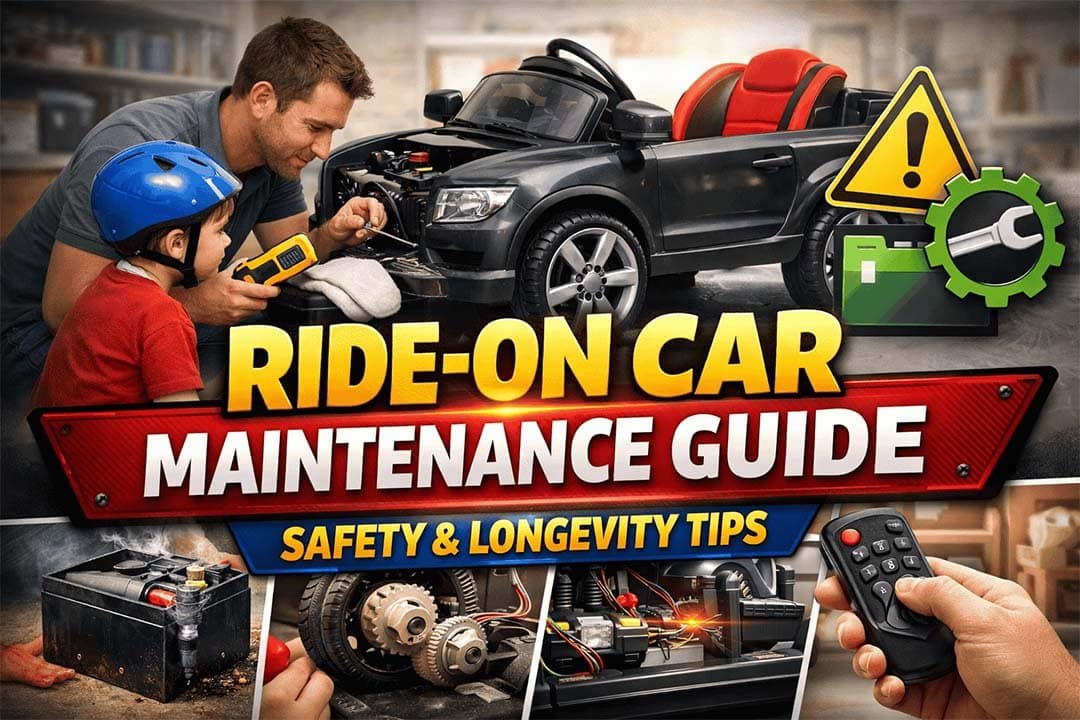





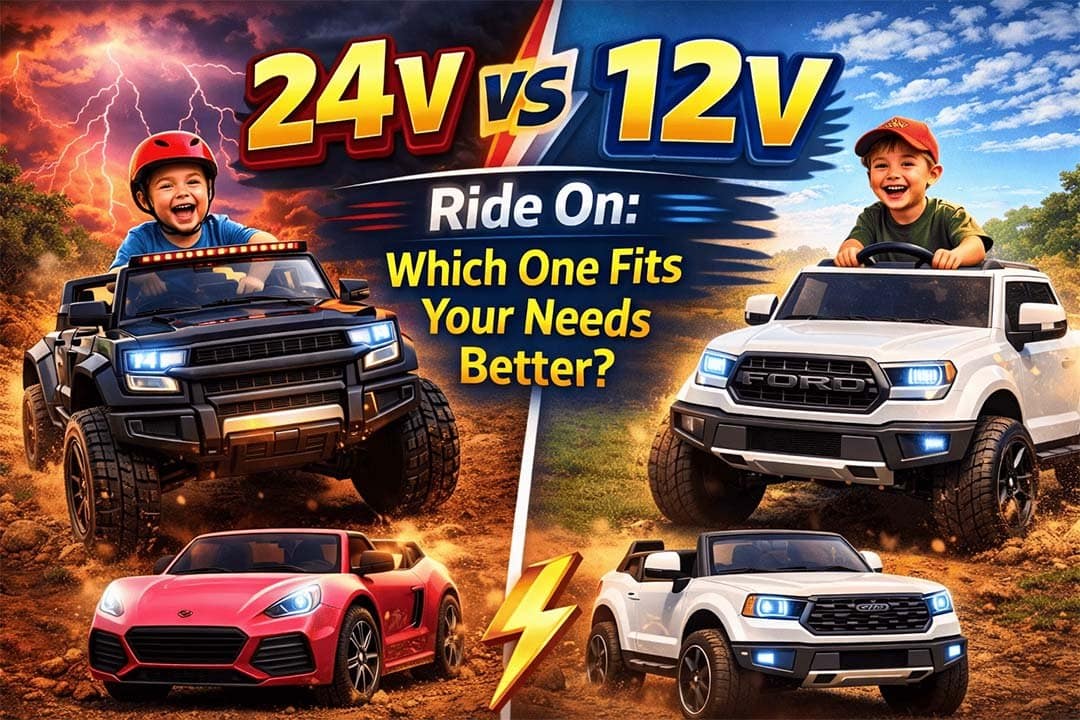





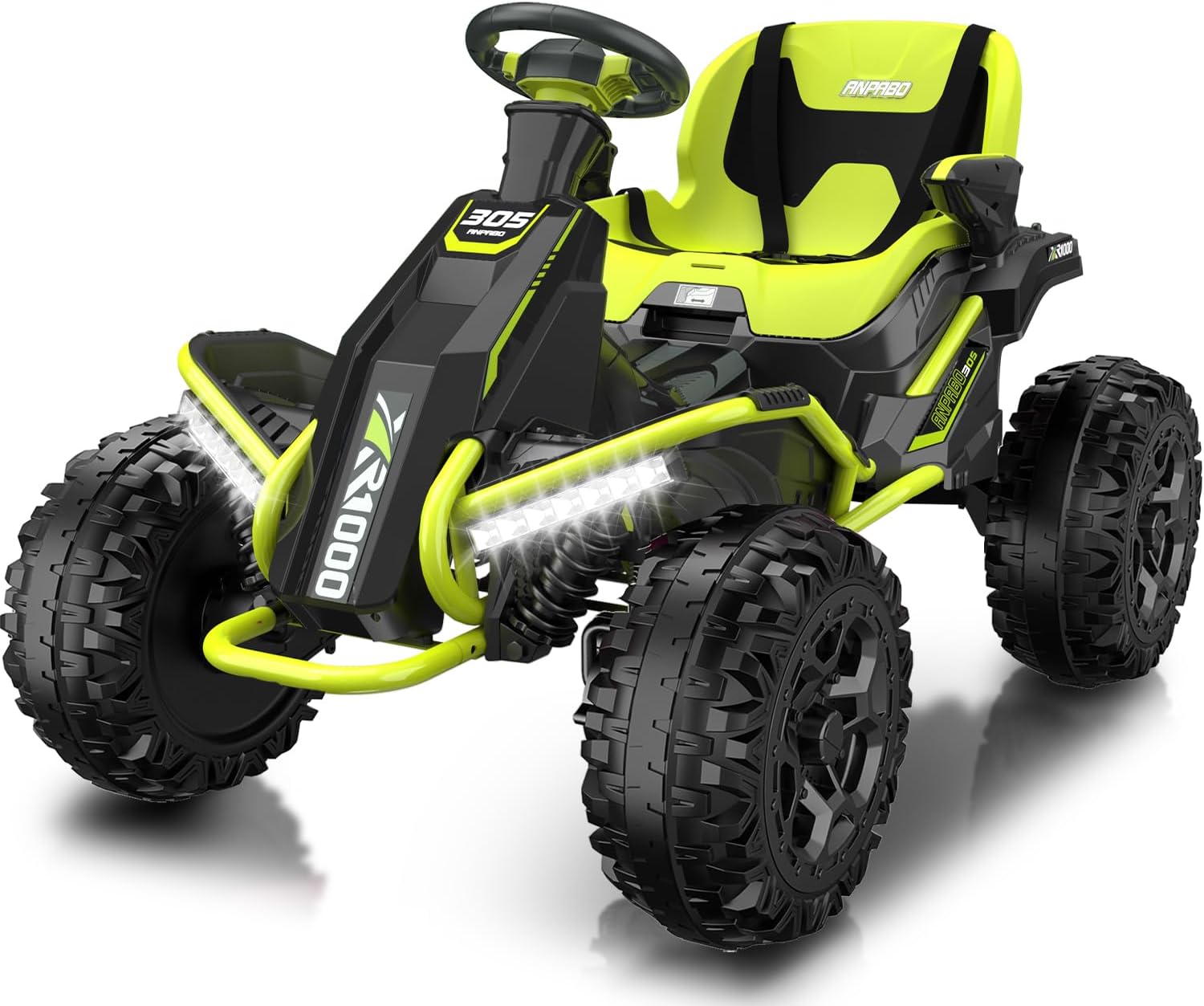


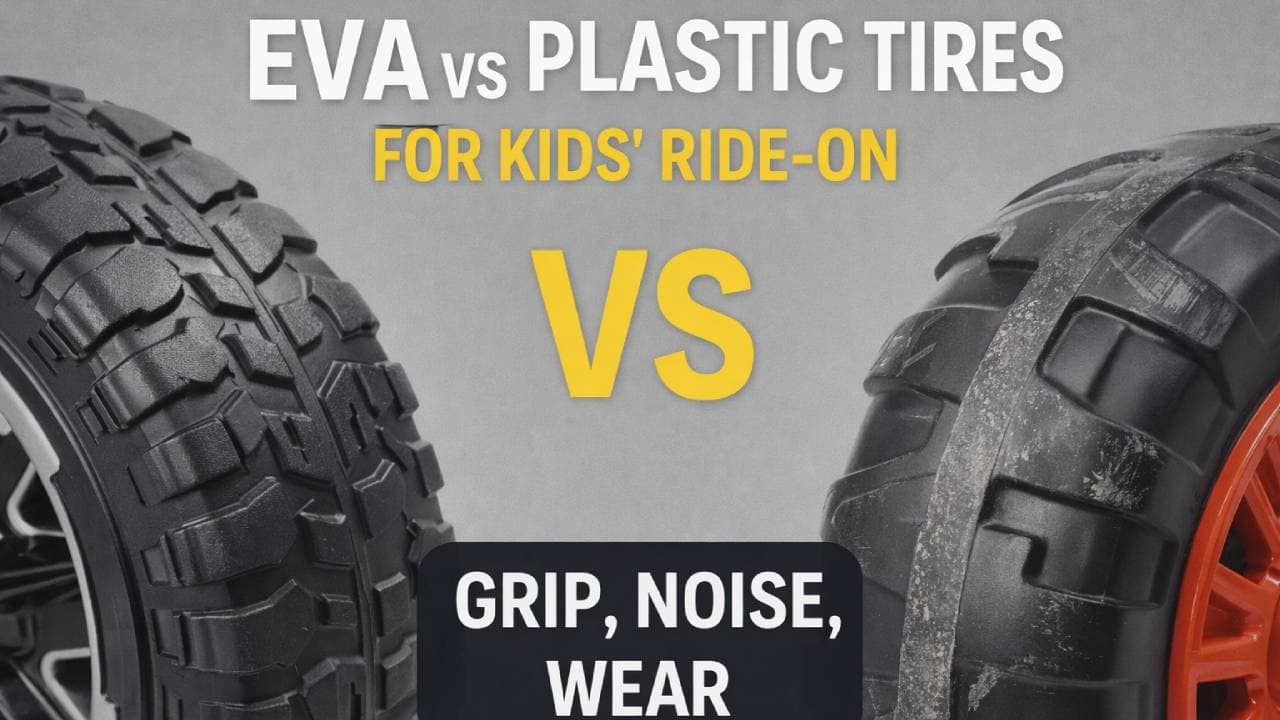
 Image created with AI. A child riding a backyard ride-on with EVA tires that grip well on pavement.


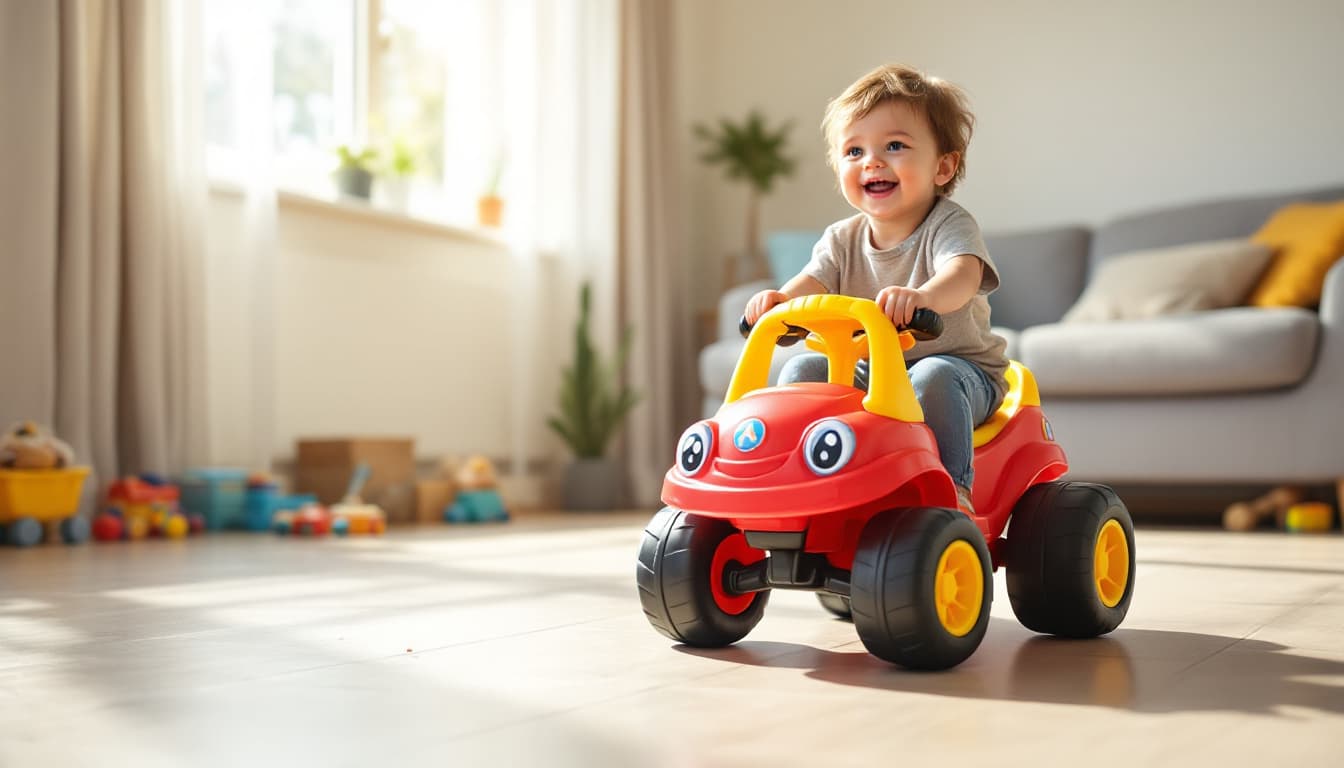 Image created with AI. A child enjoying smooth indoor laps on a ride-on with hard plastic wheels.
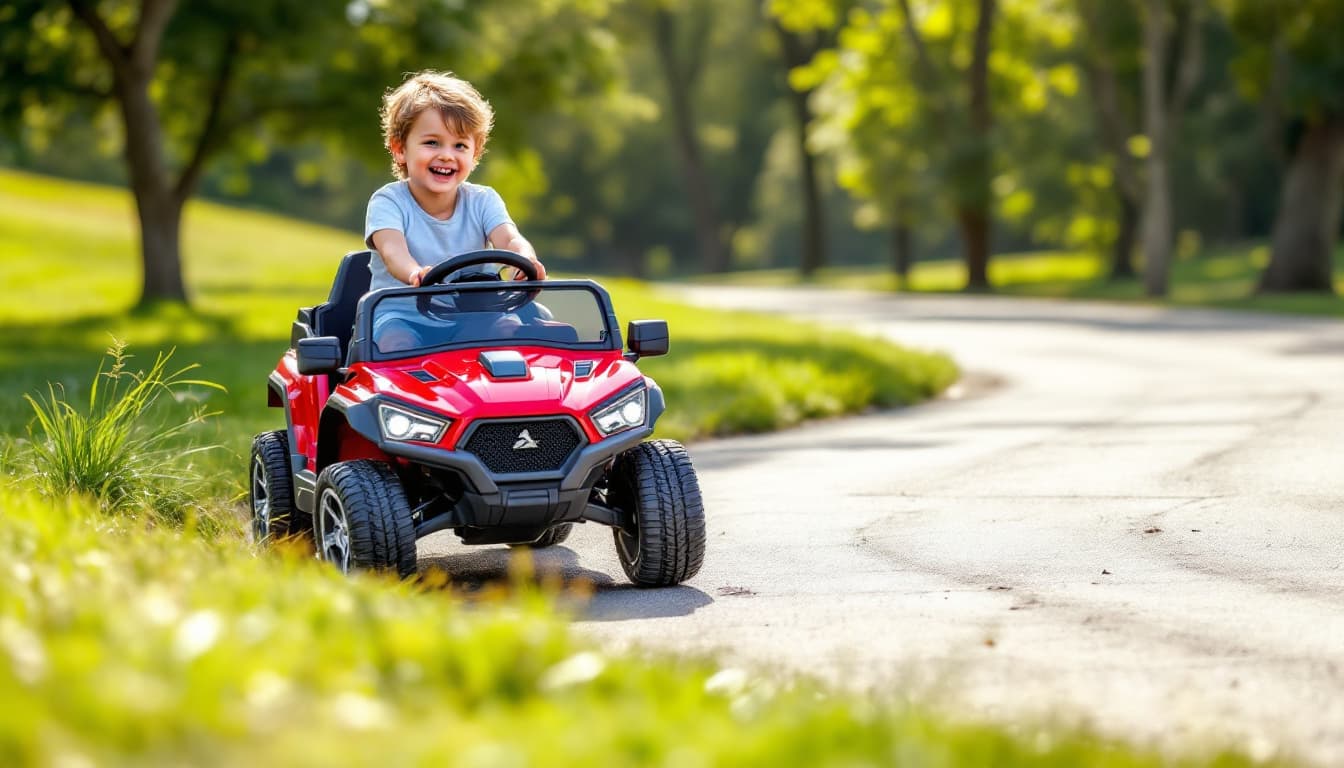 Image created with AI. A child taking a tight corner on mixed grass and pavement with EVA tires gripping securely.
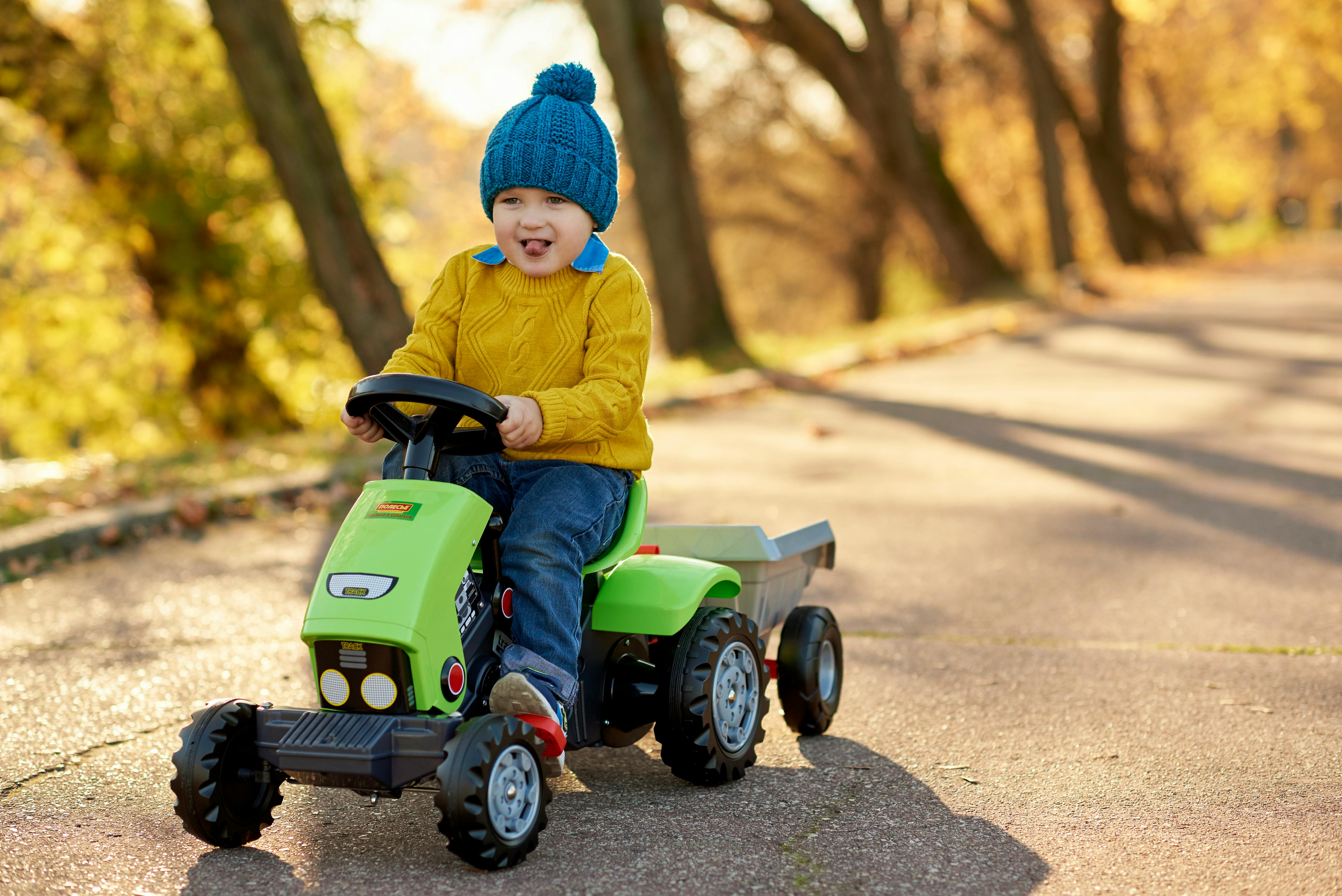 A child enjoying a smooth ride on a toy tractor, a good reminder that the right tire choice keeps play safe and fun. Photo by
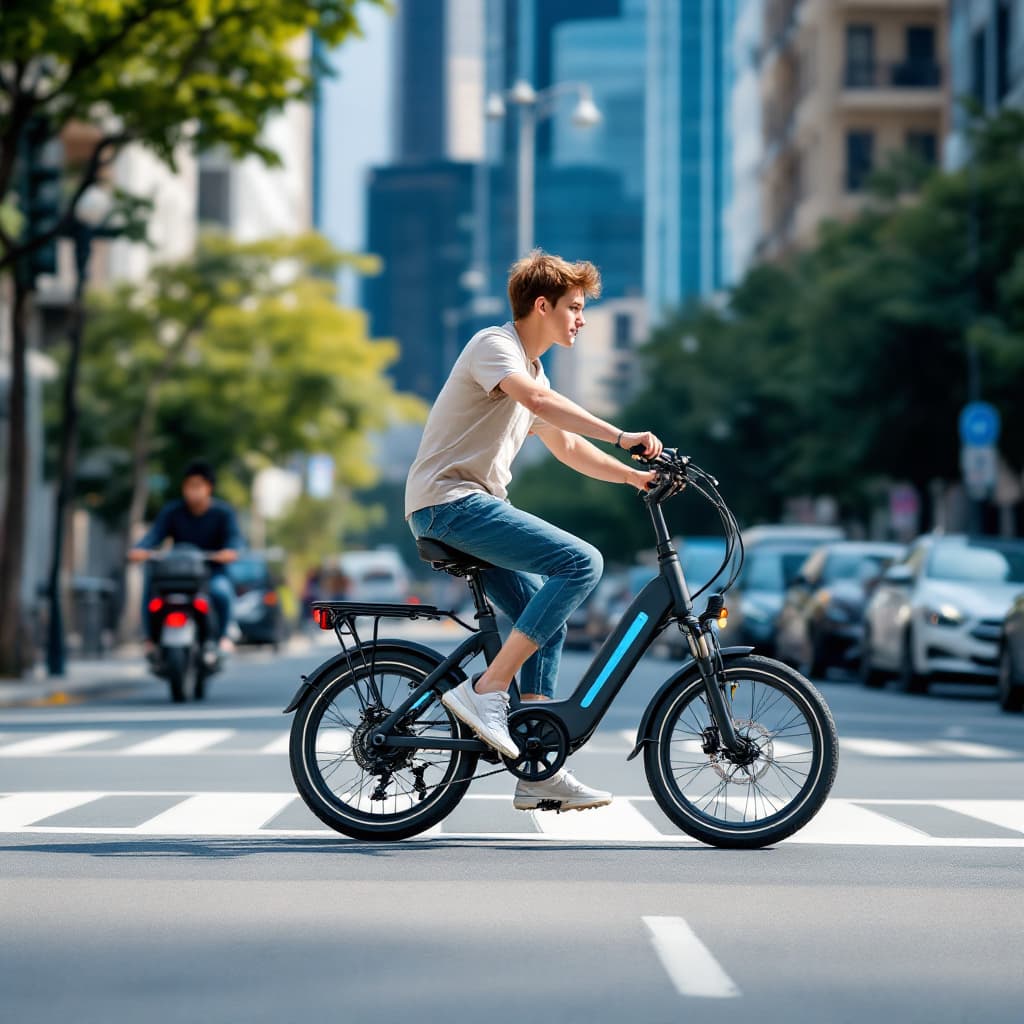 Image created with AI


 Photo by
 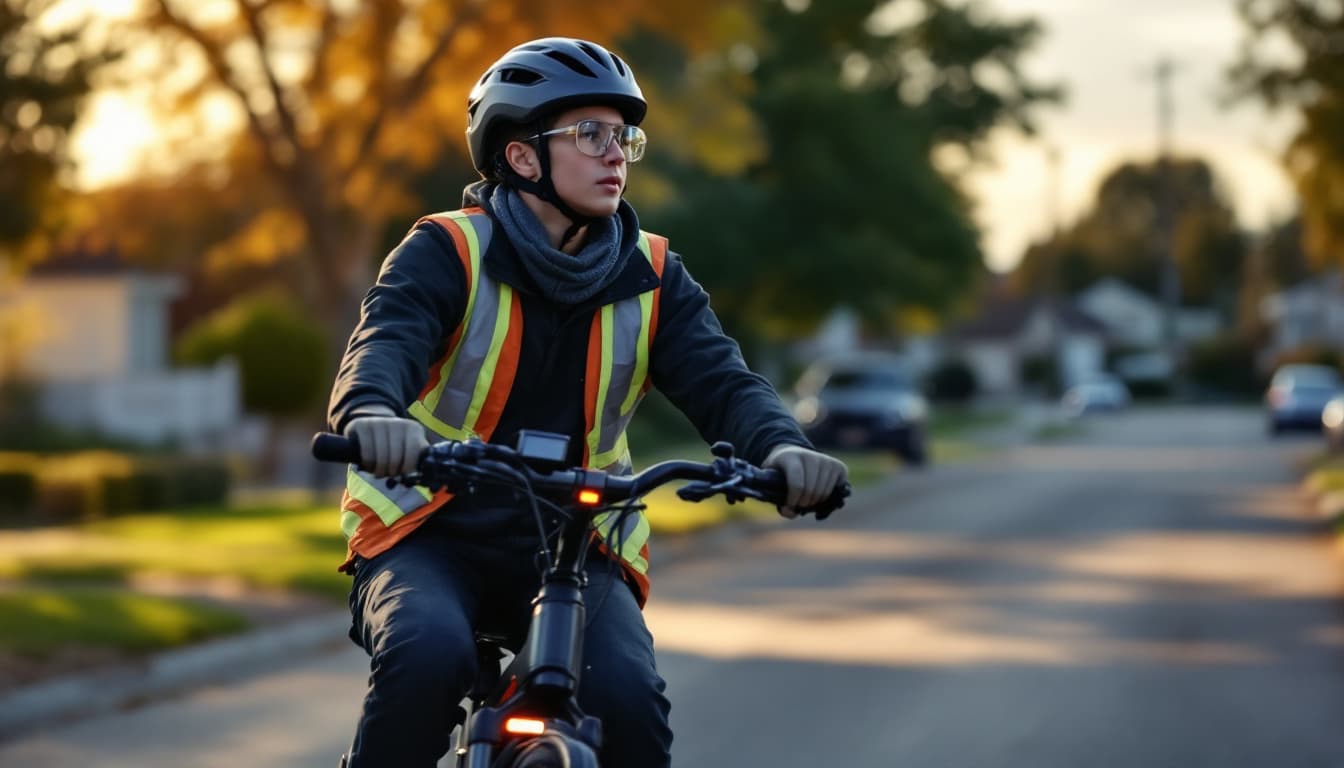 Image created with AI
 Image created with AI