
 Cart is empty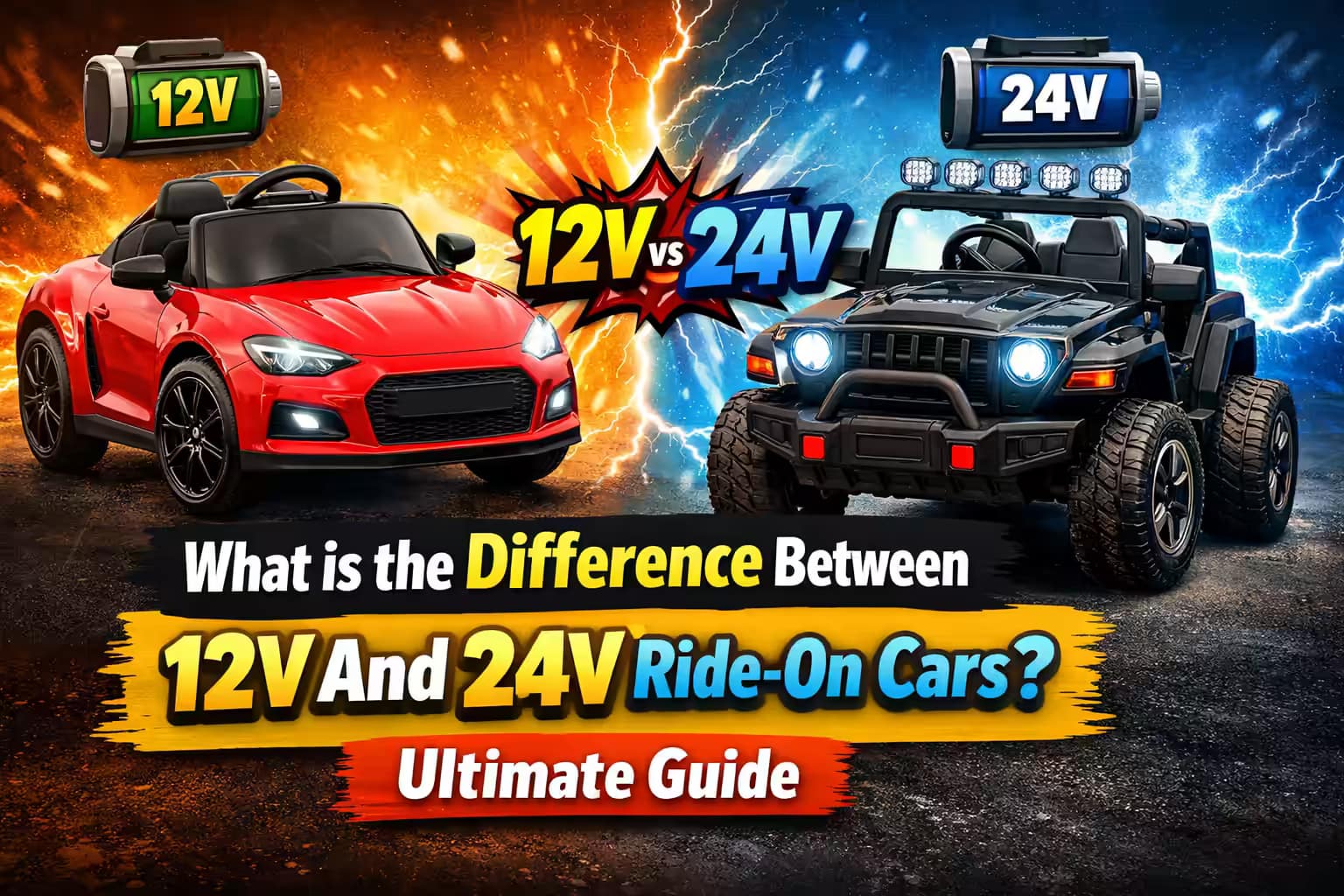
Ride-on cars are fun toys for kids. They let children drive their own little cars. But there are many types of ride-on cars. Two common types are 12V and 24V ride-on cars. What does 12V or 24V mean? Which one is better? This article will explain the difference simply.

Credit: riiroo.com
What Does 12V and 24V Mean?
Voltage (V) is a way to measure electric power. In ride-on cars, voltage tells how strong the battery is. A 12V car has a 12-volt battery. A 24V car has a 24-volt battery. The bigger the voltage, the more power the car has.
Speed Difference
One main difference is how fast the car goes. A 12V ride-on car usually goes 3 to 5 miles per hour. This is a good speed for younger kids, like 3 to 6 years old. It is safe and easy to control.
A 24V ride-on car is faster. It can go from 5 to 8 miles per hour. This speed fits older kids, about 5 to 9 years old. The car can move faster on flat or rough ground.
| Feature | 12V Ride-On Car | 24V Ride-On Car |
|---|---|---|
| Battery Voltage | 12 Volts | 24 Volts |
| Speed | 3 – 5 mph | 5 – 8 mph |
| Recommended Age | 3 – 6 years | 5 – 9 years |
| Battery Life | Shorter | Longer |
| Terrain | Flat, smooth ground | Rough and hilly ground |
| Price | Usually less | Usually more |
Battery Life and Power
Since 24V batteries have more power, they last longer. You can play more before the battery runs out. 12V cars have smaller batteries. They work well but need charging more often.
Also, 24V cars can carry heavier kids or two kids at once. 12V cars are lighter and better for single riders.
Age and Size Suitability
12V ride-on cars are great for younger children. They have slower speeds and less power. This makes driving safer for small kids.
24V cars suit older kids. These cars can go faster and handle more weight. They are better for children who want more fun and can control a faster car.

Credit: oitek.com.au
Terrain and Usage
If your child plays only on smooth surfaces, a 12V car is enough. These cars do well on sidewalks and flat yards.
For rough or hilly places, a 24V ride-on car is better. It can climb small hills and drive on grass or dirt paths easily.
Price Differences
Generally, 12V ride-on cars cost less. They are simpler and have smaller batteries.
24V cars cost more. They have bigger batteries and stronger motors. This means they need more parts and better materials.
Safety Considerations
Both 12V and 24V cars are safe when used properly. But faster cars need more careful supervision.
Always check the recommended age before buying. Make sure your child wears safety gear, like a helmet.
How to Choose the Right Ride-On Car
- Consider your child’s age. Younger kids should start with 12V cars.
- Think about where they will play. Flat surfaces? Choose 12V. Rough areas? Choose 24V.
- Look at your budget. 12V cars are cheaper but slower.
- Decide how long playtime should be. 24V cars have longer battery life.
- Check the weight limit. Older or heavier kids need 24V cars.
Summary: 12V vs 24V Ride-On Cars
To sum up, the main difference is power. 12V cars have less power, go slower, and suit younger kids. 24V cars have more power, go faster, and fit older kids better.
The choice depends on your child’s age, size, where they play, and your budget. Both types offer fun and safe ways for children to enjoy driving.
Remember, no matter which car you choose, always watch your child while they play. Safety first, fun always.
Frequently Asked Questions
Are 24v Ride-on Cars Better Than 12v?
24V ride-on cars offer higher speed (5-8 mph) and longer battery life than 12V models. They suit older kids (5-9 years). 12V cars are slower (3-5 mph) and better for younger children (3-6 years). Choose based on age, speed needs, and terrain.
What Is The Best Voltage For Ride-on Toys?
The best voltage for ride-on toys depends on age and speed needs. Use 12V for ages 3-6 (3-5 mph). Choose 24V for ages 5-9 with faster speeds (5-8 mph). Higher voltages suit older kids and advanced terrains.
How Fast Does A 12 Volt Ride-on Toy Go?
A 12-volt ride-on toy typically reaches speeds between 3 to 5 mph. It suits children aged 3 to 6 years. This speed ensures safe and enjoyable play for young riders.
Which One Is Better, 12v Or 24v?
12V ride-on cars suit ages 3-6, offer 3-5 mph speed, and lower cost. 24V models fit ages 5-9, deliver 5-8 mph, and provide more power. Choose based on child’s age, desired speed, and terrain.
What Is The Main Power Difference Between 12v And 24v Ride-on Cars?
12V ride-on cars use a 12-volt battery, while 24V cars have two 12-volt batteries. This means 24V cars deliver double the power and speed.
Which Voltage Ride-on Car Is Faster, 12v Or 24v?
24V ride-on cars are faster, reaching speeds of 5-8 mph. 12V cars usually go 3-5 mph, suitable for younger kids.
How Does Voltage Affect The Battery Life Of Ride-on Cars?
Higher voltage like 24V drains batteries quicker but offers more power. 12V batteries last longer but with less speed.
Are 24v Ride-on Cars Suitable For Younger Children?
24V cars are best for kids aged 5-9 due to higher speed. 12V cars fit younger kids, aged 3-6, for safer play.
Does The Voltage Impact The Price Of Ride-on Cars?
Yes, 24V ride-on cars cost more because of stronger motors and bigger batteries. 12V models are usually cheaper.
Which Voltage Ride-on Car Handles Rough Terrain Better?
24V cars handle rough or uneven surfaces better due to stronger power. 12V cars are best on smooth, flat surfaces.
Add a Comment