Ride-On Car Vs Balance Bike Which Is Best for Your Child

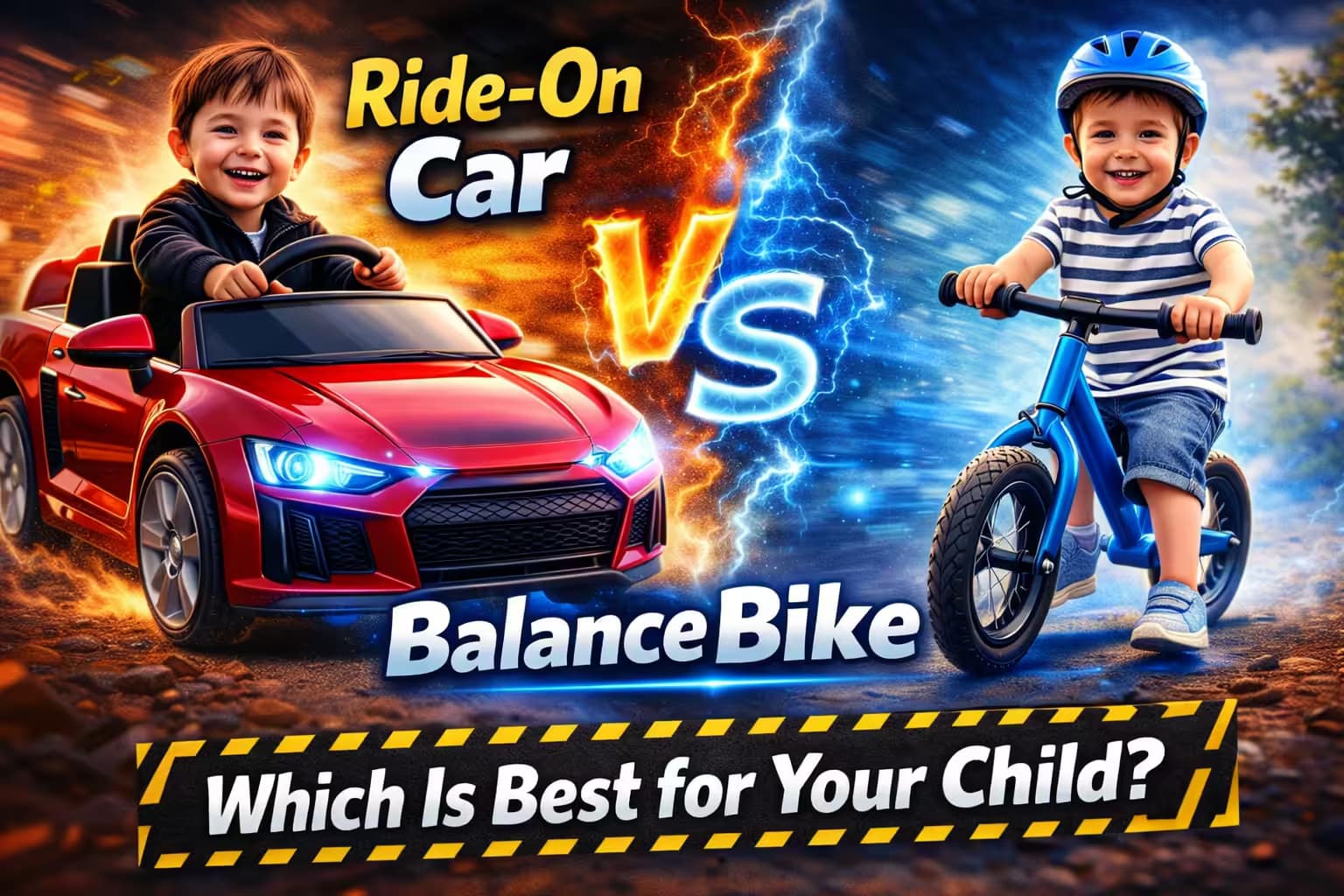
Ride-On Car Vs Balance Bike: Which Is Best for Your Child?

Choosing the right first set of wheels for your child is a big decision. As a parent, you want something fun, safe, and helpful for their development. Two popular options stand out: ride-on cars and balance bikes. Each has its own fans, but which is really better for your child? The answer depends on your child’s age, skills, and what you hope they’ll learn. This guide will walk you through all the details. You’ll learn how each option works, their benefits, and even some surprising facts that most parents don’t know. By the end, you’ll feel confident to choose what fits your child best—without second guessing.

What Is A Ride-on Car?

A ride-on car is a small vehicle designed for young children. Kids sit on or inside and use their feet or a battery-powered motor to move. These cars come in many shapes: simple plastic cars you push with your feet, or realistic, battery-powered mini vehicles that look like real cars.

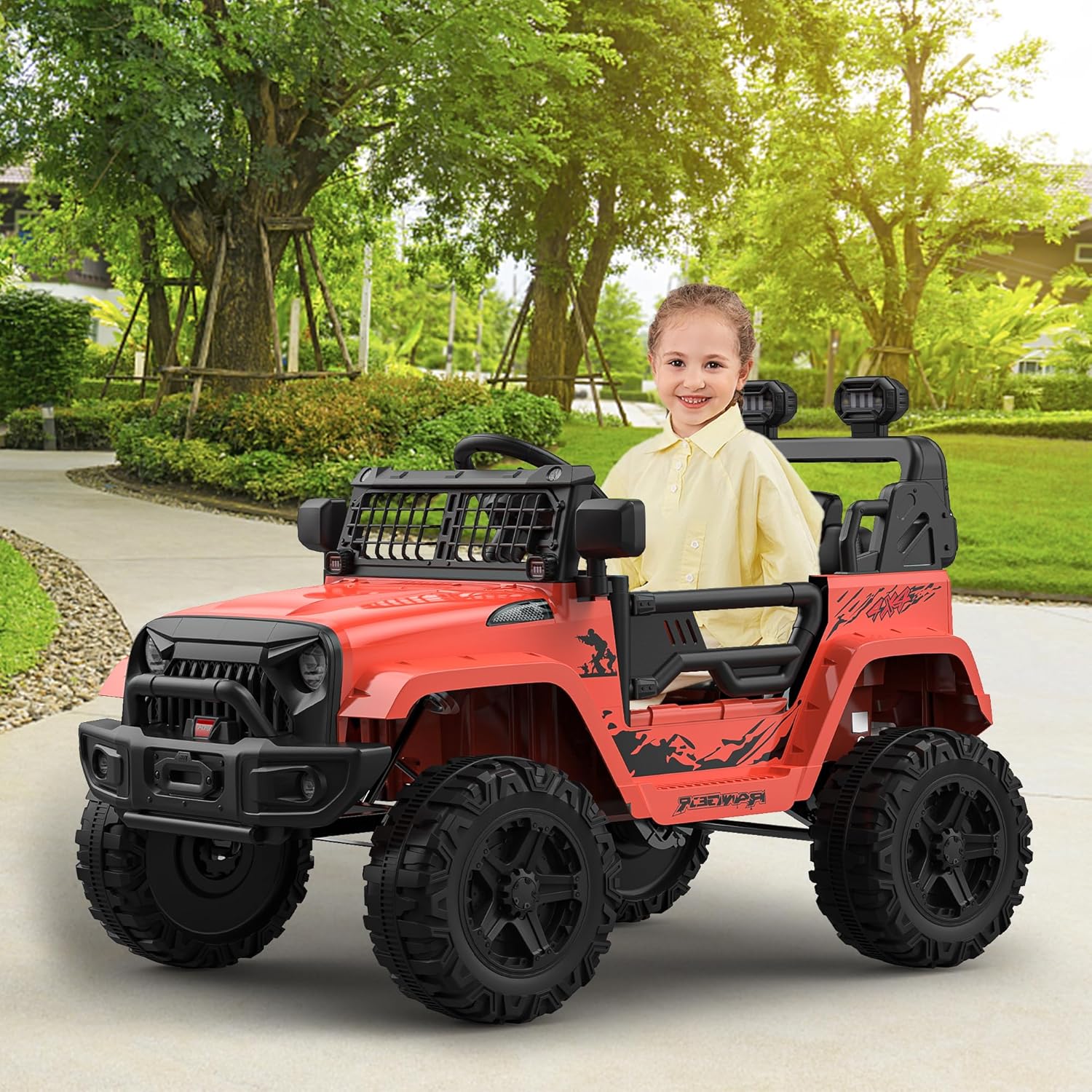
Ride-on cars are often made from sturdy plastic or metal. Most models have four wheels, a steering wheel, and sometimes working lights or sounds. Some are foot-to-floor, meaning your child pushes with their legs. Others are electric, moving forward and backward with a simple pedal.

The main goal? Fun, imagination, and early movement. Children love pretending to drive, delivering packages, or going on adventures in the backyard. Parents like them because they keep kids active, occupied, and help build basic motor skills.

What Is A Balance Bike?

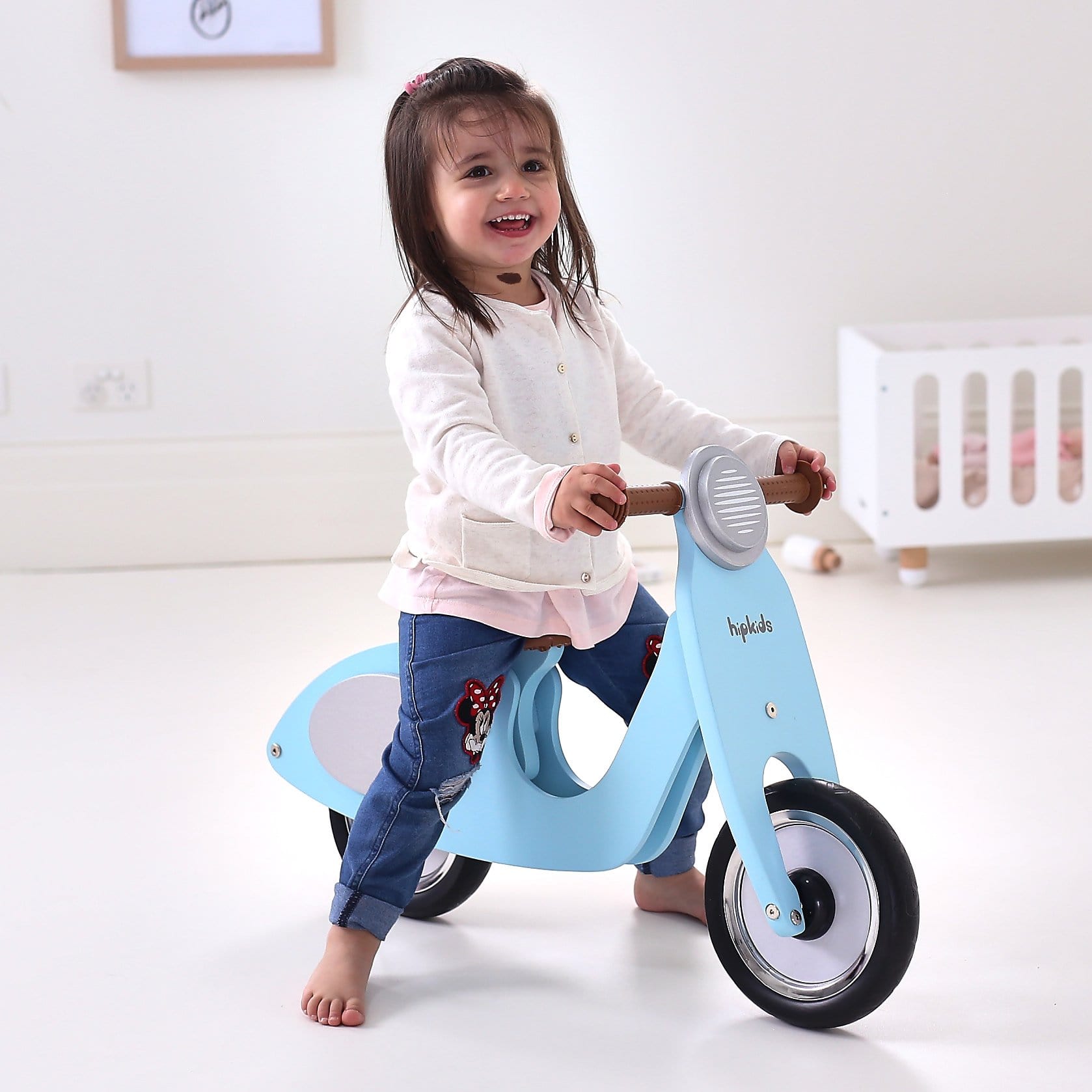
A balance bike looks much like a small bicycle but with one big difference: there are no pedals. Instead, your child sits on the seat, holds the handlebars, and pushes with their feet. These bikes are usually made for kids aged 18 months to 5 years.

Balance bikes are light, usually weighing between 2 and 5 kg. Their frames are often metal or wood, with two wheels. The seat and handlebars adjust as your child grows.

The main purpose of a balance bike is to teach balance and steering—skills needed for riding a regular bike. Children learn to glide with their feet off the ground, balancing on two wheels before ever trying pedals. This makes it easier to move to a real bike later, often skipping training wheels completely.

Key Benefits Of Ride-on Cars

Ride-on cars have a unique appeal, especially for toddlers. Their benefits go beyond just entertainment.

1. Boosts Imagination And Social Play

Kids love pretending. A ride-on car becomes a delivery truck, fire engine, or race car. This type of play helps build creativity and social skills. When children drive together, they learn about sharing, waiting, and teamwork.

2. Develops Gross Motor Skills

Using a ride-on car requires your child to push with their legs, steer, and sometimes reverse. These actions build muscle strength and improve coordination. Over time, children gain more control over their bodies and movements.

3. Safe Introduction To Mobility

For very young kids (12-24 months), ride-on cars are less intimidating than bikes. They sit close to the ground and move slowly, reducing the risk of falls. Many models have a stable base, making tip-overs rare.

4. Indoor And Outdoor Flexibility

Many ride-on cars are small enough for indoor use. On rainy days, kids can drive around the living room. On sunny days, they can explore the backyard or driveway.

5. Parent Control Options

Some electric ride-on cars offer parental remote controls. This means you can guide the car for your child, keeping them safe while they enjoy the ride. It’s a confidence booster for both parent and child.

Non-obvious Insight: Multi-child Play

Ride-on cars often fit more than one child. Siblings or friends can ride together, taking turns as driver and passenger. This is a great way to teach cooperation and sharing.

Non-obvious Insight: Early Cause-and-effect Learning

When a child pushes the car, it moves. When they turn the wheel, it changes direction. These simple actions help young children understand cause and effect—a key part of early learning.

Key Benefits Of Balance Bikes

Balance bikes are more than just a trend. They offer real developmental advantages, especially as children get closer to preschool age.

1. Teaches Real Balance Early

Balance bikes are designed to teach kids how to balance on two wheels—something that training wheels do not do well. Kids learn to glide, coast, and control their balance naturally, making the jump to pedal bikes much easier.

2. Builds Confidence And Independence

Learning to ride a balance bike gives children a sense of achievement. As they master balance, they become more confident and independent. This confidence often carries over to other activities.

3. Improves Coordination And Reflexes

Using a balance bike requires your child to steer, balance, and respond to changing ground or obstacles. This develops reflexes and hand-eye coordination—skills they’ll use for life.

4. Physical Exercise

Balance bikes give kids a real workout. They use their whole body, especially legs and core muscles. Even a short ride improves endurance and strength.

5. Smoother Transition To Pedal Bikes

Research shows that kids who start on balance bikes often skip training wheels. They can move to a regular bike by ages 3-4, sometimes earlier. The reason? They’ve already mastered balancing, the hardest part of cycling.

Non-obvious Insight: Less Fear Of Falls

Children on balance bikes are closer to the ground and can put their feet down easily. This reduces fear and the chance of injury. As a result, kids are more likely to try, fail, and try again—key for learning.

Non-obvious Insight: Bike Skills That Last

Kids who start with balance bikes tend to have better steering and braking skills later. They’ve learned to control the bike’s movement without relying on pedals or training wheels.
Ride-On Car Vs Balance Bike: Which Is Best for Your Child?
Ride-On Car Vs Balance Bike: Which Is Best for Your Child? 4

Ride-on Car Vs Balance Bike: Developmental Benefits

Both ride-on cars and balance bikes help children grow, but in different ways. Here’s a side-by-side look at how each supports development.

Skill AreaRide-On CarBalance Bike
Gross Motor SkillsLeg strength, basic coordinationBalance, coordination, leg/core strength
Fine Motor SkillsSteering wheel controlHandlebar control, braking
BalanceMinimal (stable base)High (core focus)
ConfidenceLow to medium (safe, guided play)High (mastery, independence)
Imagination/SocialVery highMedium
Physical ActivityLow to mediumMedium to high

Age Suitability: When To Choose Which?

The best option depends on your child’s age and stage of development.

Ride-on Cars

  • Best for: Ages 1 to 3
  • Why: At this age, children are just learning to move around on their own. A ride-on car is stable, easy to use, and less likely to tip. The controls are simple—just push with feet or press a pedal.
  • Tip: Look for models with a low seat and wide wheelbase for extra safety.

Balance Bikes

  • Best for: Ages 2 to 5
  • Why: By age 2, most children have enough balance and coordination to try a balance bike. The earlier they start, the easier it will be to master a pedal bike later.
  • Tip: Make sure the seat is low enough for your child to put both feet flat on the ground.

Overlapping Age Ranges

Some children are ready for a balance bike at 18 months, while others may prefer a ride-on car until age 3 or 4. Always consider your child’s comfort, confidence, and interest.

Safety Considerations

Both ride-on cars and balance bikes are safe when used correctly, but there are key differences parents should know.

Ride-on Car Safety

  • Low Speed: Most foot-powered cars move slowly. Battery-powered cars often have a max speed of 3-5 km/h.
  • Stability: Four wheels and a low center of gravity make tipping rare.
  • Supervision: Always watch young children, especially around driveways, streets, or stairs.
  • Helmet: Not always required for indoor use, but recommended outdoors.

Balance Bike Safety

  • Helmet: Always use a helmet, even for short rides.
  • Falls: More likely than with ride-on cars, especially at first. Children should practice on grass or smooth surfaces.
  • Brakes: Some balance bikes have hand brakes. Teach your child how and when to use them.
  • Supervision: Always watch near roads, hills, or water.

Common Mistake: Skipping Helmets

Many parents think helmets are not needed for short rides or on safe ground. However, even small falls can cause injury. Make helmet use a habit from day one.

Cost And Value

How do ride-on cars and balance bikes compare when it comes to price and long-term value?

TypePrice Range (USD)Average LifespanResale Value
Ride-On Car (Manual)$30–$801–2 yearsLow to Medium
Ride-On Car (Electric)$100–$4001–3 yearsLow
Balance Bike$50–$2002–4 yearsMedium to High

Practical Insights

  • Manual ride-on cars are cheap and simple but may be outgrown quickly.
  • Electric ride-on cars are exciting but costly. Batteries may need replacement.
  • Balance bikes hold their value. Many parents sell or pass them on after 2–3 years.

Non-obvious Insight: Secondhand Market

High-quality balance bikes often resell for 50–70% of their original price. Ride-on cars, especially electric ones, lose value faster due to battery wear and tear.

Ride-On Car Vs Balance Bike: Which Is Best for Your Child?
Ride-On Car Vs Balance Bike: Which Is Best for Your Child? 5

Outdoor Vs Indoor Use

Where do you want your child to ride? This affects your decision.

Ride-on Cars

  • Indoor: Foot-to-floor models are quiet and gentle on floors.
  • Outdoor: Larger cars (especially electric) need flat, smooth surfaces. Grass and gravel may slow them down.
  • Weather: Not ideal in rain or snow.

Balance Bikes

  • Indoor: Not recommended unless you have lots of space.
  • Outdoor: Work well on sidewalks, driveways, and even park trails.
  • Weather: Can handle more surfaces, but avoid wet or muddy conditions for safety.

Tip: Test Both

If possible, let your child try both options in your available space before buying.

Parent Involvement And Ease Of Use

How much help will your child need? How easy is each option for daily use?

Ride-on Cars

  • Parent Control: Some electric models offer remote control.
  • Setup: Manual cars need little assembly; electric cars may take 1–2 hours to build.
  • Maintenance: Electric cars need battery charging and care.
  • Cleaning: Most can be wiped clean; avoid leaving electric models outside.

Balance Bikes

  • Parent Control: Children ride independently. You’ll need to supervise, especially at first.
  • Setup: Usually quick—just attach handlebars and seat.
  • Maintenance: Check tire pressure (if air tires), tighten bolts.
  • Cleaning: Hose off mud or dirt after outdoor rides.

Insight: Encouraging Independence

Balance bikes encourage children to move and explore on their own, while ride-on cars (especially electric) can make kids more passive. Think about what you want your child to learn.

Learning Curve: How Quickly Will Your Child Master Each?

Every child is different, but trends are clear.

Ride-on Cars

  • Manual: Most toddlers get the hang of pushing and steering in a few days.
  • Electric: May take longer to learn controls (forward, reverse, steering), but most kids adapt fast, especially with parent help.

Balance Bikes

  • Early Days: Kids start by walking with the bike between their legs.
  • Progress: Over weeks, they gain confidence, begin gliding, and eventually coast with feet off the ground.
  • Result: By age 3–4, many children can ride a pedal bike without training wheels.

Non-obvious Insight: The “glide Stage”

There’s a key moment when a child lifts their feet and glides on a balance bike. This stage is the real sign they’re ready for a pedal bike. Don’t rush—let it happen naturally.

Durability And Maintenance

You want a product that lasts, especially if you have younger siblings or plan to resell.

Ride-on Cars

  • Manual: Fewer parts, less to break. Wheels may wear down with outdoor use.
  • Electric: Batteries can lose power over time. Replacement parts can be expensive and hard to find.

Balance Bikes

  • Frame: Metal or wooden frames last for years with basic care.
  • Wheels: Air tires may need pumping; solid tires require less care.
  • Parts: Simple mechanics mean less can go wrong.

Tip: Choose Quality Over Features

A well-made balance bike or ride-on car with basic features is often more durable and safer than a flashy, low-quality model.

Ride-On Car Vs Balance Bike: Which Is Best for Your Child?
Ride-On Car Vs Balance Bike: Which Is Best for Your Child? 6

Environmental Impact

Parents are thinking more about sustainability.

Ride-on Cars

  • Plastic: Most are made from plastic, which is hard to recycle.
  • Electric: Uses batteries that must be disposed of properly.
  • Longevity: Outgrown quickly, especially themed or bulky models.

Balance Bikes

  • Materials: Many are metal or wood, which can be recycled or biodegrade.
  • Lifespan: Often passed down or resold, reducing waste.

Insight: Simple Designs, Less Waste

A minimalist balance bike or ride-on car without electronics is better for the planet and often lasts longer.

Social And Emotional Growth

Both options can help children grow emotionally, but in different ways.

Ride-on Cars

  • Group Play: Cars often attract groups of kids. They take turns, role play, and learn to cooperate.
  • Pretend Play: Driving a “fire truck” or “ice cream van” builds imagination.

Balance Bikes

  • Individual Achievement: Learning to ride is a personal challenge. Kids gain confidence and pride as they succeed.
  • Peer Interaction: Riding with friends encourages friendly competition and sharing skills.

Non-obvious Insight: Leadership Skills

Taking turns as the “driver” in a ride-on car can help shy children learn to lead. On balance bikes, children often teach each other new tricks, building social bonds.

Common Mistakes Parents Make

Even the best intentions can lead to errors. Here are some to avoid.

  • Choosing Based on Looks Alone: Flashy colors and designs are fun but don’t guarantee quality or safety.
  • Buying Too Big or Too Small: Always check seat height and weight limits.
  • Ignoring Helmets: Make helmet use a rule, even for short rides.
  • Forgetting Supervision: Always watch children, especially near driveways or streets.
  • Not Considering Where You’ll Use It: A large electric car won’t fit in a small apartment; a balance bike isn’t ideal for crowded spaces.
  • Skipping Practice: Give your child time to learn at their own pace.
  • Overloading Ride-On Cars: Don’t let more than the recommended number of children ride at once.

Real Parent Experiences

Hearing from other parents can help.

  • Maria, mother of two: “Our ride-on car was great for rainy days indoors, but my son lost interest by age 3. The balance bike kept him moving and he learned to ride a pedal bike before kindergarten.”
  • James, father of twins: “The electric ride-on car was fun but needed constant charging. Our balance bikes got used every day and held up well enough to pass on to our neighbors.”
  • Amina, first-time parent: “I was afraid my daughter would fall on a balance bike, but she surprised me. She started slow, and within a month she was gliding down the sidewalk, helmet and all.”

Which Should You Choose?

There’s no single answer. Think about your child’s age, personality, and your space.

  • For toddlers (1–2 years): Start with a stable ride-on car. Focus on fun, safety, and easy movement.
  • For preschoolers (2–5 years): Try a balance bike. It’s the best way to teach real cycling skills and build confidence.
  • If possible: Try both. Let your child decide which feels right.

If you want a deeper look at child cycling research, check out this resource from the Wikipedia: Balance bicycle.

Frequently Asked Questions

What Age Is Best For A Ride-on Car?

Most ride-on cars are designed for children aged 1 to 3 years. Some electric models fit up to age 5, but always check the manufacturer’s guidelines for weight and height limits.

At What Age Can My Child Start A Balance Bike?

Children can start as early as 18 months if the bike fits and they show interest. Most kids are ready between 2 and 5 years. Make sure your child can touch the ground with both feet while sitting.

Are Ride-on Cars Or Balance Bikes Safer?

Both are safe when used correctly, but balance bikes require more balance and can result in more falls at first. Always use helmets and supervise play. Ride-on cars are more stable for very young children.

Will A Balance Bike Help My Child Learn To Ride A Regular Bike?

Yes. Balance bikes teach the hardest part of cycling—balance. Most kids transition to pedal bikes without training wheels and with less fear.

Can I Use Both For My Child?

Absolutely. Many families start with a ride-on car for toddlers and move to a balance bike as their child grows. Some children enjoy both at the same time, depending on the day and activity.

Choosing between a ride-on car and a balance bike doesn’t have to be difficult. Think about your child’s needs, your space, and your goals. With the right choice, you’ll set them on a path to fun, confidence, and a lifetime of safe cycling.
Single Motor Vs Dual Motor Ride-On Cars Which Is Best for Kids

Single Motor Vs Dual Motor Ride-On Cars: Which Is Best for Kids?

Choosing the right ride-on car for your child can feel confusing. One of the main decisions parents face is whether to buy a single motor or dual motor ride-on car. At first, these terms sound technical, but they have a big impact on how your child experiences their new toy. The right motor system influences everything from speed and power to battery life and even safety. This guide will break down the real differences between single and dual motor ride-ons, explain which is better in different situations, and help you make a confident, informed choice.

Many parents focus only on size, color, or brand. But the motor setup is often more important for performance and satisfaction. Understanding how these cars work—and the trade-offs—will save you money, prevent disappointment, and give your child the best possible ride.

Let’s look at what makes these two types of ride-on cars unique, and why your decision matters more than you might think.

What Are Single Motor Ride-on Cars?

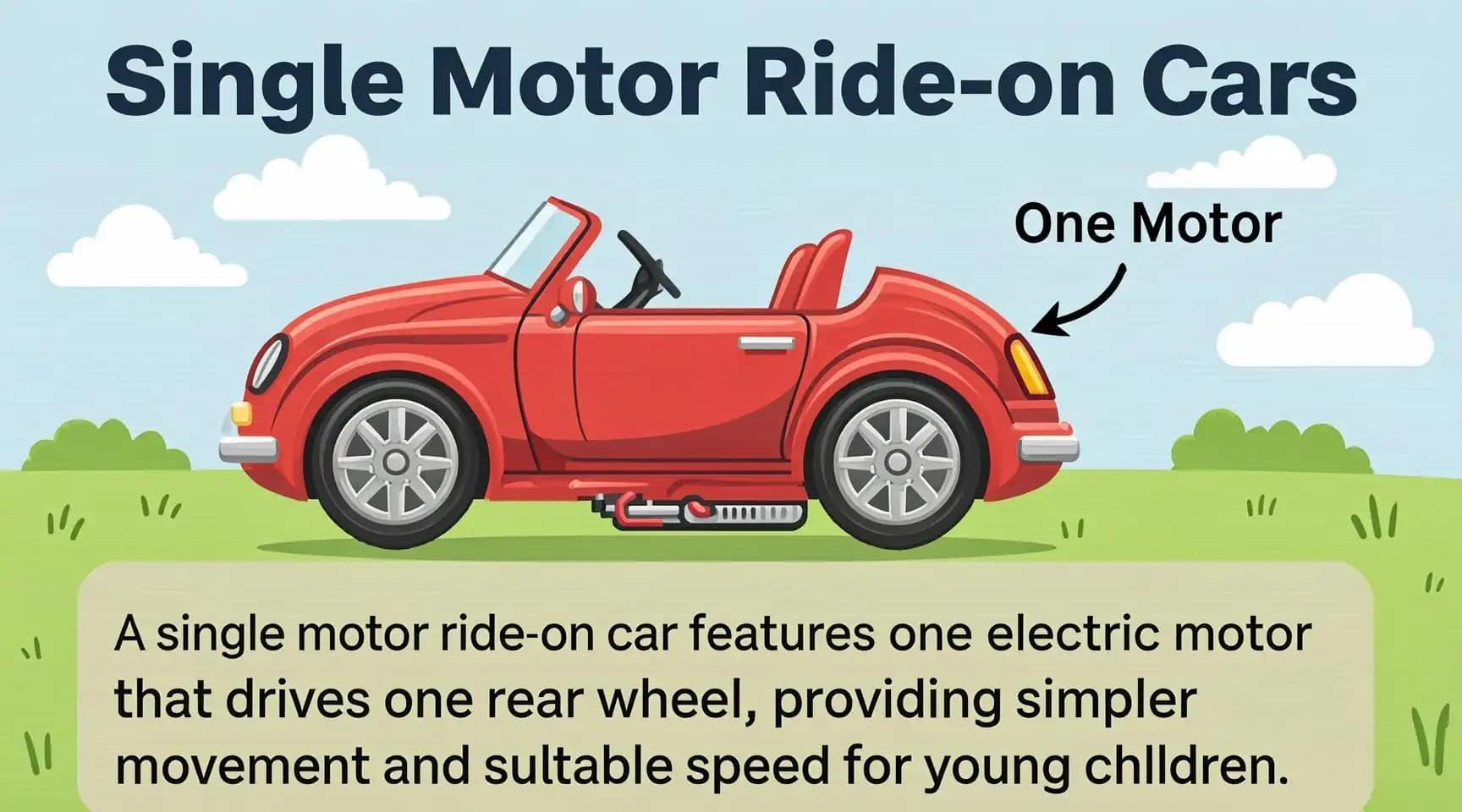
A single motor ride-on car is powered by just one electric motor. This motor usually drives either the rear or the front wheels, rarely all four. The design is simple, cost-effective, and easy for young children to use. Most single motor cars are recommended for flat surfaces and light use.

What Are Single Motor Ride-on Cars
Single Motor Vs Dual Motor Ride-On Cars: Which Is Best for Kids? 12

Single motor cars are often the first ride-on toys that parents consider. They are usually smaller, lighter, and less expensive than dual motor models. The single motor provides all the force to move the car, controlling both speed and direction.

Many models come with basic features like forward and reverse, simple steering, and sometimes basic lights and sounds.

A key point: single motor cars often struggle on uneven ground, grass, or small inclines. Because only one set of wheels is powered, there is less traction and climbing ability. Still, on smooth indoor floors or sidewalks, single motor ride-ons work well and are easy to control.

What Are Dual Motor Ride-on Cars?

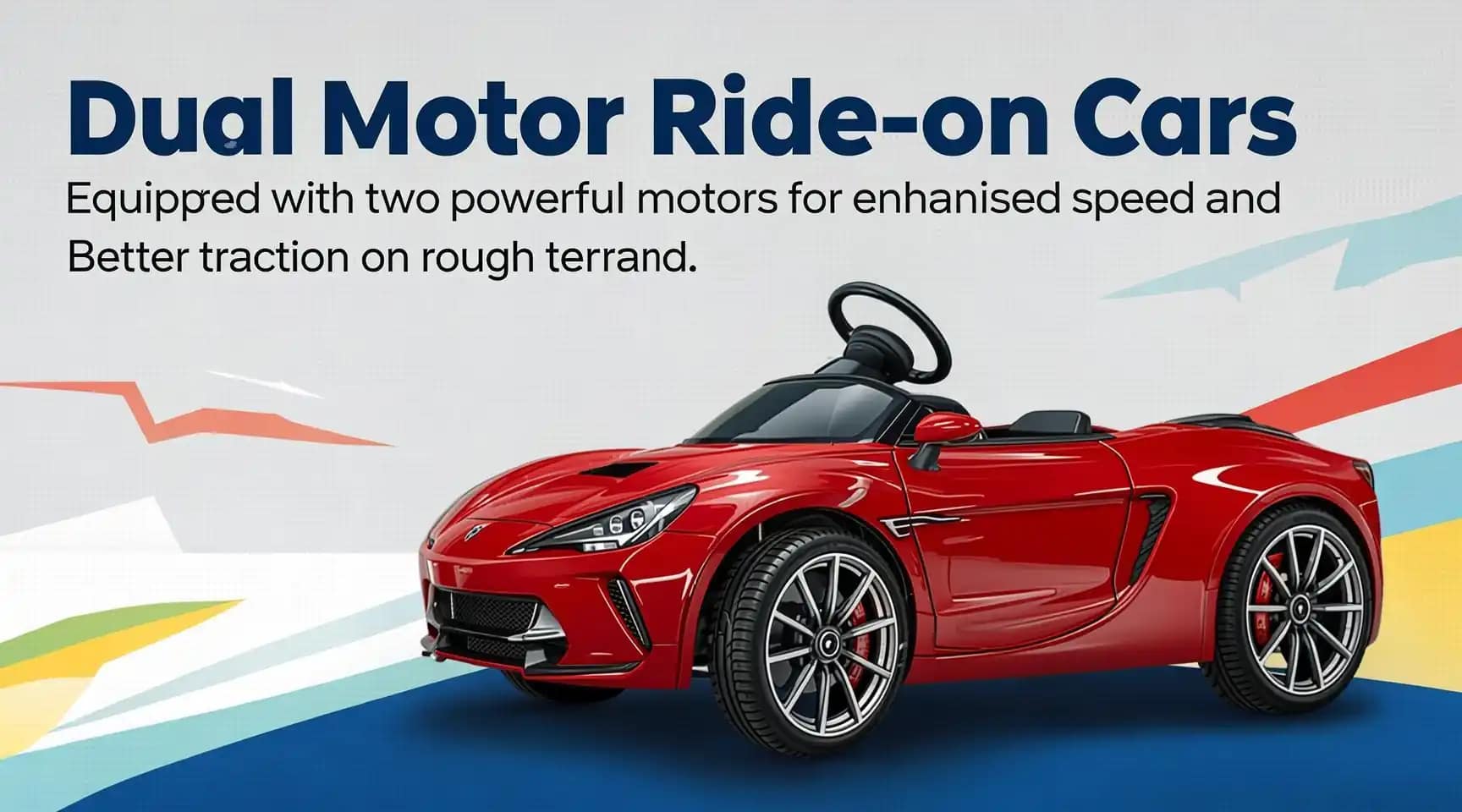
A dual motor ride-on car uses two separate electric motors. Usually, each motor powers a different wheel or a pair of wheels (for example, one for the left side, one for the right). This setup is more powerful, offers better control, and can handle a wider range of surfaces.

What Are Dual Motor Ride-on Cars
Single Motor Vs Dual Motor Ride-On Cars: Which Is Best for Kids? 13

Dual motor cars are designed for children who want more adventure or need to drive on grass, gravel, or gentle slopes. The motors work together, delivering more torque and better handling, especially when turning or dealing with obstacles. This gives the child a smoother, less frustrating ride.

Many dual motor models also include extra features, such as advanced suspension, higher weight limits, and even parental remote controls. They are often larger and heavier, which means the car feels more stable and durable. However, all these benefits come with a higher price tag and slightly more complex maintenance.

Key Differences: Single Motor Vs Dual Motor

Understanding the technical and practical differences is the foundation for choosing the right car. Here is a direct comparison to help you see the main distinctions:

FeatureSingle MotorDual Motor
Number of Motors12
Drive WheelsUsually rear or front onlyBoth sides (left & right) or both rear wheels
Surface CapabilityFlat, smooth onlyGrass, gravel, inclines
SpeedUsually slower (2-3 mph)Faster (up to 5 mph)
Power & TorqueLowHigh
Battery LifeLonger (uses less power)Shorter (uses more power)
Weight LimitLower (50-60 lbs)Higher (up to 100 lbs+)
PriceLower ($100-$200)Higher ($200-$400+)
MaintenanceSimpleMore involved

Performance: Which Is Better For Different Terrains?

One of the most important differences is how these cars handle various surfaces. Children don’t just drive on perfect, flat floors. They want to explore the backyard, drive over grass, or even try a small hill. The motor setup makes a huge difference in these situations.

Flat Indoor Floors

Single motor cars work well indoors. The motor provides enough power for smooth surfaces, and the lower speed is safer for young children. Dual motor cars will also perform well, but the extra power is not needed indoors.

Outdoor Pavement Or Sidewalks

Both types can handle sidewalks and driveways, but dual motor cars offer a smoother, more stable ride, especially if there are small bumps or cracks. The added power makes stops and starts easier, reducing the chance of getting stuck.

Grass And Uneven Surfaces

This is where dual motors win clearly. On grass, sand, or gravel, single motor cars often slow down or stop completely. Dual motor cars use their two motors to deliver more torque and keep moving, even if one wheel loses grip.

For children who want to ride off the sidewalk, dual motor is a must.

Inclines And Small Hills

Single motors struggle with inclines, especially as the child gets heavier. The car may move very slowly or not at all. Dual motor cars can climb gentle slopes, although the steepness they can handle depends on the model and battery strength.

Real-world Example

A parent buys a single motor ride-on for their daughter. On the living room floor, it works perfectly. But in the backyard, the car barely moves over the grass, and their daughter loses interest. If they had chosen a dual motor, she could ride almost anywhere outside, making the toy much more fun and useful.

Single Motor Vs Dual Motor Ride-On Cars: Which Is Best for Kids?
Single Motor Vs Dual Motor Ride-On Cars: Which Is Best for Kids? 14

Speed And Power: What To Expect

Many parents want to know: “How fast do these cars go?” Speed is not everything, but it does affect how exciting the car feels.

Typical Speeds

  • Single motor: Most reach 2 to 3 miles per hour (about 3 to 5 km/h). This is a brisk walking speed, safe for young children.
  • Dual motor: Commonly reach 4 to 5 miles per hour (about 6 to 8 km/h). This feels much faster to a child, especially outdoors.

Acceleration

Dual motor cars accelerate more smoothly. When starting or stopping, the motors share the work, making the car less likely to jerk or stall. This is important for children who may not control the pedal perfectly.

Power And Torque

Torque is the turning force that helps a car start moving, especially when climbing or carrying weight. Single motor cars have limited torque, so they slow down easily when loaded or faced with obstacles. Dual motor cars have nearly double the torque, making them better for heavier children or challenging terrain.

Weight Carrying Capacity

Another important detail is how much weight the car can carry. See the comparison below:

Car TypeMax Weight Limit
Single Motor50-60 lbs (22-27 kg)
Dual Motor90-130 lbs (41-59 kg)

This means dual motor cars are better for older kids, or if siblings want to ride together.

Battery Life And Charging

Ride-on cars use rechargeable batteries, but the number of motors affects how long the car runs before needing a charge.

Single Motor Battery Life

Single motor cars use less power, so the battery lasts longer. Most can run for 1. 5 to 2 hours on a full charge, depending on the weight and surface.

Dual Motor Battery Life

Dual motor cars use more electricity. Expect 1 to 1. 5 hours of run time per charge. If the car is driven mostly on grass or slopes, the battery drains faster.

Charging Time

Both types usually need 8 to 12 hours to fully recharge. For longer play, look for models with removable batteries or consider buying a spare.

Battery Replacement

Batteries wear out over time, usually after 1-2 years. Dual motor models may need battery replacement sooner, especially if used heavily.

Non-obvious tip: Many parents forget to check the battery voltage before buying. Some ride-on cars have 6V, others 12V or 24V batteries. Higher voltage means more power and speed, but also faster battery drain. Always match the voltage with the car’s motor type for best results.

Safety Considerations

Safety is a priority for every parent. Both single and dual motor cars are designed for children, but there are important differences.

Speed Control

Single motor cars are slower, making them safer for toddlers or very young children. Dual motor cars may have higher speeds, but many also include parental remote controls, speed limiters, and seat belts for added safety.

Braking

Dual motor systems often have better electronic braking. When the child releases the pedal, both motors stop quickly, helping avoid bumps or collisions.

Stability

Dual motor cars are usually heavier and sit lower to the ground, making them less likely to tip over. This is especially important for outdoor play or when turning at higher speeds.

Remote Control

Many dual motor ride-ons come with a parental remote control. This allows adults to take over driving if needed, which is a major plus for children who are still learning.

Age Recommendations

  • Single motor: Best for ages 2-4, or children under 60 lbs.
  • Dual motor: Suitable for ages 3-8, or children up to 130 lbs.

Non-obvious safety insight: Always check the car’s wheels. Hard plastic wheels can slip on smooth floors, while rubberized wheels provide more grip and safer handling, especially on wet or uneven surfaces.

Price Comparison: Budget Vs Value

Ride-on cars are a big investment for many families. Let’s look at what you really get for your money.

Typical Price Ranges

  • Single motor cars: $100 to $200. Often found in toy stores or online marketplaces. Usually includes basic features only.
  • Dual motor cars: $200 to $400+. Higher-end models can cost $600 or more, especially with luxury features like leather seats, working headlights, or MP3 players.

What Are You Paying For?

With dual motor cars, the higher price covers:

  • Better motors and electronics
  • Stronger chassis and suspension
  • Advanced features (remote control, music, lights)
  • Higher weight limits and longer lifespan

Single motor cars are more basic but offer good value for younger children or indoor use.

Cost Over Time

Dual motor cars last longer as your child grows. Many parents who buy a single motor car upgrade to a dual motor model within a year or two as their child outgrows the first car. Considering this, dual motor cars can actually be more economical in the long run.

Durability And Maintenance

Parents want toys that last. The durability of ride-on cars depends not just on price, but also on the motor system.

Single Motor Durability

Single motor cars have fewer moving parts, so there is less to go wrong. However, the smaller motor can burn out if overloaded or used on rough surfaces. Plastic gears may wear quickly if the car is used outdoors often.

Dual Motor Durability

Dual motor cars use stronger parts, including metal gears and reinforced wheels. Each motor shares the workload, leading to less strain and longer life. However, more parts mean more things that could need fixing (like wiring or switches).

Maintenance Tips

  • Charge batteries fully before first use.
  • Avoid using ride-on cars in rain or wet conditions.
  • Clean wheels and motor area regularly to prevent dirt buildup.
  • Check for loose wires or connections every few months.
  • Replace worn batteries with the correct voltage and size.

Practical insight: Never let children ride with a low battery, as weak power can damage the motors over time.

Features And Extras: What Matters?

Modern ride-on cars come with many features, but not all are equally important. Here’s what to look for:

Essential Features

  • Seat belts: Must-have for safety
  • Parental remote control: Essential for young or inexperienced drivers
  • Working headlights: Useful for outdoor play in the evening
  • Sturdy wheels: Rubber or EVA foam for best grip

Nice-to-have Extras

  • Music and MP3 player: Fun but not essential
  • Opening doors or trunk: Adds realism
  • Suspension system: Smoother ride on bumpy surfaces
  • Painted or detailed body: More attractive, but can raise price

Dual Motor-only Features

Some features are usually available only on dual motor models:

  • Two-speed settings (high and low)
  • Realistic horn and engine sounds
  • More advanced dashboards with displays
  • Rear-wheel drive or all-wheel drive (rare in single motor cars)

Non-obvious insight: Sometimes, too many electronic features (like flashing lights or built-in games) can drain the battery faster. Choose based on your child’s preferences and play habits.

Who Should Choose Single Motor Ride-on Cars?

Single motor cars are not “bad”—they have a perfect use case. These are best for:

  • Very young children (ages 2-4)
  • Indoor play, or outdoor use on smooth driveways
  • Families on a tight budget
  • First-time buyers who want a simple, safe toy
  • Homes with small spaces (apartments, small patios)

If your child is light, cautious, and just starting to enjoy ride-on toys, a single motor car is usually enough.

Who Should Choose Dual Motor Ride-on Cars?

Dual motor cars are the better choice if:

  • Your child is 3 years or older
  • They want to ride outside, especially on grass or uneven ground
  • You have siblings who may ride together
  • You want the car to last for several years
  • You value advanced features and more realistic driving

For adventurous children or those who get bored easily, dual motors give the extra excitement and freedom they want.

Common Mistakes Parents Make

Buying a ride-on car is exciting, but many parents make avoidable mistakes. Here are some common errors and how to avoid them:

  • Ignoring the motor type: Many buyers focus on color or brand, not realizing the motor setup matters most for performance.
  • Underestimating your child’s growth: Children grow fast. A car that’s “just right” now may be too small or weak in six months.
  • Choosing based on indoor tests: Cars that work well indoors may fail outdoors, especially single motor types.
  • Forgetting about battery voltage: Don’t mix and match batteries; always use the correct voltage and type.
  • Not checking safety features: Some budget models skip seat belts or sturdy wheels to lower costs. Always check before buying.
  • Buying based on price only: The cheapest car may not last or perform well, leading to extra costs later.

Real-world tip: Read customer reviews and look for videos of the car in action, not just photos. This helps you see how it handles real surfaces and children of different ages.

Environmental And Noise Considerations

Ride-on cars are electric, so they are much quieter and cleaner than gas-powered toys.

  • Noise: Single motor cars are usually quieter, as there is less mechanical movement. Dual motors make a deeper hum but are not loud enough to disturb neighbors.
  • Emissions: Both types are zero-emission, making them safe for indoor and outdoor play.
  • Recycling: Batteries must be disposed of properly—never throw them in regular trash.

Environmental insight: Some brands use recyclable plastics or offer battery recycling programs. This can be a small but meaningful factor in your choice.

Comparing Popular Models

Here is a quick look at how popular models compare. These are examples to help you understand what is available.

ModelMotor TypeMax SpeedWeight LimitFeatures
Kidzone RacerSingle Motor2.5 mph55 lbsBasic, seat belt, lights
Best Choice JeepDual Motor3.7 mph65 lbsRemote, music, lights, 2 speeds
Costzon MercedesDual Motor4 mph88 lbsRemote, MP3, headlights, suspension
Power Wheels Dune RacerDual Motor5 mph130 lbs2 seats, steel frame, high speed, off-road tires
Little Tikes Cozy CoupeSingle Motor2 mph50 lbsSimple, lightweight, indoor use

How To Decide: A Step-by-step Guide

Still not sure which to choose? Use this decision process:

  • Where will your child drive most often?
  • Indoors or smooth pavement: Single motor is fine.
  • Grass, gravel, or inclines: Go for dual motor.
  • How old and heavy is your child?
  • Under 4 years or under 60 lbs: Single motor is suitable.
  • Over 4 years or over 60 lbs: Dual motor lasts longer.
  • How much do you want to spend?
  • Budget under $200: Single motor is your main option.
  • Budget $250+: Dual motor opens more choices.
  • Do you need advanced features?
  • Remote control, multiple speeds, better suspension: Only available on most dual motor models.
  • Is battery life important?
  • Long play sessions, few recharges: Single motor lasts longer per charge.
  • Do you care about resale value?
  • Dual motor cars often hold value better because of their durability and features.
Single Motor Vs Dual Motor Ride-On Cars: Which Is Best for Kids?
Single Motor Vs Dual Motor Ride-On Cars: Which Is Best for Kids? 15

The Verdict: Which Is Best?

There is no one-size-fits-all answer. Here’s a quick summary:

  • Single motor ride-on cars are perfect for toddlers, indoor use, and families on a budget. They are simple, safe, and easy to maintain.
  • Dual motor ride-on cars are the better choice for outdoor adventures, older or heavier children, and families who want a longer-lasting, more exciting toy. They cost more but offer much better performance and features.

If you can afford it and want the car to last, dual motor is usually the smart investment. But for a first-time toy or young child, single motor cars are safe and reliable.

For more technical details on electric motors in toys, you can read this Wikipedia article on electric motors.

Frequently Asked Questions

What Is The Main Benefit Of A Dual Motor Ride-on Car?

The main benefit is better performance on rough surfaces. Dual motors provide more power and torque, allowing the car to drive on grass, gravel, and small hills. They also usually support heavier children and advanced features like remote control and multiple speed settings.

Are Dual Motor Cars Always Faster Than Single Motor Cars?

Usually, yes. Dual motor cars are typically faster, reaching up to 5 mph, while single motor models usually max out at 2-3 mph. However, speed depends on battery voltage, weight, and the car’s electronics.

Can Two Children Ride Together In A Single Motor Car?

It is not recommended. Single motor cars have lower weight limits (50-60 lbs) and less power. Carrying two children can strain the motor and drain the battery quickly. Dual motor cars are better for shared rides.

How Long Do The Batteries Last In Each Type?

Single motor cars usually run for 1.5 to 2 hours per charge, while dual motor cars last about 1 to 1.5 hours. Play time depends on the weight of the child and the surface type. Batteries typically last 1-2 years before needing replacement.

Do All Dual Motor Cars Have Parental Remote Controls?

Not all, but most dual motor models include a parental remote, allowing adults to control the car for safety. Always check the product description to confirm if this feature is included.

Choosing between single and dual motor ride-on cars is about matching the car’s abilities with your child’s needs and play environment. Pay attention to where your child will drive, their age and weight, and what features matter most. If you keep these factors in mind, you’ll find a ride-on car that delivers hours of fun, adventure, and happy memories.

Single Motor Vs Dual Motor Ride-On Cars: Which Is Best for Kids?
Single Motor Vs Dual Motor Ride-On Cars: Which Is Best for Kids? 16