 Cart is empty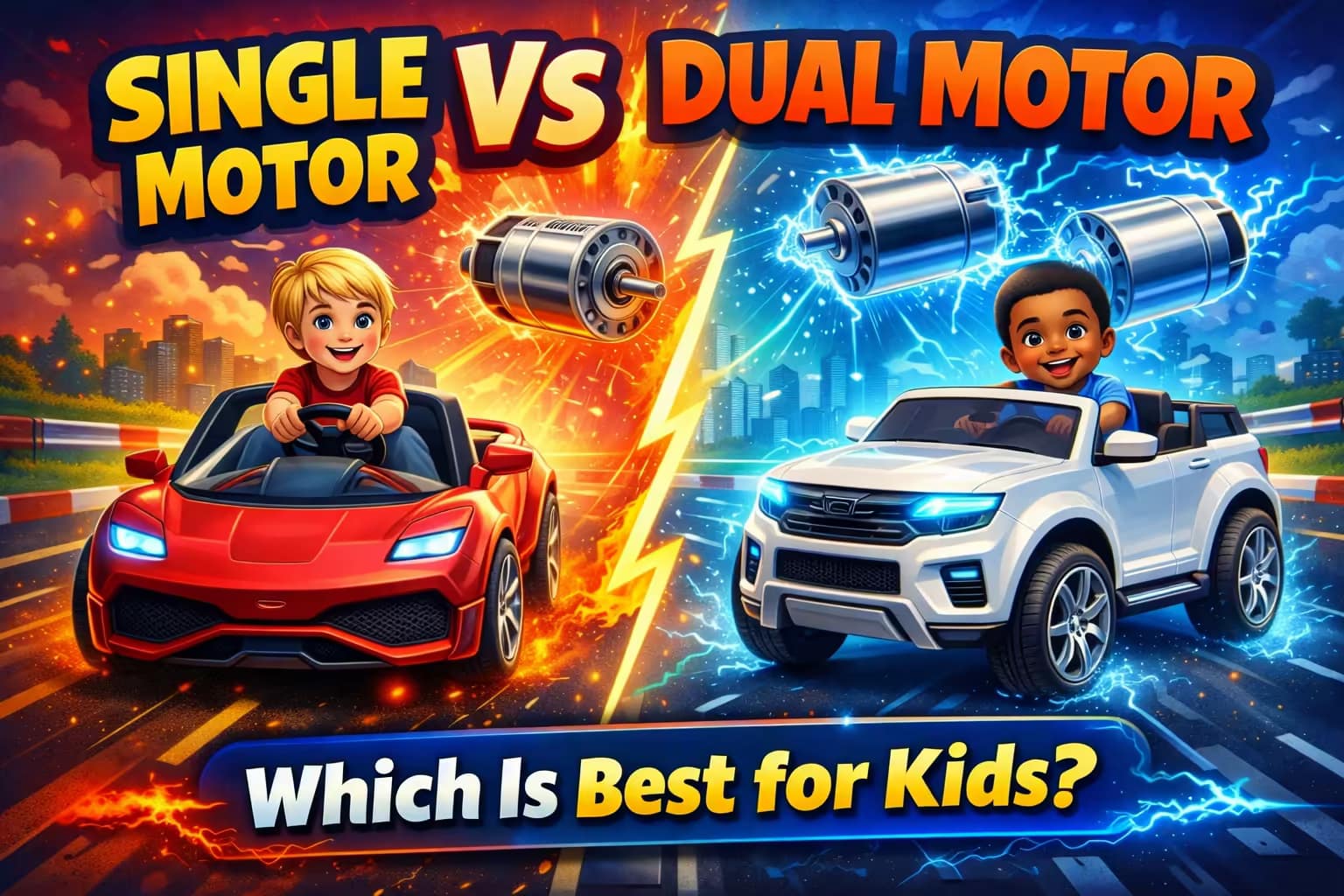
Choosing the right ride-on car for your child can feel confusing. One of the main decisions parents face is whether to buy a single motor or dual motor ride-on car. At first, these terms sound technical, but they have a big impact on how your child experiences their new toy. The right motor system influences everything from speed and power to battery life and even safety. This guide will break down the real differences between single and dual motor ride-ons, explain which is better in different situations, and help you make a confident, informed choice.
Many parents focus only on size, color, or brand. But the motor setup is often more important for performance and satisfaction. Understanding how these cars work—and the trade-offs—will save you money, prevent disappointment, and give your child the best possible ride.
Let’s look at what makes these two types of ride-on cars unique, and why your decision matters more than you might think.
What Are Single Motor Ride-on Cars?
A single motor ride-on car is powered by just one electric motor. This motor usually drives either the rear or the front wheels, rarely all four. The design is simple, cost-effective, and easy for young children to use. Most single motor cars are recommended for flat surfaces and light use.
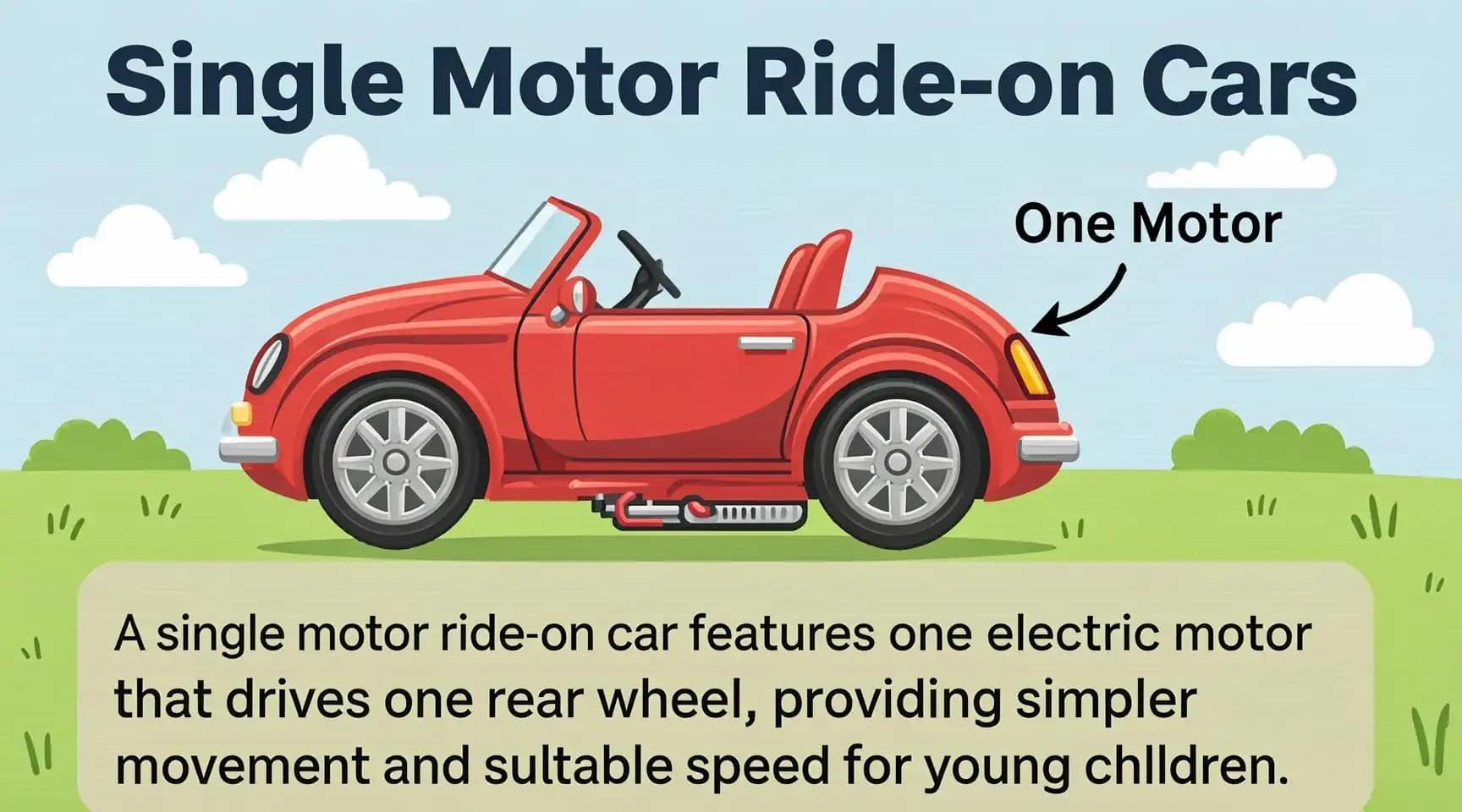
Single motor cars are often the first ride-on toys that parents consider. They are usually smaller, lighter, and less expensive than dual motor models. The single motor provides all the force to move the car, controlling both speed and direction.
Many models come with basic features like forward and reverse, simple steering, and sometimes basic lights and sounds.
A key point: single motor cars often struggle on uneven ground, grass, or small inclines. Because only one set of wheels is powered, there is less traction and climbing ability. Still, on smooth indoor floors or sidewalks, single motor ride-ons work well and are easy to control.
What Are Dual Motor Ride-on Cars?
A dual motor ride-on car uses two separate electric motors. Usually, each motor powers a different wheel or a pair of wheels (for example, one for the left side, one for the right). This setup is more powerful, offers better control, and can handle a wider range of surfaces.
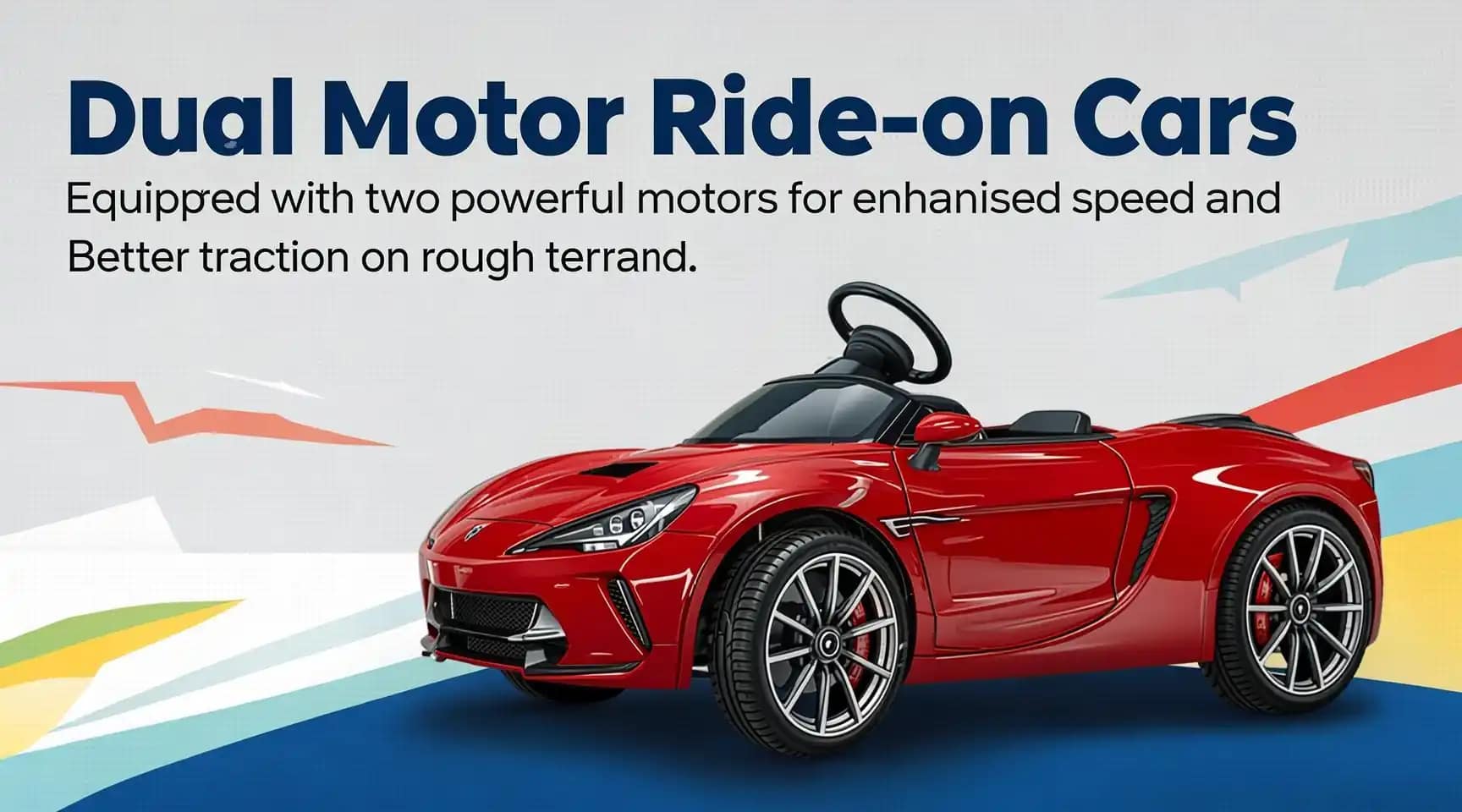
Dual motor cars are designed for children who want more adventure or need to drive on grass, gravel, or gentle slopes. The motors work together, delivering more torque and better handling, especially when turning or dealing with obstacles. This gives the child a smoother, less frustrating ride.
Many dual motor models also include extra features, such as advanced suspension, higher weight limits, and even parental remote controls. They are often larger and heavier, which means the car feels more stable and durable. However, all these benefits come with a higher price tag and slightly more complex maintenance.
Key Differences: Single Motor Vs Dual Motor
Understanding the technical and practical differences is the foundation for choosing the right car. Here is a direct comparison to help you see the main distinctions:
| Feature | Single Motor | Dual Motor |
|---|---|---|
| Number of Motors | 1 | 2 |
| Drive Wheels | Usually rear or front only | Both sides (left & right) or both rear wheels |
| Surface Capability | Flat, smooth only | Grass, gravel, inclines |
| Speed | Usually slower (2-3 mph) | Faster (up to 5 mph) |
| Power & Torque | Low | High |
| Battery Life | Longer (uses less power) | Shorter (uses more power) |
| Weight Limit | Lower (50-60 lbs) | Higher (up to 100 lbs+) |
| Price | Lower ($100-$200) | Higher ($200-$400+) |
| Maintenance | Simple | More involved |
Performance: Which Is Better For Different Terrains?
One of the most important differences is how these cars handle various surfaces. Children don’t just drive on perfect, flat floors. They want to explore the backyard, drive over grass, or even try a small hill. The motor setup makes a huge difference in these situations.
Flat Indoor Floors
Single motor cars work well indoors. The motor provides enough power for smooth surfaces, and the lower speed is safer for young children. Dual motor cars will also perform well, but the extra power is not needed indoors.
Outdoor Pavement Or Sidewalks
Both types can handle sidewalks and driveways, but dual motor cars offer a smoother, more stable ride, especially if there are small bumps or cracks. The added power makes stops and starts easier, reducing the chance of getting stuck.
Grass And Uneven Surfaces
This is where dual motors win clearly. On grass, sand, or gravel, single motor cars often slow down or stop completely. Dual motor cars use their two motors to deliver more torque and keep moving, even if one wheel loses grip.
For children who want to ride off the sidewalk, dual motor is a must.
Inclines And Small Hills
Single motors struggle with inclines, especially as the child gets heavier. The car may move very slowly or not at all. Dual motor cars can climb gentle slopes, although the steepness they can handle depends on the model and battery strength.
Real-world Example
A parent buys a single motor ride-on for their daughter. On the living room floor, it works perfectly. But in the backyard, the car barely moves over the grass, and their daughter loses interest. If they had chosen a dual motor, she could ride almost anywhere outside, making the toy much more fun and useful.
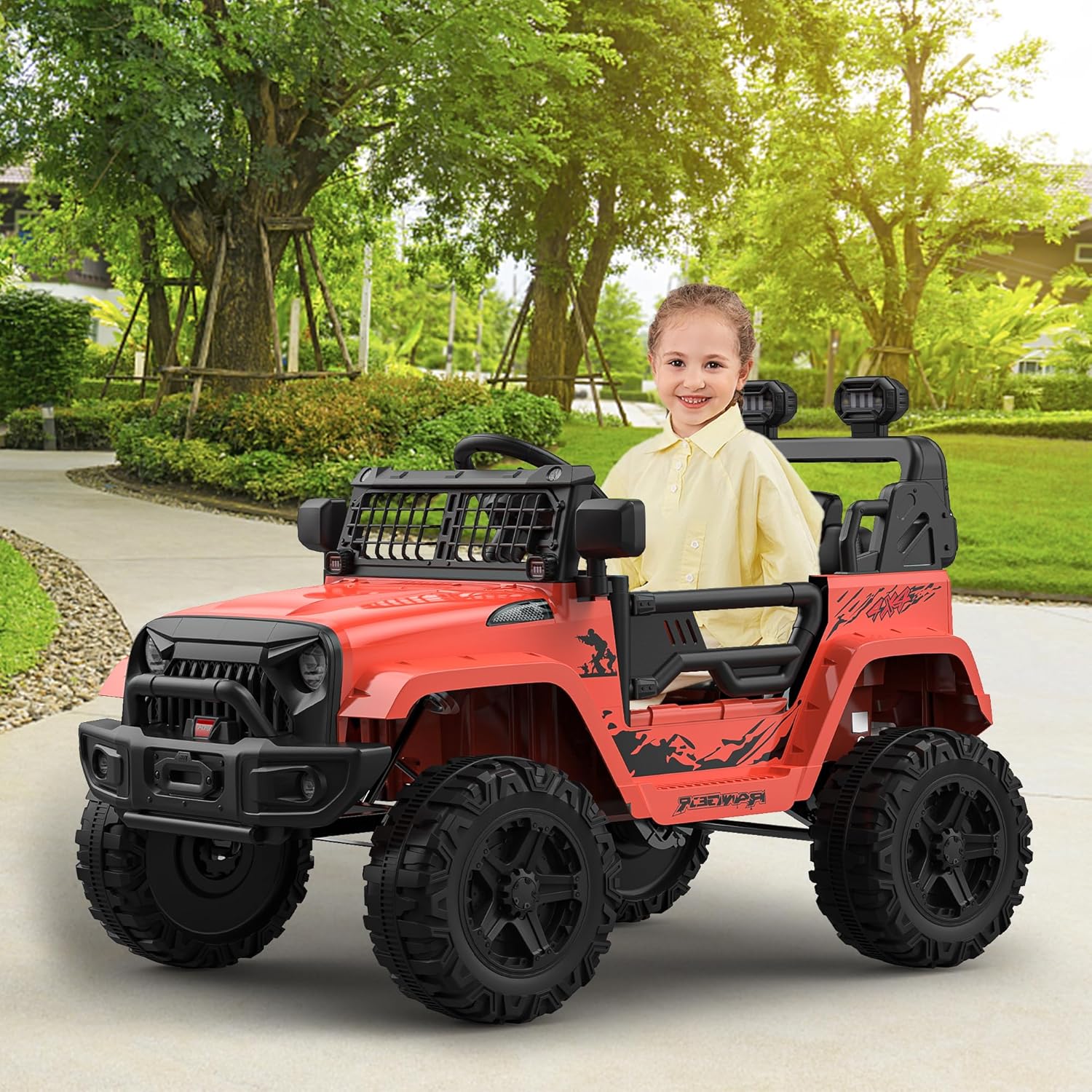
Speed And Power: What To Expect
Many parents want to know: “How fast do these cars go?” Speed is not everything, but it does affect how exciting the car feels.
Typical Speeds
- Single motor: Most reach 2 to 3 miles per hour (about 3 to 5 km/h). This is a brisk walking speed, safe for young children.
- Dual motor: Commonly reach 4 to 5 miles per hour (about 6 to 8 km/h). This feels much faster to a child, especially outdoors.
Acceleration
Dual motor cars accelerate more smoothly. When starting or stopping, the motors share the work, making the car less likely to jerk or stall. This is important for children who may not control the pedal perfectly.
Power And Torque
Torque is the turning force that helps a car start moving, especially when climbing or carrying weight. Single motor cars have limited torque, so they slow down easily when loaded or faced with obstacles. Dual motor cars have nearly double the torque, making them better for heavier children or challenging terrain.
Weight Carrying Capacity
Another important detail is how much weight the car can carry. See the comparison below:
| Car Type | Max Weight Limit |
|---|---|
| Single Motor | 50-60 lbs (22-27 kg) |
| Dual Motor | 90-130 lbs (41-59 kg) |
This means dual motor cars are better for older kids, or if siblings want to ride together.
Battery Life And Charging
Ride-on cars use rechargeable batteries, but the number of motors affects how long the car runs before needing a charge.
Single Motor Battery Life
Single motor cars use less power, so the battery lasts longer. Most can run for 1. 5 to 2 hours on a full charge, depending on the weight and surface.
Dual Motor Battery Life
Dual motor cars use more electricity. Expect 1 to 1. 5 hours of run time per charge. If the car is driven mostly on grass or slopes, the battery drains faster.
Charging Time
Both types usually need 8 to 12 hours to fully recharge. For longer play, look for models with removable batteries or consider buying a spare.
Battery Replacement
Batteries wear out over time, usually after 1-2 years. Dual motor models may need battery replacement sooner, especially if used heavily.
Non-obvious tip: Many parents forget to check the battery voltage before buying. Some ride-on cars have 6V, others 12V or 24V batteries. Higher voltage means more power and speed, but also faster battery drain. Always match the voltage with the car’s motor type for best results.
Safety Considerations
Safety is a priority for every parent. Both single and dual motor cars are designed for children, but there are important differences.
Speed Control
Single motor cars are slower, making them safer for toddlers or very young children. Dual motor cars may have higher speeds, but many also include parental remote controls, speed limiters, and seat belts for added safety.
Braking
Dual motor systems often have better electronic braking. When the child releases the pedal, both motors stop quickly, helping avoid bumps or collisions.
Stability
Dual motor cars are usually heavier and sit lower to the ground, making them less likely to tip over. This is especially important for outdoor play or when turning at higher speeds.
Remote Control
Many dual motor ride-ons come with a parental remote control. This allows adults to take over driving if needed, which is a major plus for children who are still learning.
Age Recommendations
- Single motor: Best for ages 2-4, or children under 60 lbs.
- Dual motor: Suitable for ages 3-8, or children up to 130 lbs.
Non-obvious safety insight: Always check the car’s wheels. Hard plastic wheels can slip on smooth floors, while rubberized wheels provide more grip and safer handling, especially on wet or uneven surfaces.
Price Comparison: Budget Vs Value
Ride-on cars are a big investment for many families. Let’s look at what you really get for your money.
Typical Price Ranges
- Single motor cars: $100 to $200. Often found in toy stores or online marketplaces. Usually includes basic features only.
- Dual motor cars: $200 to $400+. Higher-end models can cost $600 or more, especially with luxury features like leather seats, working headlights, or MP3 players.
What Are You Paying For?
With dual motor cars, the higher price covers:
- Better motors and electronics
- Stronger chassis and suspension
- Advanced features (remote control, music, lights)
- Higher weight limits and longer lifespan
Single motor cars are more basic but offer good value for younger children or indoor use.
Cost Over Time
Dual motor cars last longer as your child grows. Many parents who buy a single motor car upgrade to a dual motor model within a year or two as their child outgrows the first car. Considering this, dual motor cars can actually be more economical in the long run.
Durability And Maintenance
Parents want toys that last. The durability of ride-on cars depends not just on price, but also on the motor system.
Single Motor Durability
Single motor cars have fewer moving parts, so there is less to go wrong. However, the smaller motor can burn out if overloaded or used on rough surfaces. Plastic gears may wear quickly if the car is used outdoors often.
Dual Motor Durability
Dual motor cars use stronger parts, including metal gears and reinforced wheels. Each motor shares the workload, leading to less strain and longer life. However, more parts mean more things that could need fixing (like wiring or switches).
Maintenance Tips
- Charge batteries fully before first use.
- Avoid using ride-on cars in rain or wet conditions.
- Clean wheels and motor area regularly to prevent dirt buildup.
- Check for loose wires or connections every few months.
- Replace worn batteries with the correct voltage and size.
Practical insight: Never let children ride with a low battery, as weak power can damage the motors over time.
Features And Extras: What Matters?
Modern ride-on cars come with many features, but not all are equally important. Here’s what to look for:
Essential Features
- Seat belts: Must-have for safety
- Parental remote control: Essential for young or inexperienced drivers
- Working headlights: Useful for outdoor play in the evening
- Sturdy wheels: Rubber or EVA foam for best grip
Nice-to-have Extras
- Music and MP3 player: Fun but not essential
- Opening doors or trunk: Adds realism
- Suspension system: Smoother ride on bumpy surfaces
- Painted or detailed body: More attractive, but can raise price
Dual Motor-only Features
Some features are usually available only on dual motor models:
- Two-speed settings (high and low)
- Realistic horn and engine sounds
- More advanced dashboards with displays
- Rear-wheel drive or all-wheel drive (rare in single motor cars)
Non-obvious insight: Sometimes, too many electronic features (like flashing lights or built-in games) can drain the battery faster. Choose based on your child’s preferences and play habits.
Who Should Choose Single Motor Ride-on Cars?
Single motor cars are not “bad”—they have a perfect use case. These are best for:
- Very young children (ages 2-4)
- Indoor play, or outdoor use on smooth driveways
- Families on a tight budget
- First-time buyers who want a simple, safe toy
- Homes with small spaces (apartments, small patios)
If your child is light, cautious, and just starting to enjoy ride-on toys, a single motor car is usually enough.
Who Should Choose Dual Motor Ride-on Cars?
Dual motor cars are the better choice if:
- Your child is 3 years or older
- They want to ride outside, especially on grass or uneven ground
- You have siblings who may ride together
- You want the car to last for several years
- You value advanced features and more realistic driving
For adventurous children or those who get bored easily, dual motors give the extra excitement and freedom they want.
Common Mistakes Parents Make
Buying a ride-on car is exciting, but many parents make avoidable mistakes. Here are some common errors and how to avoid them:
- Ignoring the motor type: Many buyers focus on color or brand, not realizing the motor setup matters most for performance.
- Underestimating your child’s growth: Children grow fast. A car that’s “just right” now may be too small or weak in six months.
- Choosing based on indoor tests: Cars that work well indoors may fail outdoors, especially single motor types.
- Forgetting about battery voltage: Don’t mix and match batteries; always use the correct voltage and type.
- Not checking safety features: Some budget models skip seat belts or sturdy wheels to lower costs. Always check before buying.
- Buying based on price only: The cheapest car may not last or perform well, leading to extra costs later.
Real-world tip: Read customer reviews and look for videos of the car in action, not just photos. This helps you see how it handles real surfaces and children of different ages.
Environmental And Noise Considerations
Ride-on cars are electric, so they are much quieter and cleaner than gas-powered toys.
- Noise: Single motor cars are usually quieter, as there is less mechanical movement. Dual motors make a deeper hum but are not loud enough to disturb neighbors.
- Emissions: Both types are zero-emission, making them safe for indoor and outdoor play.
- Recycling: Batteries must be disposed of properly—never throw them in regular trash.
Environmental insight: Some brands use recyclable plastics or offer battery recycling programs. This can be a small but meaningful factor in your choice.
Comparing Popular Models
Here is a quick look at how popular models compare. These are examples to help you understand what is available.
| Model | Motor Type | Max Speed | Weight Limit | Features |
|---|---|---|---|---|
| Kidzone Racer | Single Motor | 2.5 mph | 55 lbs | Basic, seat belt, lights |
| Best Choice Jeep | Dual Motor | 3.7 mph | 65 lbs | Remote, music, lights, 2 speeds |
| Costzon Mercedes | Dual Motor | 4 mph | 88 lbs | Remote, MP3, headlights, suspension |
| Power Wheels Dune Racer | Dual Motor | 5 mph | 130 lbs | 2 seats, steel frame, high speed, off-road tires |
| Little Tikes Cozy Coupe | Single Motor | 2 mph | 50 lbs | Simple, lightweight, indoor use |
How To Decide: A Step-by-step Guide
Still not sure which to choose? Use this decision process:
- Where will your child drive most often?
- Indoors or smooth pavement: Single motor is fine.
- Grass, gravel, or inclines: Go for dual motor.
- How old and heavy is your child?
- Under 4 years or under 60 lbs: Single motor is suitable.
- Over 4 years or over 60 lbs: Dual motor lasts longer.
- How much do you want to spend?
- Budget under $200: Single motor is your main option.
- Budget $250+: Dual motor opens more choices.
- Do you need advanced features?
- Remote control, multiple speeds, better suspension: Only available on most dual motor models.
- Is battery life important?
- Long play sessions, few recharges: Single motor lasts longer per charge.
- Do you care about resale value?
- Dual motor cars often hold value better because of their durability and features.

The Verdict: Which Is Best?
There is no one-size-fits-all answer. Here’s a quick summary:
- Single motor ride-on cars are perfect for toddlers, indoor use, and families on a budget. They are simple, safe, and easy to maintain.
- Dual motor ride-on cars are the better choice for outdoor adventures, older or heavier children, and families who want a longer-lasting, more exciting toy. They cost more but offer much better performance and features.
If you can afford it and want the car to last, dual motor is usually the smart investment. But for a first-time toy or young child, single motor cars are safe and reliable.
For more technical details on electric motors in toys, you can read this Wikipedia article on electric motors.
Frequently Asked Questions
What Is The Main Benefit Of A Dual Motor Ride-on Car?
The main benefit is better performance on rough surfaces. Dual motors provide more power and torque, allowing the car to drive on grass, gravel, and small hills. They also usually support heavier children and advanced features like remote control and multiple speed settings.
Are Dual Motor Cars Always Faster Than Single Motor Cars?
Usually, yes. Dual motor cars are typically faster, reaching up to 5 mph, while single motor models usually max out at 2-3 mph. However, speed depends on battery voltage, weight, and the car’s electronics.
Can Two Children Ride Together In A Single Motor Car?
It is not recommended. Single motor cars have lower weight limits (50-60 lbs) and less power. Carrying two children can strain the motor and drain the battery quickly. Dual motor cars are better for shared rides.
How Long Do The Batteries Last In Each Type?
Single motor cars usually run for 1.5 to 2 hours per charge, while dual motor cars last about 1 to 1.5 hours. Play time depends on the weight of the child and the surface type. Batteries typically last 1-2 years before needing replacement.
Do All Dual Motor Cars Have Parental Remote Controls?
Not all, but most dual motor models include a parental remote, allowing adults to control the car for safety. Always check the product description to confirm if this feature is included.
—
Choosing between single and dual motor ride-on cars is about matching the car’s abilities with your child’s needs and play environment. Pay attention to where your child will drive, their age and weight, and what features matter most. If you keep these factors in mind, you’ll find a ride-on car that delivers hours of fun, adventure, and happy memories.
