
 Cart is empty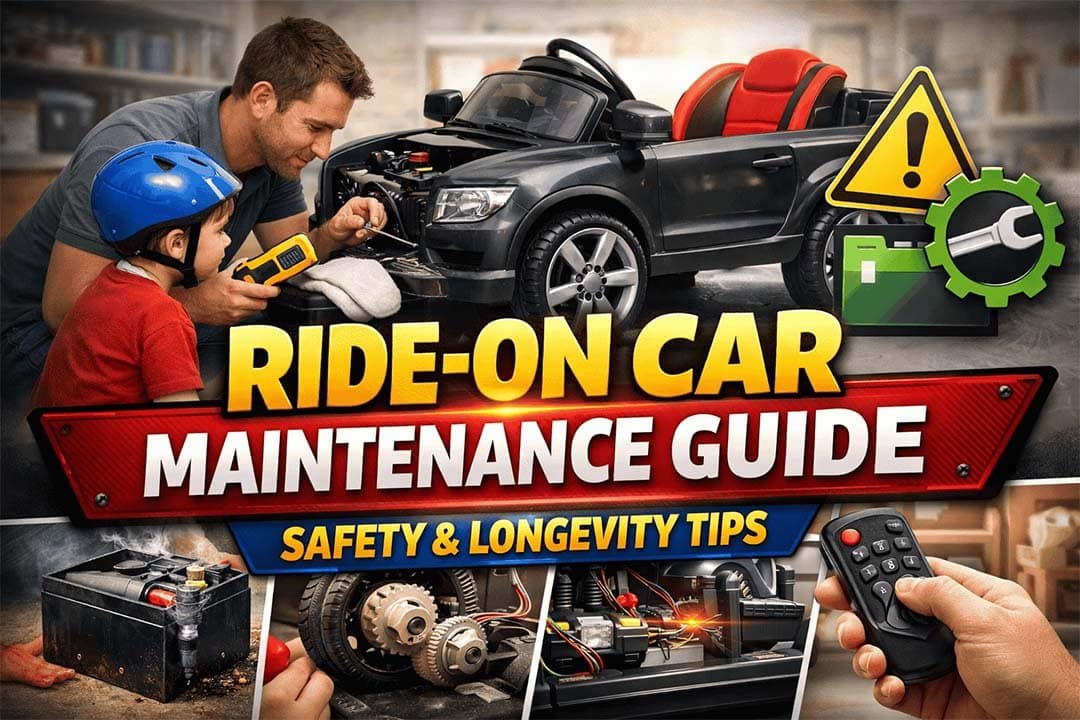
RIDE ON CAR MAINTENANCE GUIDE: THE ULTIMATE PARENTAL MANUAL FOR SAFETY AND LONGEVITY
INTRODUCTION
Owning a kids ride-on car is an exciting milestone for any child, providing hours of outdoor play and a sense of independence. However, these vehicles are complex machines that combine mechanical parts with sensitive electrical systems. Proper maintenance is not just about making the toy last longer; it is fundamentally about ensuring the safety of the child operating it. As an expert in ride-on vehicle maintenance, I have seen how a few minutes of preventative care can save parents hundreds of dollars in replacement parts and, more importantly, prevent accidents caused by mechanical failure.
Many parents encounter common frustrations such as the vehicle failing to charge, a sudden loss of speed, or steering malfunctions. Most of these issues are preventable through a consistent maintenance routine. This guide provides a comprehensive, technical, and safety-oriented approach to caring for electric ride-on vehicles. By following these steps, you can maximize the lifespan of the battery, maintain the integrity of the motor, and ensure that every ride is as safe as the first. This guide is designed to be evergreen, covering the core technologies found in 6V, 12V, and 24V models common in 2026.
BASIC RIDE-ON CAR COMPONENTS: A PARENT-FRIENDLY OVERVIEW
To maintain a vehicle effectively, it is essential to understand the primary components that make it function. Most modern ride-on cars share a similar internal architecture, regardless of their brand or specific aesthetic design.
- Battery: The heart of the vehicle. Most models use Sealed Lead-Acid (SLA) batteries, though newer high-end models are increasingly using Lithium-Iron Phosphate (LiFePO4) for longer life cycles and faster charging. The battery stores the chemical energy that the motor converts into motion.
- Motor: Usually located near the rear axles, these small electric motors are often paired with a gearbox. They convert battery power into physical movement. High-performance 24V models may have dual motors (one for each rear wheel) to provide better traction and power.
- Wheels and Tires: These are the primary contact points with the ground. They can be made of hard plastic, which is durable but loud, or EVA (Ethylene-vinyl acetate) foam, which provides a smoother, quieter ride and better grip.
- Wiring and Connectors: This is the “nervous system” of the car. It carries signals from the foot pedal, the steering wheel buttons, and the parental remote control to the main control board and the motors.
- Control Panel and Switches: This includes the power button, forward/reverse switch, speed toggles, and any auxiliary features like lights or sound systems. These are often the most exposed to the elements.
- Frame and Seat: The structural foundation of the car. It is designed to protect the child and house the internal components. The seat often conceals the battery compartment, acting as a secondary barrier between the child and the electrical system.
BATTERY MAINTENANCE BEST PRACTICES

The battery is the most frequent point of failure in ride-on cars. Because these batteries rely on chemical reactions to store power, they require specific care to prevent degradation. Neglecting the battery for even a single season can result in a permanent loss of capacity.
Proper Charging Habits
New vehicles usually require an initial charge of 18 to 24 hours before the first use. Even if the car turns on out of the box, the battery is likely at a storage voltage rather than a full charge. Failing to perform this initial deep charge can permanently reduce the battery’s maximum capacity. After the initial charge, standard charging cycles typically range from 8 to 12 hours. Never guess the charge time; use a timer if your charger does not have an automatic shut-off indicator.
How Often to Charge
You should charge the battery after every use, regardless of how short the ride was. Lead-acid batteries do not have a “memory effect” like older nickel-cadmium batteries; instead, they suffer when left in a discharged state. If the car is not being used, the battery should still be charged at least once every 30 days. This prevents the battery from falling below its critical voltage threshold, a point from which most standard chargers cannot recover it.
Avoiding Overcharging and Deep Discharge
Never leave a battery on the charger for more than 24 hours. Overcharging can lead to “gassing” or swelling of the battery casing, which is a significant fire hazard. Conversely, a deep discharge—where the battery is run until it is completely dead—can cause permanent cell damage known as sulfation. Stop the vehicle as soon as you notice a significant drop in speed or if the lights begin to dim.
Storage Tips for Long Periods of Non-Use
If the car will be stored for more than two weeks, disconnect the battery from the wiring harness. This prevents “parasitic drain” from components like the remote control receiver or clock. Store the battery in a cool, dry place. Avoid storing batteries directly on concrete floors, as the moisture and cold can accelerate self-discharge. A wooden shelf in a climate-controlled garage is ideal.
Signs a Battery Needs Replacement

- The car runs for less than 15 minutes after a full 12-hour charge.
- The battery casing appears swollen, bloated, or has rounded sides.
- You notice a “rotten egg” smell (sulfuric acid) during the charging process.
- The battery terminal connectors show heavy white or green powdery corrosion.
⚡ Master Your Battery Knowledge: Want to unlock the secrets of chemical safety, voltage charts, and advanced lifespan tips?
→ Read the Ultimate Battery Care GuideCLEANING AND EXTERIOR CARE

Keeping the vehicle clean is not just about aesthetics; it prevents grit and moisture from entering the electrical housing and mechanical joints, which can cause premature wear and rust.
Safe Cleaning Methods
Always turn the power off and disconnect the battery before cleaning. Use a soft, microfiber cloth dampened with plain water or a mild, non-abrasive dish soap solution. Wipe down the plastic bodywork and use a dry cloth to buff it dry immediately. For hard-to-reach areas like the steering column or around buttons, use a soft-bristled toothbrush or a can of compressed air.
What Cleaners to Avoid
- Pressure Washers: Never use a high-pressure hose or a pressure washer. The force can drive water past the motor seals and into the control board, causing instant short circuits and permanent damage.
- Harsh Chemicals: Avoid bleach, ammonia, or petroleum-based cleaners. These can react with the plastic, making it brittle and prone to cracking, and they can dissolve the adhesive on safety decals.
- Abrasive Pads: Steel wool or scouring pads will scratch the finish and ruin the look of the car.
Preventing Water Damage
If the vehicle is caught in the rain, move it to a dry area immediately. Do not turn it on. Open the battery compartment and use a low-heat hair dryer or a fan to circulate air around the wiring for several hours. Do not attempt to power the vehicle on until you are 100 percent certain all internal components are completely dry. Moisture trapped in a connector can cause corrosion that doesn’t show up until weeks later.
Protecting Decals and Paint
To keep the car looking new and prevent the plastic from becoming chalky, you can use a plastic-safe UV protectant spray. This prevents the sun from fading the colors and keeps the stickers from peeling at the edges. Apply the protectant to a cloth first, then wipe it onto the car to avoid overspray on the electrical switches.
WHEEL, TIRE, AND AXLE CARE

The wheels are subject to constant friction, impact, and weight. Regular inspection ensures the car drives straight and remains stable during maneuvers.
Checking Wheel Alignment
If the car pulls to one side, check the steering linkage under the front of the chassis. Ensure the metal rods are not bent and that the plastic connectors are snapped firmly into place. If the steering wheel is straight but the wheels are turned, you may need to adjust the nut on the steering column to realign the center point.
Tightening Loose Wheels
Vibrations from driving on uneven pavement, grass, or gravel can loosen the nuts or cotter pins holding the wheels in place. Once a month, remove the hubcaps and check that the central nut is snug. It should be tight enough that the wheel does not wobble side-to-side, but loose enough that the wheel can spin freely without resistance.
Identifying Worn Tires
Plastic wheels eventually develop flat spots or holes, especially if the child frequently performs “burnouts” on concrete. If the traction is gone, the motor will spin inside the wheel or the wheel will spin on the ground without moving the car. This puts unnecessary strain on the gearbox. If the tread is worn thin or you see cracks in the plastic, the wheels should be replaced to maintain safety and traction.
Indoor vs. Outdoor Wear Patterns
Cars used primarily on carpet will accumulate hair, carpet fibers, and pet fur around the axles. These can wrap around the motor shaft, creating friction that leads to overheating. Outdoor use leads to grit, sand, and mud accumulation. Both environments require regular axle cleaning. Use a pair of pliers or tweezers to remove any hair or debris caught between the wheel and the motor housing. Apply a single drop of silicone-based lubricant to the axle once cleaned to ensure smooth rotation.
MOTOR AND ELECTRICAL SYSTEM CARE

The motor and gearbox are the mechanical muscles of the ride-on car. While they are generally sealed units, they still require periodic attention to prevent burnout.
Keeping Motors Debris-Free
Check the motor vents for dust, grass clippings, or small pebbles. Use a can of compressed air to blow out any debris. A clogged motor cannot dissipate heat. Heat is the number one killer of small electric motors. If the motor runs too hot, the internal copper windings can melt, leading to “motor burnout,” which is a common cause of total vehicle failure.
Checking Wires and Connectors
The bouncing and jarring of normal play can loosen electrical plugs. Periodically check the “quick-connect” plastic plugs under the seat and behind the dashboard. If they feel loose, you can gently squeeze the metal female terminal with pliers to ensure a tighter fit. Look for frayed wires or insulation that has been rubbed away by moving parts like the steering column or the suspension.
Common Electrical Warning Signs
- Intermittent Power: The car starts and stops randomly. This usually indicates a loose wire or a failing thermal fuse that is tripping under low stress.
- Burning Smell: If you smell hot plastic or ozone, stop use immediately. This is a sign of an electrical short or an overloaded motor that is about to fail.
- Hot Wires: If the wires leading to the battery feel hot to the touch after a ride, there is too much resistance in the system, possibly from a failing battery or a motor that is struggling to turn.
When NOT to Attempt DIY Repairs
If the main circuit board (the brain of the car) is scorched, has visible black marks, or a “fried” smell, it must be replaced. Do not attempt to solder components on the control board unless you have professional electronics training. Bypassing safety limiters on a circuit board can lead to uncontrolled acceleration or fire.
🔧 Fix It Like a Pro: Stuck with a loose wire or a dead motor? Don’t guess—get the official wiring schematics and step-by-step repair flows.
→ Access Wiring Diagrams & Repair HacksSAFETY CHECKS PARENTS SHOULD DO REGULARLY

Safety is the priority. A mechanical failure while a child is driving can lead to accidents, especially if the vehicle is used near slopes or obstacles.
Seat Belt Inspection
Ensure the seat belt buckle clicks securely and the webbing is not frayed or torn. The mounting points where the belt attaches to the plastic frame should be checked for “stress whitening” or cracks in the plastic. If the seat belt is compromised, do not allow the child to drive until it is repaired.
Remote Control Testing
For vehicles with a parental remote, test the “Emergency Stop” or “P” button before every session. Ensure the remote has fresh batteries; a weak battery in the remote can lead to “runaway” situations where the car continues to move after the button is released. If the remote lags or loses connection, do not allow the child to drive in areas near traffic, pools, or hills.
Brake and Pedal Response
Most ride-on cars use “automatic braking,” meaning the car stops when the foot is lifted from the pedal. Test this on a flat surface. If the car coasts for more than a few inches after the pedal is released, the internal switch may be sticking or the motor brushes may be worn. A sticking switch can be dangerous if the child needs to stop suddenly.
Stability and Balance
Check the underside of the car for any structural cracks in the plastic chassis. Ensure the seat is bolted down tightly. A loose seat can shift the child’s center of gravity during a turn, making the vehicle prone to tipping. Also, check that the steering wheel does not have excessive “play” or looseness, which can make it difficult for the child to steer accurately.
SEASONAL MAINTENANCE TIPS

Environmental factors play a huge role in the longevity of electric toys. Different seasons require different care strategies.
Rainy Season Care
Avoid puddles at all costs. While many ride-on cars look like rugged off-roaders, they are rarely waterproof. If you live in a high-humidity area, apply a small amount of dielectric grease to the electrical connectors. This grease prevents moisture from reaching the metal contacts, which stops oxidation and rust from forming inside the plugs.
Winter Storage
Never leave a ride-on car outside in freezing temperatures. Extreme cold can freeze the liquid electrolyte inside a lead-acid battery, causing the casing to crack and leak acid. Always bring the battery indoors during winter. If the car itself must stay in an unheated garage, cover it with a breathable fabric sheet to prevent dust buildup and nesting by small rodents. Mice are known to chew on the colorful wiring of toy cars, which can create dangerous shorts.
Hot Weather Battery Protection
High heat accelerates chemical reactions inside the battery, leading to a shorter lifespan and a higher risk of swelling. Avoid charging the battery in a hot garage during the peak of summer. Charge it in a climate-controlled environment if possible. Never leave the car in direct sunlight for extended periods, as UV rays can degrade the integrity of the plastic seat and steering wheel, making them hot to the touch and brittle over time.
COMMON PROBLEMS AND TROUBLESHOOTING

Even with the best maintenance, issues can arise. Here is how to systematically troubleshoot the most common problems.
Ride-On Car Not Charging
First, check the wall outlet with another device to ensure it has power. Next, inspect the charger’s “brick” for a light indicator. If the light doesn’t change color (e.g., from green to red) when plugged into the car, the battery may be too discharged for the charger to recognize it, or the charging port on the car may have a loose wire. Use a multimeter to check if the charger is putting out the correct voltage.
Sudden Loss of Power
This is often caused by the thermal fuse. Most cars have a built-in fuse that “trips” if the motor gets too hot or the car is carrying too much weight. Wait 5 to 10 minutes for the fuse to reset automatically. If it happens repeatedly, the car may be overloaded, or you may be driving on a surface (like thick grass or steep hills) that the motor isn’t designed for.
One Wheel Not Working
If only one rear wheel spins, you likely have a “stripped” gearbox or a disconnected motor wire. Gearboxes contain plastic gears that can strip if the child shifts from forward to reverse while the car is still moving. To check, swap the left and right motor plugs on the control board; if the problem moves to the other side, the issue is the control board. If the same wheel stays dead, the issue is the motor or gearbox.
Remote Control Not Responding
Check for signal interference from other 2.4GHz devices like Wi-Fi routers or other RC toys. Try re-pairing the remote to the car following the manufacturer’s specific sequence, which usually involves holding a “code” or “match” button while turning the car on. Always replace the remote batteries before assuming the unit is broken.
Unusual Noises
A grinding noise usually indicates a gear issue within the gearbox. A high-pitched squeak usually means the axles or steering joints need a drop of plastic-safe lubricant. A clicking sound often means a gear has a broken tooth and will soon fail completely.
WHAT PARENTS SHOULD NEVER DO
To maintain the warranty, ensure safety, and prevent fires, avoid these common mistakes:
- Using Incompatible Chargers: Never use a charger from a different toy, even if the plug fits. The voltage and amperage must match the battery’s requirements exactly. A charger with too much amperage will boil the battery, while one with too little will never fully charge it.
- Modifying Voltage: Some parents attempt to “overvolt” a 12V car with a 24V battery to make it faster. This is extremely dangerous. It can lead to motor fires, melted wires, and can cause the car to reach speeds that the steering and braking systems were not designed to handle.
- Bypassing Safety Features: Never bypass a fuse or a speed-limiter. These are there to prevent electrical fires and protect the child from losing control.
- Allowing Water Exposure to Electronics: Do not drive through tall, wet grass or deep puddles. The moisture can wick up the wires and reach the control board through capillary action.
WHEN TO SEEK PROFESSIONAL REPAIR OR REPLACEMENT
While many tasks are DIY-friendly, some situations require professional intervention or total part replacement for safety reasons.
Battery Failure Indicators
If a battery shows any signs of leaking fluid, “bulging,” or if it feels excessively hot during a normal charge, do not attempt to use it again. Recycle it at a designated battery drop-off location and purchase an OEM-equivalent replacement. Never throw lead-acid batteries in the regular trash.
Motor Burnout Signs
If the motor produces smoke, a heavy metallic smell, or if it makes a loud “pop” sound followed by a loss of power, it has likely suffered an internal short. Motors are generally not repairable at this scale and must be replaced as a unit.
Structural Damage
If the plastic frame has a major crack near the axle mounts, the steering column, or the battery tray, the structural integrity is compromised. In these cases, the vehicle may no longer be safe for use, as it could collapse or lose a wheel while in motion.
FAQ – PEOPLE ALSO ASK
How often should a ride-on car battery be charged?
It should be charged after every use and at least once a month when not in use. This prevents the battery from falling into a deep discharge state which can permanently kill the cells and make the battery unable to accept a charge.
Can ride-on cars be left outside?
It is not recommended. Rain, sun, and temperature fluctuations can damage the electronics, fade the plastic, and ruin the battery. Always store the vehicle in a dry, covered area like a garage or a shed.
How long do ride-on car batteries last?
With proper care, a standard lead-acid battery lasts 1 to 3 years. Factors like charging frequency, storage temperature, and the weight of the child greatly impact this lifespan. Lithium batteries can last up to 5 years or more.
Is it safe to replace a ride-on car battery at home?
Yes, as long as you use a battery with the same voltage and connector type. Always ensure the car is off and the charger is disconnected before swapping batteries. Wear gloves to protect against any potential acid residue.
Why is my child’s ride-on car slowing down?
The most common reasons are a dying battery that can no longer hold a high voltage under load, a motor that is overheating, or debris like hair or grass wrapped around the axles creating friction.
How do I know if the charger is working?
Most chargers have an LED light. Typically, red means charging and green means the battery is full. If the light stays green but the car won’t move, the battery may be “sulfated” and unable to hold a charge despite the charger’s reading.
Can I upgrade the tires for better grip?
You can often add rubber traction bands to plastic wheels, but avoid making them too “grippy” on high-torque motors, as this can put excessive strain on the plastic gears in the gearbox, causing them to strip.
❄️ Don’t Let Winter Ruin the Fun!
Ensure your car survives storage and starts perfectly next season with our expert checklist.
Download Seasonal Storage GuideCONCLUSION
A kids ride-on car is more than just a toy; it is a mechanical vehicle that requires consistent oversight to remain safe and functional. By prioritizing battery health, keeping the electrical system dry, and performing regular safety checks on the wheels and steering, you ensure that the vehicle remains a safe and fun outlet for your child’s play.
Proactive maintenance is significantly easier and more cost-effective than reactive repairs. A few minutes spent checking connections and cleaning axles each month can add years to the life of the vehicle. Always refer to the manufacturer’s manual for model-specific requirements, and never compromise on safety for the sake of speed or convenience. With the right care, your child’s favorite car will be ready for the road for years to come.