 Cart is empty
Parents want the same three things, every time.
- Safe enough that you are not sweating the whole time.
- Durable enough that it does not die after three weekends.
- Fun enough that your kid actually uses it, instead of it becoming an expensive garage ornament.
Kids, meanwhile, want one thing. Real car vibes. Lights. Sounds. A steering wheel that feels legit. Maybe a “start” button. Definitely something that looks like it could beat your neighbor’s ride on the imaginary drag strip.
This guide is how I would buy in 2026. What’s actually improved lately, what to avoid, how to choose voltage and fit, and then a shortlist of parent approved picks by category.
And yeah. These are toys, not transportation. Supervision still matters. Where they drive matters even more.
Why 2026 Is a Great Time to Buy an Electric Ride-On Car (What’s Actually Improved)
A few years ago, a lot of ride on cars were basically the same product with a different sticker. Same jerky start. Same plastic wheels that spin on grass. Same remote that works… until it doesn’t.
2026 is better. Not perfect. But better.
The stuff that’s genuinely improved
Better parent remotes (2.4GHz).
Older remotes could be glitchy, short range, and sometimes they would “fight” the car. Newer 2.4GHz remotes are usually smoother, more reliable, and less likely to get interference from other toys nearby.
Smoother acceleration (soft start).
This is a huge one. The old school “on/off” lurch was the reason a lot of kids hated ride ons at first. Or parents did. Soft start makes it feel more like a real pedal. Less head snap. Less tipping risk.
Improved seat belts.
Still often basic lap belts, but more brands are using sturdier buckles and better anchor points. Some toddler focused models even do harness style belts now.
Stronger plastics and frames.
Not all, but the good models use thicker body panels, better mounting points, and less brittle plastic. You notice it during assembly. Doors line up better. Seats flex less.
Better tires, especially EVA.
EVA wheels are that slightly squishy foam rubber feel. Quieter. Better grip. Less sliding on smooth floors. Still not true “rubber tire” performance, but a real upgrade from hard plastic.
More realistic dashboards and lighting.
This is mostly about fun, but it can be functional too if it includes a battery indicator so you are not guessing when it will die mid lap.
Why cheap ride ons still disappoint
You can find super cheap listings everywhere. Sometimes they look identical in photos. In real life, the usual problems show up fast:
- weak batteries that fade after a few months
- jerky starts, no soft start
- bad traction, especially on grass
- flimsy wheels or wheel hubs that wobble
- remote range that is more like “stand 4 feet away and pray”
- questionable wiring and connectors during assembly
You do not need the most expensive model. But you also do not want the cheapest possible one unless you are okay with it being basically a short term toy.
Set expectations (this saves headaches)
These are not meant for roads. Not for steep hills. Not for hauling stuff. Not for riding unsupervised around a neighborhood.
A ride on car is a controlled, low speed toy. Best on safe, predictable surfaces. And the parent remote is not optional when kids are little, or when you are near obstacles.
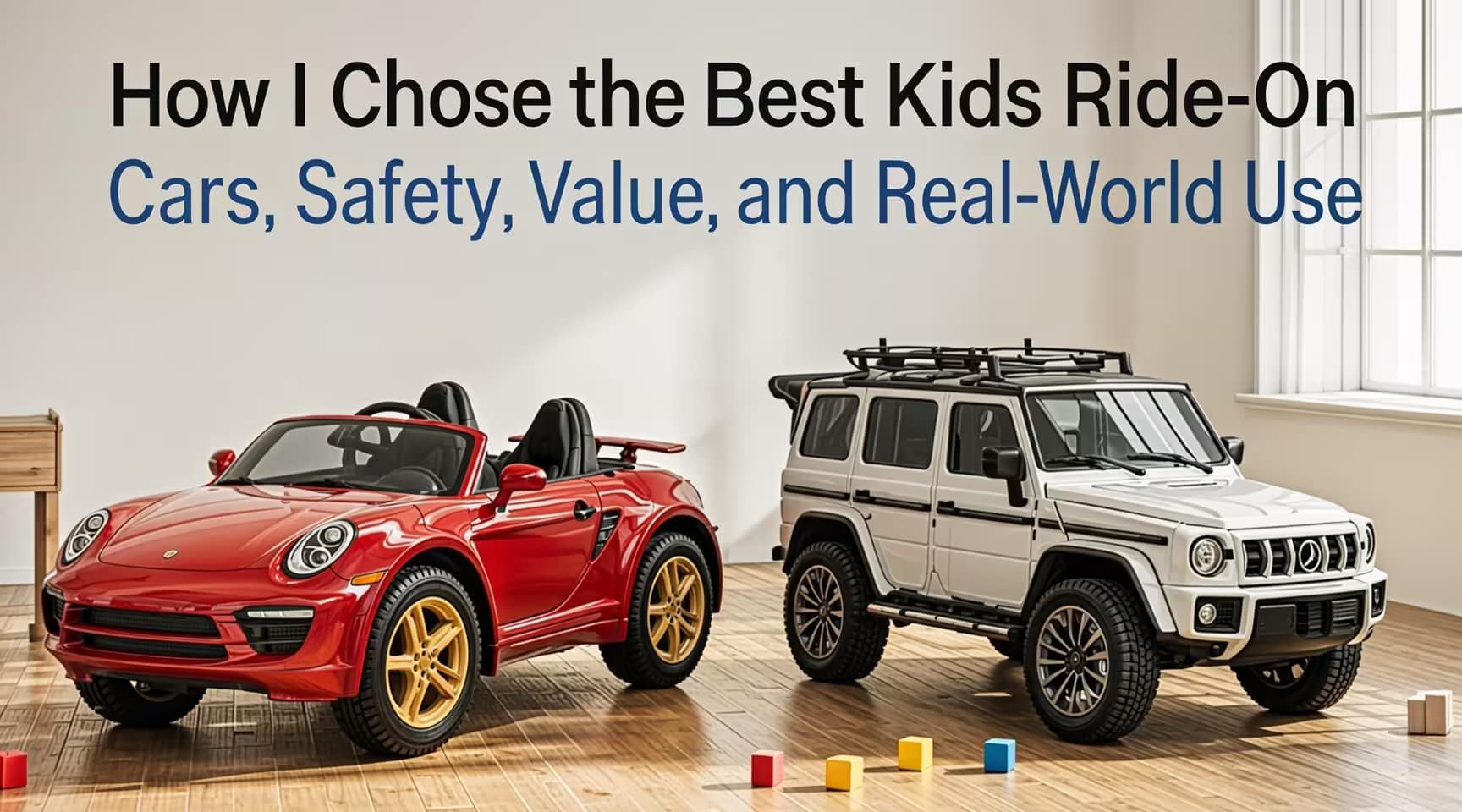
How I Chose the Best Kids Ride-On Cars (Safety, Value, and Real-World Use)
I’m not ranking these by “most popular” or “most expensive”. I’m grouping them by what works for real families.
Here is the parent checklist I used.
Non negotiables (stuff I would not compromise on)
- Reliable parent remote with override and stop
- Seat belt (at least a lap belt, ideally better for toddlers)
- Stable wheelbase (wide enough that turns do not feel tippy)
- Age appropriate speeds (and ideally a low speed mode)
- Charging safety (a decent charger, no sketchy heat issues, clear instructions)
Quality signals that usually matter
- Battery type: sealed lead acid is most common and fine, lithium is lighter but usually costs more
- Wiring neatness: if the connectors look flimsy during assembly, that’s a red flag
- Wheel material: EVA is a big plus
- Motor setup: dual motor tends to be better for grass and heavier kids
- Suspension: not required, but helpful on uneven pavement
Practical stuff parents feel later
- assembly time and how annoying it is
- whether replacement parts exist (battery, remote, wheels, charger)
- whether the brand has any real support
- realistic weight limits, not fantasy numbers
What “best” actually means (by age group)
- Toddlers (12 to 24 months): stability, very low speed, remote control that works every time
- Preschool (3 to 5): soft start, traction, low and high speed modes, enough power for mild outdoor use
- Kids (5 to 8): higher weight limit, torque, EVA wheels, possibly 24V if your space is safe for it
Before You Buy: Pick the Right Voltage (6V vs 12V vs 24V)
Voltage is not everything, but it’s the easiest filter.
In simple terms, voltage usually affects power potential. Torque. Speed ceiling. Ability to move on grass. Not always. Because motors, gearing, wheels, and weight matter too. But still, voltage is a good start.
6V ride ons
Best for: toddlers, first timers, indoor or flat driveway use
What it feels like: slow, gentle, pretty safe
Where it struggles: grass, slopes, heavier kids
12V ride ons
Best for: most families, ages around 3 to 6
What it feels like: enough power to be fun, still manageable
Why it’s the sweet spot: huge selection, better features, usually comes with a decent remote and soft start
24V ride ons
Best for: older kids, heavier riders, bigger yards, more space
What it feels like: noticeably faster, more torque
What you need: supervision and room. Also you need to be okay with your kid actually moving, quickly.
And again. Performance is not just voltage.
A 12V dual motor with EVA wheels can outperform a lazy 24V setup on certain terrain. Especially if the 24V has slick plastic wheels and poor gearing.
Age, Size & Safety Fit (The Part Most Parents Get Wrong)
The biggest mistake is buying based on the listing age range and ignoring fit.
You want to match:
- height and legroom (can they reach the pedal comfortably?)
- inseam and knee bend (are their knees jammed into the dash?)
- weight limit (and not just “it holds 66 lbs” in the title)
- confidence level (some kids love speed, some hate it)
Toddlers
Prioritize:
- low speed, wide base
- simple controls
- parent remote control with priority
- enclosed footwell so feet stay inside
Preschoolers
Look for:
- two speed modes
- better traction
- soft start
- suspension if you have bumpy pavement
Older kids
You want:
- higher weight limit
- better torque
- EVA wheels
- adjustable seat if available (rare, but nice)
Basic safety rules (still worth saying out loud)
- helmet if outdoors, especially on sidewalks or park paths
- closed toe shoes
- no streets, no traffic areas
- adult supervision. always for toddlers, and honestly for most kids
Remote Control vs Kid-Driven: What Parents Should Choose (and Why)
If your kid is under 3, you will use the remote. A lot. Even if you think you won’t.
Here’s why:
- Limited coordination: Toddlers are still developing motor skills. They often can’t steer or control speed reliably.
- Safety first: At this age, kids are curious but unpredictable. The remote lets you maintain full control to avoid accidents.
- Shared spaces: If you have pets, other children, or obstacles nearby, the remote ensures your child stays safe.
- Short attention spans: Toddlers may lose interest quickly or get distracted. You’ll need the remote to guide or stop the ride on a whim.
- Emergency situations: The ability to instantly stop or adjust speed with a parent-controlled remote is crucial in unexpected moments.
Even if your toddler insists on “driving,” the reality is that the remote will be your best tool for keeping playtime fun and secure.
When remote control is essential
- ages 1 to 3
- brand new riders
- shared spaces (other kids, pets, obstacles)
- near driveways, garages, patio steps, pools
What to look for in a parent remote
- 2.4GHz
- priority override (remote always wins)
- emergency stop
- smooth steering and speed control
- real range that lets you stand nearby, not hover over the car
Common remote issues
- pairing problems
- laggy steering
- interference in crowded areas
Better models reduce this with stronger pairing and more stable connections. It’s not magic. But it’s better than it used to be.
Kid driven pros
It’s independence. Motor skills. Confidence. Also it’s adorable when they take it seriously.
If kid mode is the goal, choose a model with:
- soft start
- speed limiter or low speed mode
- stable base
The 2026 Shortlist: Best Electric Ride-On Cars for Kids (By Category)
I’m grouping picks by who they are best for. Because “best ride on car” is meaningless unless you know your kid’s age, your terrain, and your storage situation.
Also quick note: manufacturers change runs. Listings get updated. Always confirm battery voltage, wheel type, weight limit, and whether EVA wheels are included before you buy.
How to use this list
Pick by:
- age and size
- terrain
- remote needs
- seat count
- budget
Then compare features.
Best Overall 12V Ride-On Car for Most Families (2026 Pick)
Pick: 12V Licensed SUV Style Ride-On with EVA Wheels + Soft Start + 2.4GHz Remote
Think “licensed SUV” in the category of Kid Trax, Peg Perego style builds, or the better 12V licensed lookalikes that specifically mention soft start and EVA wheels.

- ALL-TERRAIN EVA TIRES: The 2 seater ride on kids car with parental remote control features durable, wear-resistant EVA t…
- 20” REAL TWO SEATER: Designed with roomy dual seats, this all terrain drivable car for kids vehicle allows two kids to …
- REMOTE CONTROL: The included remote lets adults guide the two seater ride on car for kids ages 4-8, supporting safe supe…
I’m not pretending one single SKU stays consistent all year. What I’m recommending is the configuration that wins in real life.
Who it’s for: ages roughly 3 to 6, flat driveway to park paths, parents who want remote + kid mode
Why it wins: balanced speed, soft start, decent traction, stable frame, remote override you can trust
Feature checklist to prioritize on the product page
- 12V battery
- 2 speed modes (or low/high)
- soft start
- seat belt
- EVA wheels (or rubber traction strips at minimum)
- battery indicator
- suspension if included
- working lights, basic horn, maybe music input
What to watch Runtime is always less on:
- grass
- heavier riders
- cold weather
- constant full throttle driving (which is… most kids)
If the model supports a spare battery swap, that can be worth it. If it doesn’t, just plan for ride time in chunks.
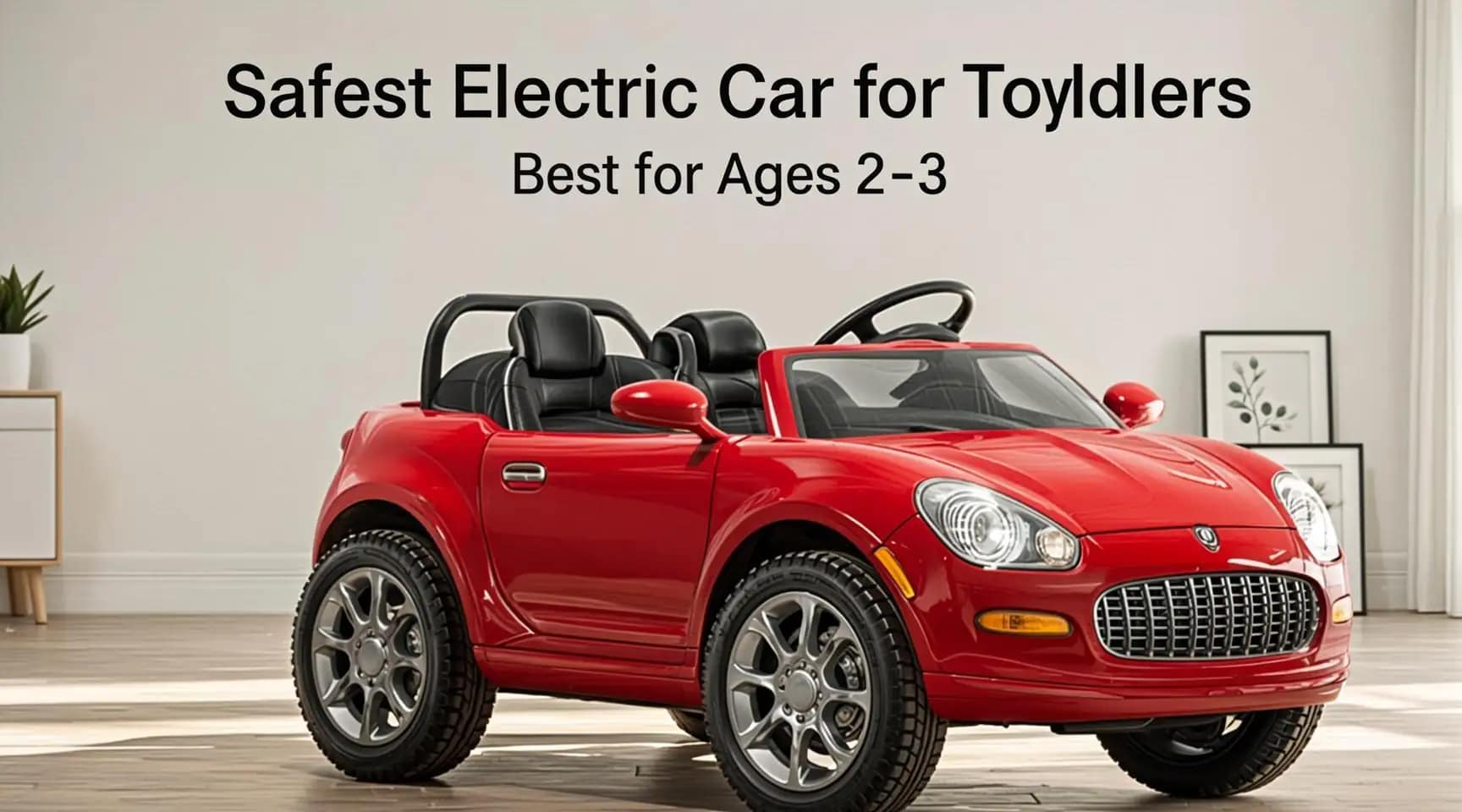
Safest Electric Car for Toddlers (Best for Ages 2–3)
Pick: 6V or “Slow 12V” Toddler Car with Wide Stance + Remote Priority Stop
For toddlers, slower is better. Like, boring to older kids. Perfect.

- Power&Long-Lasting Play: Powered by a 12V 4.5Ah rechargeable battery, this ride on offers up to 80 minutes of continuous…
- 8″ Big Wheel: 8″ tires glide smoothly over paved roads; Powerful high-speed motor ensures max speed of 1.5mph, a very sa…
- Anti-Rollover Safety: Engineered with stability features to prevent tipping on slopes or bumpy terrain, keeping little o…
Who it’s for: 2 to 3, early riders, parents driving most of the time
Must have safety features
- very low max speed
- soft start
- wide stable stance
- secure belt (some offer harness style)
- remote priority stop
Design wins
- simple steering wheel
- comfy seat with back support
- anti slip tires (EVA if possible)
- enclosed footwell
Setup tips
- start indoors or flat backyard
- avoid slopes, even gentle ones
- in shared spaces, use the remote full time
Best Budget Electric Ride-On Car (Still Worth Buying)
Budget is tricky here because the very cheapest models tend to be the ones that frustrate parents. So when I say budget, I mean “lowest price that is still a decent toy”.
Pick: Basic 12V Single-Seater with Remote Override + Seat Belt (Preferably Soft Start)

- REALISTIC DRIVING ACTION: Give your kids a realistic behind-the-wheel experience with controls sized for small hands and…
- PARENTAL REMOTE CONTROL: Join in the fun and take your child on a wild ride with full control over the truck’s driving f…
- INTERACTIVE FUNCTIONS: Four wheel drive with spring suspension pairs with working LED headlights for a realistic multi-t…
What you give up at lower prices
- often plastic wheels (louder, slippery)
- weaker motors, usually single motor
- louder gear noise
- smaller seat and lower weight limit
- less refined remote
Non negotiables even on budget
- remote override
- seat belt
- stable base
- decent charger with clear instructions
How to make budget work
- use on smooth pavement
- keep rider weight comfortably under the limit
- avoid thick grass
- treat the battery well (more on that later)
This is the category where battery care makes the biggest difference. A budget ride on with a healthy battery will feel “fine”. A budget ride on with a neglected battery feels broken.
Best Two-Seater Ride-On Car (Siblings / Playdates)
Two seaters are fun. Also heavier. Which means they need torque.
Pick: 12V or 24V Two-Seater UTV Style with Dual Motors + Wider Wheelbase + EVA Wheels
Who it’s for: two younger kids, or one older kid who wants space

- [4 X 200W Powerful Engines] Powered by a 24V battery and four 200W drive motors, this ride on toys can reach a top speed…
- [2-Seater with Remote Control] Unlike other narrow fake 2-seater ride on car, this spacious real 2-seater has a real sep…
- [Premium EVA Tires for Greater Safety] Compared with ordinary plastic tires, EVA tires offer stronger grip and shock abs…
What matters most
- actual seat space, not “two seater” marketing
- higher weight capacity
- dual motors
- wider wheelbase
- stronger belts (at least two lap belts)
Terrain notes Two seaters get sluggish on grass. Even good ones. If your main area is a lawn, prioritize:
- EVA wheels with tread
- higher torque setup (often 24V, or strong dual motor 12V)
- suspension
Parent tips Make rules early. Hands and feet inside. No standing. Remote in crowds.
Best Off-Road/Grass Performer (Backyard-Friendly Pick)
“Off road” is a big word in ride on land. Thick grass can stop even strong models if the kid is heavy and the battery is low.
Pick: 24V UTV with Dual Motors, EVA/Rubberized Tires, Suspension, Higher Clearance
Who it’s for: lawns, gravel paths, uneven pavement

- 24V POWERFUL 4X75W MOTORS: This 24V kids utv benefited from a premium 24V rechargeable battery and 4 pcs 75W motors. Max…
- 2-SEATER UTV W/ ELECTRIC DUMP BED: This 2 Seater ride on dump truck is equipped with 4 strong spring suspension wich all…
- REMOTE CONTROL & MANUAL MODES: This 24V electric car can easy to start by one button. Kids can drive the truck around fr…
Key specs
- dual motor
- deep tread tires (EVA with tread, or rubber strips)
- suspension
- higher ground clearance
Realistic expectations
- short dry grass: usually okay with the right model
- thick grass: still a struggle
- sand: basically a no
- hills: avoid. these are toys
Safety note Teach stopping distance. Uneven surfaces change how fast they stop, and how they turn.
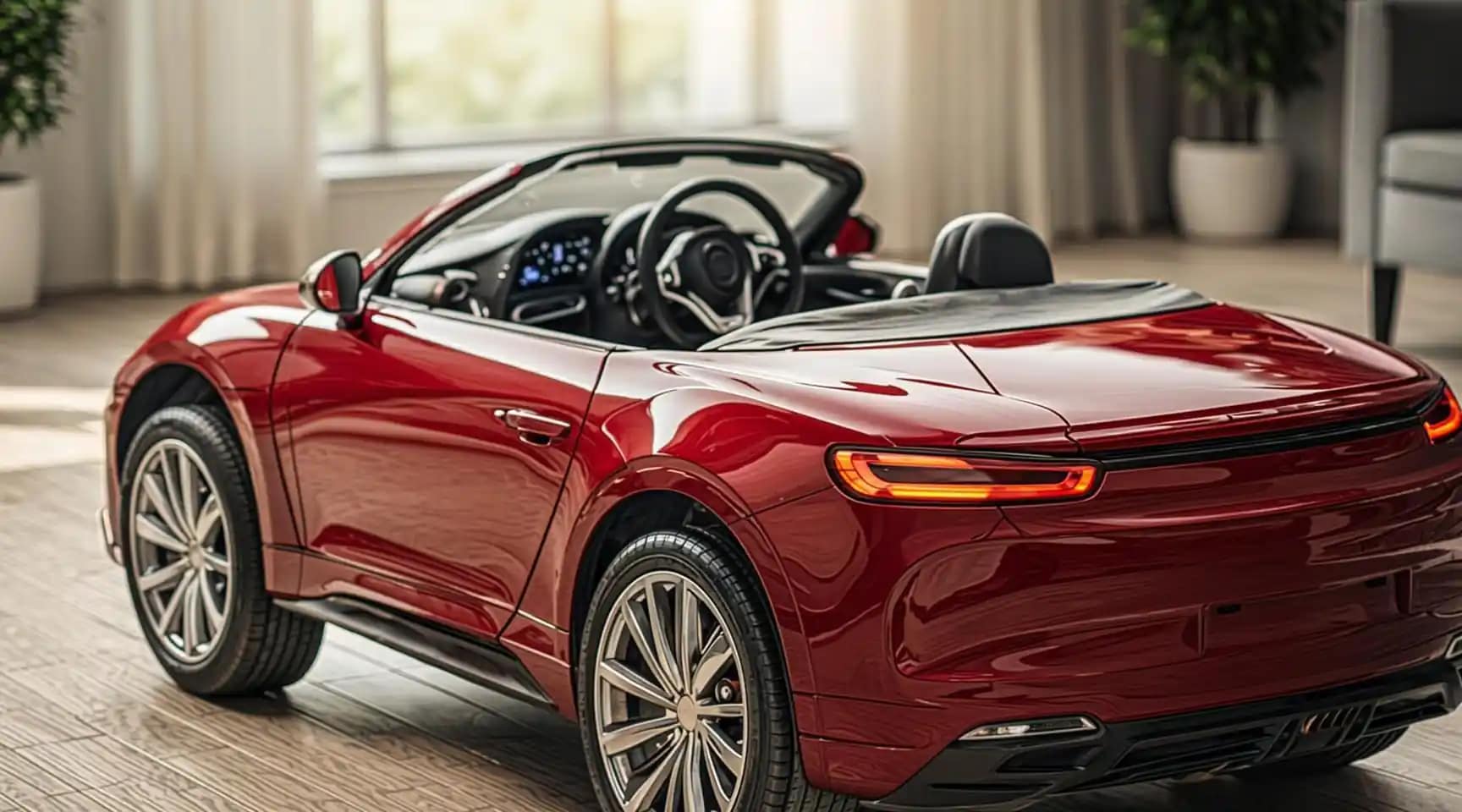
Best “Realistic Car” Experience (Lights, Sounds, Music, Dashboard)
Some kids are not impressed by torque. They want buttons. They want the whole vibe.
Pick: Licensed Style 12V Car with Working Headlights, Engine Start Sound, Bluetooth/USB, Battery Display
Who it’s for: kids who care about cool factor and pretend driving

- [Licensed Mercedes Benz G63] Featuring the iconic grille for which Mercedes Benz is known, this g wagon electric car for…
- [Premium Performance] Powered by two 35W high-performance motors and an upgraded 12V 7AH rechargeable battery (55% capac…
- [Parent Remote & Manual Mode] By using the parent remote control, parents can either stop the toddler car in an emergenc…
Features that actually add value
- working headlights (visible, not just tiny LEDs)
- horn that is not painfully loud
- engine start sound (fun, usually harmless)
- Bluetooth/USB for music
- battery level display
Features that are mostly gimmicks
- sirens that are too loud and annoying
- fragile door latches that break fast
Parent sanity tip Volume control is not optional. If the listing does not mention it, assume it will be loud.
Best Compact Pick for Apartments/Small Storage
If you live in an apartment, storage is the whole game. Some ride ons are huge, awkward, and heavy.
Pick: Compact 6V or Small 12V Coupe Style with Tight Turning Radius
Who it’s for: limited storage, smaller kids, indoor plus flat outdoor use

- Superior Power: Equipped with upgraded 75W high-performance motors, this ANPABO kids wiggle car delivers stronger power,…
- Spacious 2-Seater Design for Growth: Unlike small single-seat ride on cars, this upgraded swing car features a wide 17-i…
- Enhanced Safety & Anti-Rollover Design: This electric car for kids is equipped with a reliable rear-drive system that de…
What to prioritize
- lighter chassis
- simpler assembly
- carry handle if included
- smaller footprint and turning radius
Trade offs
- smaller seat
- less power
- shorter runtime
Storage tips Do not store it in extreme heat or cold if you can avoid it. Batteries hate that. If you have to store in a garage, bring the battery inside during winter if the manual allows easy access.
What to Look For in the Best 12V Ride-On Cars (2026 Buyer Checklist)
This is the skimmable part. If you are comparing product pages, these are the items that matter.
The 5 specs that matter most
- Weight limit (realistic, not just “up to 110 lbs” in the title)
- Battery and charger (12V battery, safe charger, clear charging instructions)
- Motor configuration (single vs dual motor)
- Wheel material (EVA preferred)
- Remote quality (2.4GHz, override, stop)
Soft start (why it matters)
Soft start means the car accelerates gradually instead of jerking forward. This is:
- more comfortable for kids
- less scary for new riders
- safer around obstacles
- less likely to tip during sudden starts or turns
Speed ranges and adjustability
Adjustable speeds matter because:
- siblings share
- kids grow fast
- different spaces need different speeds
A low speed mode near people is just… common sense. And it saves toes.
Certifications and compliance (careful here)
Look for reputable compliance statements on listings and manuals, but do not assume a logo means “invincible safety”. Build quality and supervision still matter.
Battery & Runtime: What Parents Can Expect (Not Marketing Numbers)
Marketing runtime is always best case. Flat surface. Light kid. Warm day. New battery. Low speed.
Real world typical ranges, very general:
- 6V: roughly 30 to 60 minutes
- 12V: roughly 45 to 90 minutes
- 24V: roughly 60 to 120 minutes
That can drop fast on grass or with a heavier rider. Or if your kid holds the pedal down like they are escaping the cops.
Battery types
Sealed lead acid (SLA):
Most common. Affordable. Heavy. Fine when cared for.
Lithium (less common):
Lighter. Often better performance consistency. Usually pricier. Still needs proper charging habits.
Charging best practices (boring, but this is how you keep it alive)
- do the first charge as the manual says, usually a full charge
- do not leave it on the charger for days unless the manual explicitly allows it
- avoid draining to zero repeatedly
- for off season storage, store partially charged and top up occasionally
Signs a battery is failing
- runtime suddenly drops
- car slows down quickly even on flat ground
- it struggles to start
- battery will not hold charge
Batteries are often replaceable and that can bring a “dead” ride on back to life, assuming the electronics are fine.
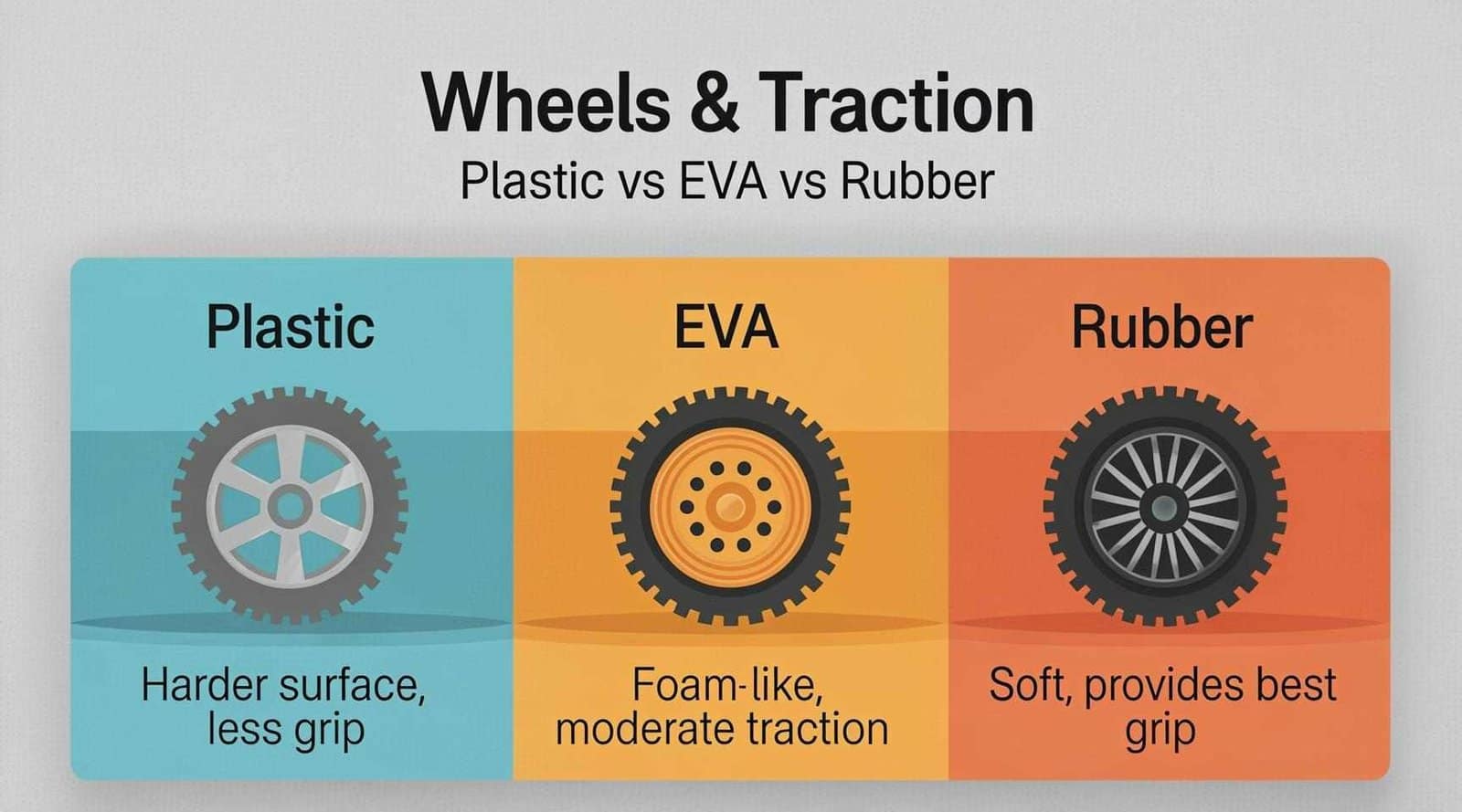
Wheels & Traction: Plastic vs EVA vs Rubber
Wheel type changes everything. Noise, grip, and how it handles turns.
Plastic wheels
- loud on pavement
- slippery on smooth floors
- poor grass performance
- common on budget models
EVA wheels
- quieter
- better grip
- more premium feel
- usually worth paying for
Rubber (rare)
- best traction
- sometimes only present as rubber strips or treads
If you are using it indoors sometimes, EVA wheels are also a sanity buy. Plastic wheels echo through a house.
Motors, Power & Terrain: Single vs Dual Motor
Dual motor benefits
- better acceleration
- better on grass
- better with heavier kids
- less “stalling” feeling
Single motor
- fine for flat pavement
- fine for lighter kids
- common in budget picks
Torque matters more than top speed for most families. You want the car to move smoothly and not get stuck, not to be fast.
Watch outs
- overheating if you push it up hills
- stalling in thick grass
- burning through battery when the wheels spin without moving
If it’s struggling, stop and move it. Do not keep mashing the pedal while it’s stuck. That’s how you cook a motor.
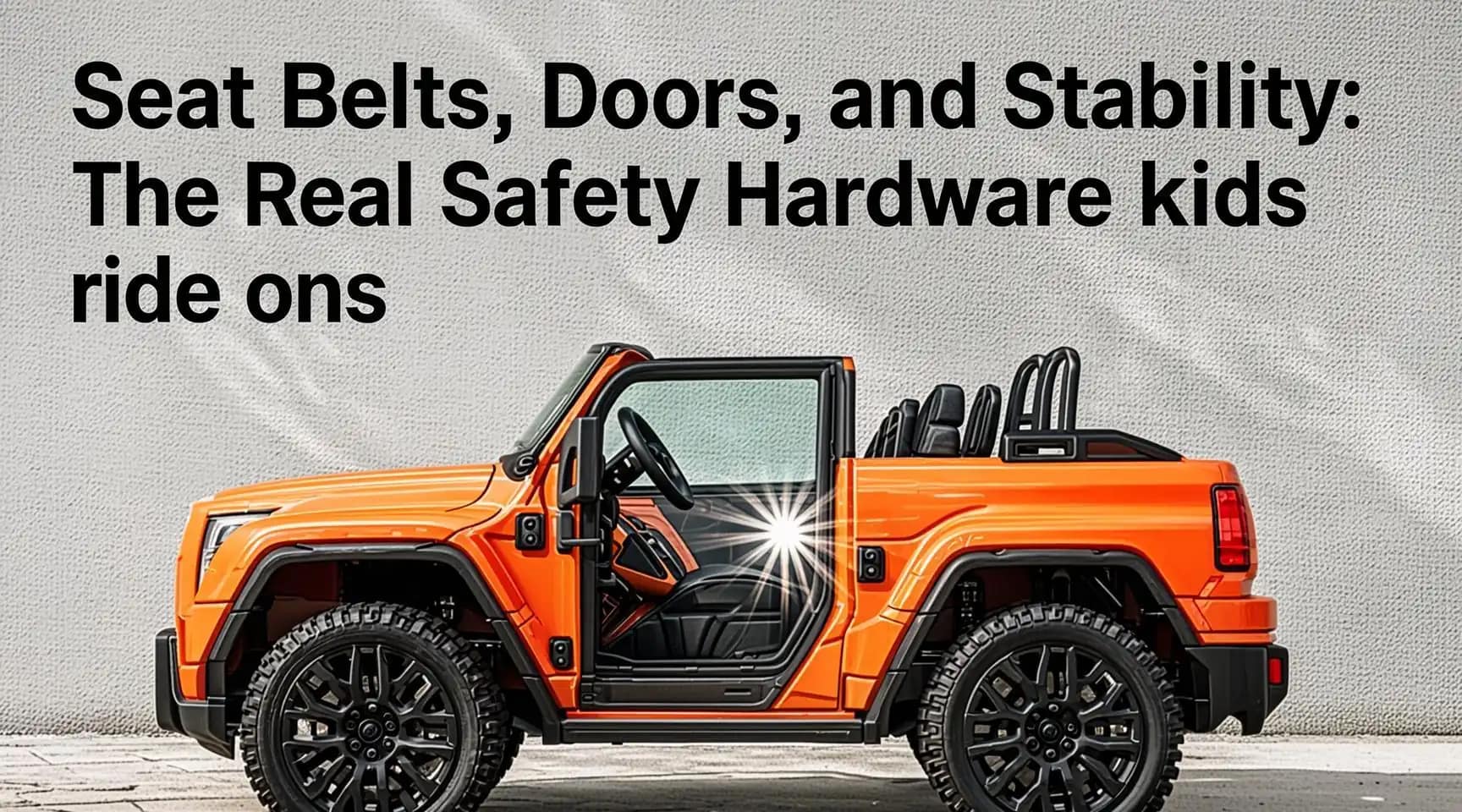
Seat Belts, Doors, and Stability: The Real Safety Hardware
Seat belts
Most common is a simple lap belt. That’s normal. For toddlers, a more secure harness style is a nice upgrade, but not common.
Check that:
- buckle works easily but does not pop open
- anchor points feel solid
- belt is not just decorative webbing
Doors
Doors are fun. Also breakable.
Check latches for:
- sturdiness
- pinch risk
- whether the door is mostly cosmetic
Stability
Look for:
- wider wheelbase
- low center of gravity
- speed limiter or low speed mode
- soft start
And for toddlers, remote emergency stop is the real safety feature. It matters more than fancy lights.
Top Mistakes to Avoid When Buying Electric Ride-On Toys
These are the ones I see again and again.
- Buying by age alone. Height and weight matter more.
- Ignoring terrain. Grass needs torque and better wheels.
- Assuming two seater means two kids fit comfortably. Some are cramped.
- Not checking replacement parts. Batteries and remotes are the first things you might need.
- Choosing higher voltage than your space supports. A fast car in a tiny driveway is just stress.
Setup, Maintenance & Battery Care (So It Lasts More Than One Season)
Most ride ons fail early because of loose assembly, bad storage, or battery neglect.
Assembly tips
- tighten steering and wheel hardware properly
- check wiring connectors and make sure they click in
- test remote pairing before you fully button it up
- charge fully before the first real ride
Pre ride checklist (quick)
- seat belt works
- wheels are secure
- speed is set to low for new riders
- area is clear of obstacles, pets, and little siblings wandering around
Cleaning
Wipe down. Do not hose it down. Water and electronics do not mix, and these are not sealed like real vehicles.
Battery care
- charge after use, but do not leave on charger forever unless allowed
- store indoors if possible
- avoid freezing temps and extreme heat
- off season: store partially charged, top up occasionally
Replacing parts
Often easy DIY:
- battery
- charger
- remote (depends on model)
- wheels (sometimes)
If electronics are failing under warranty, use warranty. Do not open everything up and void it unless you are sure you are past return windows.
Where Kids Should (and Shouldn’t) Drive These Cars
Best surfaces
- flat pavement
- smooth concrete
- short dry grass (with the right model)
Avoid
- streets, anywhere with traffic
- steep driveways
- wet surfaces
- puddles, pools, sprinklers
- loose gravel that can jam wheels (model dependent)
Driving rules that actually work
- set boundaries with cones or chalk
- low speed mode near people
- remote control in crowded areas
- no driving behind cars, ever. visibility is the issue.
Supervision by age
- toddlers: constant, hands on supervision
- preschool: close supervision, remote nearby
- older kids: still supervised outdoors, especially near driveways
Quick Comparison: How to Choose the Right Pick in 60 Seconds
Here’s the fast decision flow.
- Child age and weight
- Terrain (pavement vs grass)
- Remote needed? (under 3, yes)
- Seat count (one kid vs siblings)
- Budget
Mini matrix (simple)
Toddler safe: 6V or slow 12V, wide stance, remote priority stop
Best all around: 12V, soft start, EVA wheels, 2 speed modes
Two seater: 12V strong dual motor or 24V, higher weight limit, wide base
Grass friendly: dual motor, EVA tread, suspension, higher clearance
Budget: 12V with remote override, accept plastic wheels and lower performance
Before you click buy, double check:
- weight limit
- wheel type
- battery voltage
- remote override and stop
- warranty and replacement parts availability
Wrap-Up: The Parent-Approved Way to Buy a Ride-On Car in 2026
If you want the simplest summary, it’s this.
- Safest toddler pick: a stable 6V or slow 12V with remote priority stop and soft start
- Best overall for most families: a 12V ride on with EVA wheels, soft start, and a reliable 2.4GHz remote
- Best for grass: dual motor, better tires, ideally 24V, with realistic expectations
- Best two seater: higher weight capacity, dual motors, wide base, and decent belts
- Best budget: keep it on smooth pavement, protect the battery, do not expect miracles on lawns
Buy the model that fits your space and your child’s size today, not the one they will “grow into” in two years. That sounds practical. It is also how you avoid the classic situation where the car is too fast, too big, or too weak for where you actually live.
Safety features plus terrain match plus battery care. That combo is what makes these things feel worth it. Kids get the real car vibes. You get fewer headaches.
FAQs (Frequently Asked Questions)
What are the key features parents look for in electric ride-on cars?
Parents typically want electric ride-on cars to be safe enough so they don’t worry constantly, durable enough to last beyond a few weekends, and fun enough that their kids actually use them instead of becoming garage ornaments.
How have electric ride-on cars improved by 2026 compared to earlier models?
By 2026, ride-on cars have seen genuine improvements such as better 2.4GHz parent remotes with smoother control, soft start acceleration reducing jerky movements, improved seat belts including harness styles for toddlers, stronger plastics and frames for durability, EVA foam tires for better grip and quieter rides, and more realistic dashboards with functional lighting like battery indicators.
Why should I avoid cheap electric ride-on cars?
Cheap ride-ons often have weak batteries that fade quickly, jerky starts without soft acceleration, poor traction especially on grass, flimsy wheels or wobbling hubs, short-range or glitchy remotes, and questionable wiring which can affect safety and longevity. They tend to be short-term toys rather than lasting investments.
What safety features are non-negotiable when choosing a kids’ ride-on car?
Essential safety features include a reliable parent remote with override and stop functions, at least a lap seat belt (preferably better for toddlers), a stable wheelbase wide enough to prevent tipping during turns, age-appropriate speed settings with low-speed modes, and safe charging equipment with clear instructions.
How do I choose the right voltage for an electric ride-on car?
Voltage generally affects power potential such as torque and top speed. Lower voltages like 6V suit toddlers with very low speeds; 12V is common for preschoolers offering moderate power; 24V models provide higher torque and speed suitable for older kids or mild outdoor use. However, motor quality, gearing, wheels, and weight also impact performance.
What practical considerations should parents keep in mind after purchasing a ride-on car?
Parents should consider assembly time and difficulty, availability of replacement parts like batteries or remotes, brand support quality, realistic weight limits rather than inflated claims, and ensuring that the toy is used under supervision on safe surfaces as these are not meant for roads or steep hills.
Add a Comment