 Cart is empty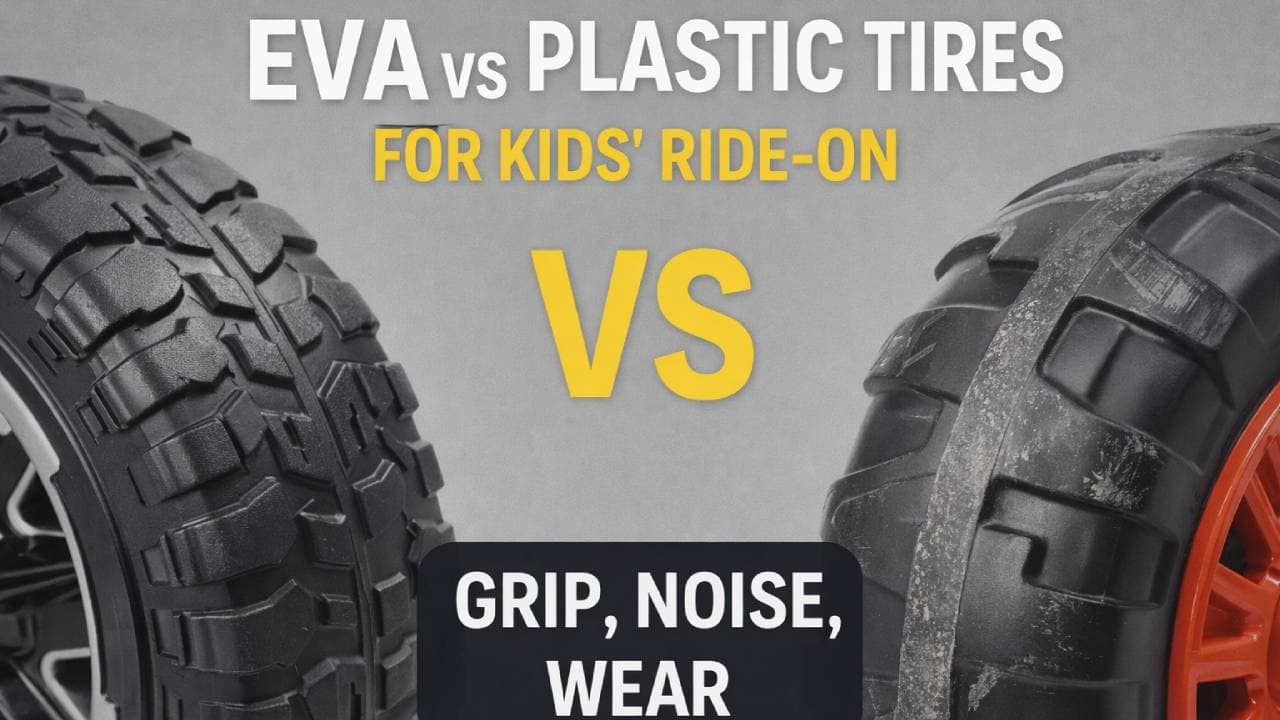
Picture your kid tearing down the sidewalk, giggling, and waving. The ride-on hums, takes a corner, and keeps grip on the path. Then it hits the patio, and the sound changes. That shift comes down to the tires.
This guide compares EVA and plastic tires for kids ride-ons. We look at grip, noise, and wear so you can buy with confidence. It matters for fun, safety, and long-term value. The right choice means smoother rides, fewer slips, and less racket.
EVA tires feel softer, help with traction, and cut road noise. They handle mixed surfaces and keep little drivers comfortable. Plastic tires are tough and budget friendly, and they roll fast on smooth floors. They can last, but they can also clatter and slide on certain ground.
You’ll see how each tire type behaves on concrete, grass, and tile. We’ll cover how long they last, how loud they sound, and how they affect battery life and speed. We’ll also touch on ride quality and how much maintenance they need. Expect clear answers and real-world tips.
Want a peek at a solid setup with EVA tires? Check out this model with wear-resistant EVA tires for outdoor play. It shows how softer rubber-like wheels can boost grip and comfort.
Ready to find the best fit for your child’s play zone, budget, and riding style? Keep reading for smart buying tips, quick checks you can do in-store, and a simple chart to match tires to your terrain. Your goal is simple, happy rides, less noise, and wheels that last. Let’s get you there fast.
What Makes EVA Tires a Smart Choice for Kids’ Ride-On Toys
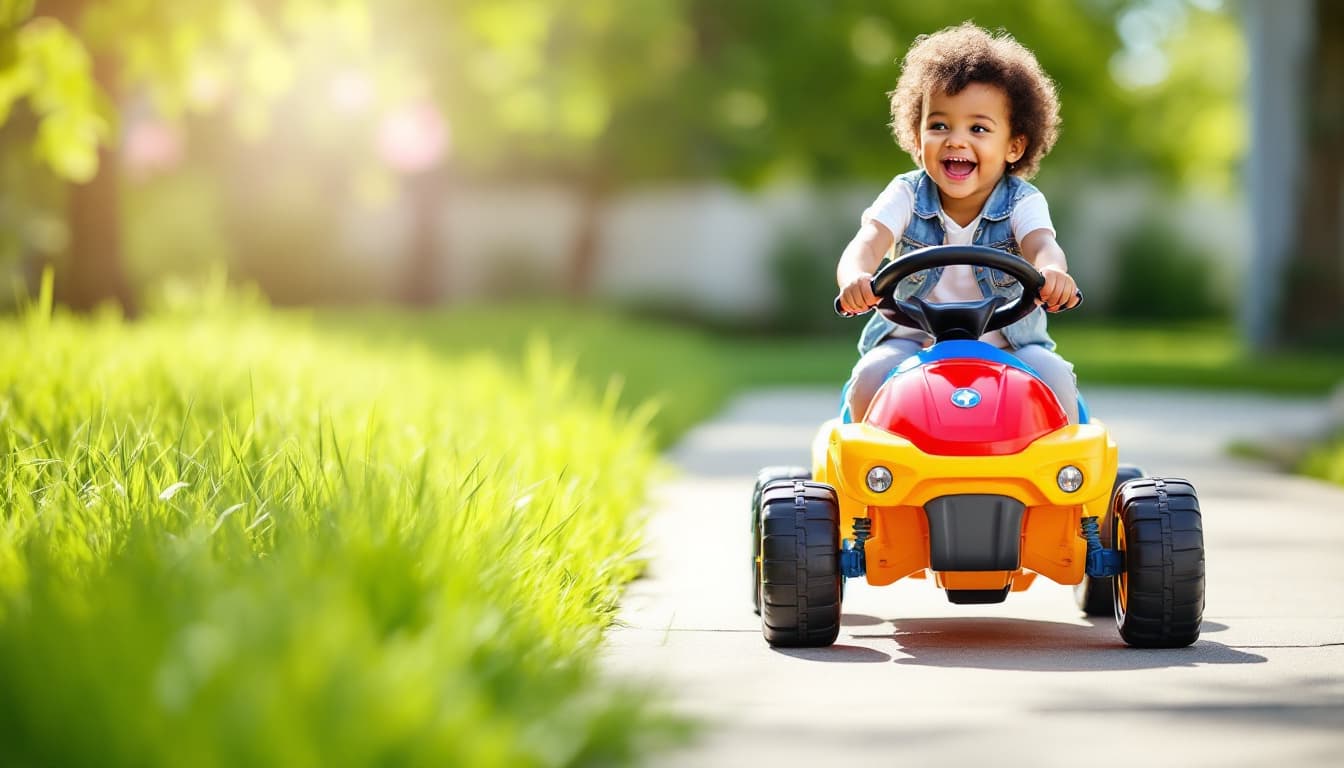 Image created with AI. A child riding a backyard ride-on with EVA tires that grip well on pavement.
EVA stands for ethylene-vinyl acetate, a foam-like material that feels like rubber but stays light. On a ride-on, that means smooth rolling on pavement, quiet operation on tile, and easy control for small hands. The tires do not need air, so there are no flats and no pump to store. Parents can push or carry the toy with less strain because the wheels keep the weight down.
On a typical day, this translates to more laps on the driveway, fewer slips on indoor floors, and a calmer noise level in the house. EVA grips better than hard plastic on most smooth surfaces, which supports safer starts and stops. That added traction and shock absorption help kids ride longer with less chatter and fewer jolts. For indoor play and light outdoor use, EVA often hits the sweet spot for comfort and value. Sources also point to quieter running and improved traction compared to hard plastic, a win for both safety and your ears. See overviews on quiet, grippy EVA wheels in this guide to best wheels for kids’ ride-on toys and why hard plastic can lose traction on uneven or slippery surfaces.
Key Benefits of EVA for Everyday Fun and Safety
EVA tires bring practical perks you can notice on day one:
- Lightweight control: Kids steer and push off with less effort. Parents can carry the ride-on up steps without a battle.
- Softer feel: The foam core absorbs small bumps, which takes the sting out of seams and patio cracks.
- Better grip than plastic: Starts are steadier, stops are shorter, and turning on smooth floors feels secure.
- Quiet rides: EVA dampens vibration, so you hear a soft hum rather than clatter on tile or hardwood.
- No air, no flats: Maintenance stays simple. No tubes, no leaks, and no weekly checks.
- Smooth-surface longevity: On tile, hardwood, and pavement, EVA wears evenly and avoids cracking, which reduces replacement costs over time.

- 2PCS 21.5CM/8.5in Rubber Tire for Ride On Car Aperture 1.2CM/0.47in Black PU Soft Solid Tire for DIY self-made Power Whe…
- High-Quality Bearings: We Have Installed 2 High-Quality Bearings On Each Tire To Reduce Friction and Noise, And We Have …
- High-Quality Materials: The Outer Layer is Made of High-Grade Solid Rubber and Plastic Materials. It is a Professional D…

- 2-Pack 10″x3.5″ Rubber Pneumatic Tire for Power Wheel Ride On Car, 10in Replacement Wheels with Bearings, Compatible wit…
- Smooth & Quiet Ride – Each wheel is equipped with a high-quality bearing, reducing friction and noise while increasing w…
- Perfect Size Fit – Each replacement wheel measures 10″ (26cm) in diameter, 3.5″ (9cm) in width, and 0.47″ (1.2cm) bore d…

- Very important: The Tire Size is Complex, We have Filmed a Video Measuring the Tire. Please Watch the Video and Follow t…
- Size: diameter 37CM/14.5in, aperture 1.6CM/0.63″, 370×130.The black tread has metal bearings, and the size is very compl…
- Material and Advantages: Made of EVA soft Material, Not Plastic or Rubber.Alligator Tread Pattern, Equipped with Soft EV…
Picture a toddler rolling across the kitchen, transitioning to the driveway, then looping back into the hallway. The ride stays stable, the noise stays low, and confidence grows with each lap. That consistency makes EVA a smart pick for daily play.
Why Plastic Tires Still Hold Up in Budget Ride-On Options
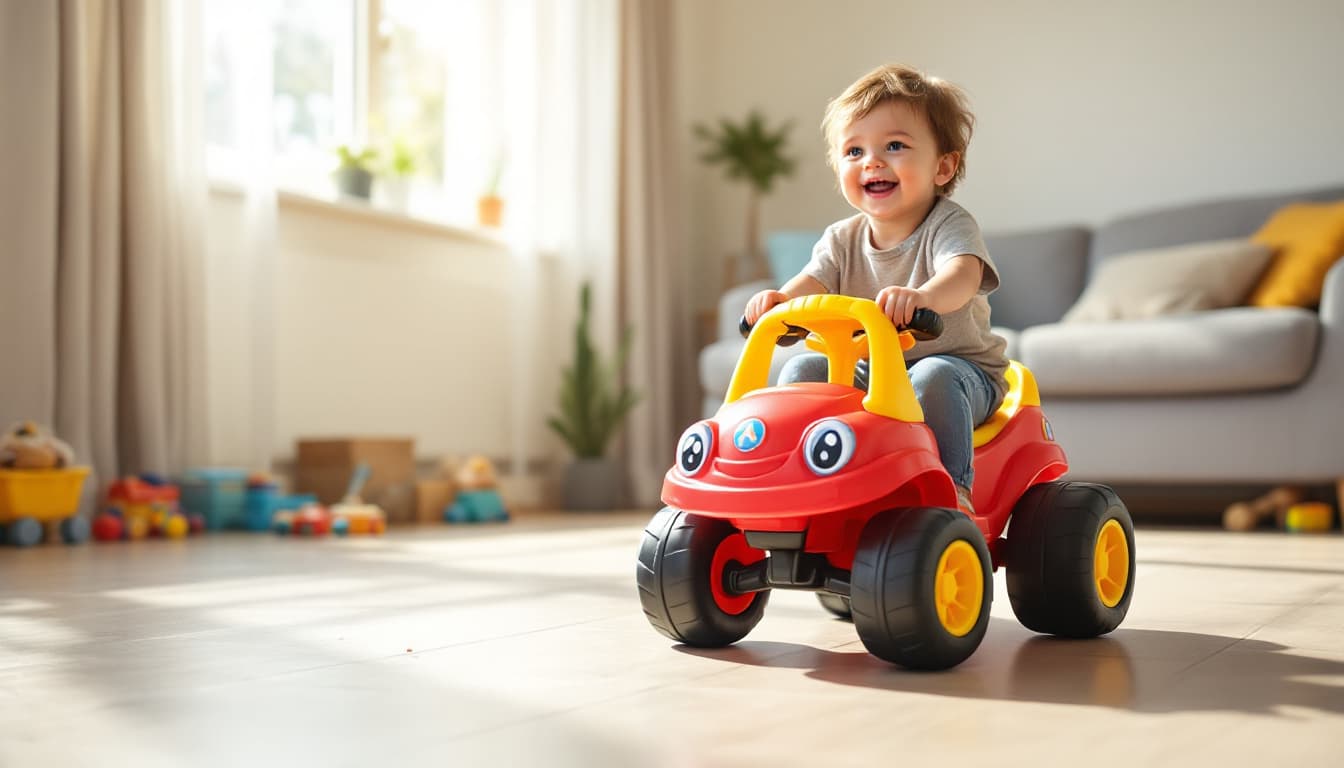 Image created with AI. A child enjoying smooth indoor laps on a ride-on with hard plastic wheels.
Plastic tires are simple, hard, and reliable. They are molded from common polymers like polypropylene or polyethylene, which keeps weight low and costs down. That combo makes them a smart pick for starter ride-ons, especially when you want easy speed on smooth floors. They do not flex much, so they roll fast on tile, vinyl, and hardwood with little resistance.
You trade some grip and quiet for price and simplicity. On flat, indoor surfaces, they shine. Outdoors on rough concrete, they can rattle and scuff. For many families, the value is clear. A budget ride-on with plastic wheels delivers basic fun without a big bill. If you want a quick overview of strengths and limits, this breakdown of plastic tires vs. rubber tires on kids’ ride-ons covers affordability, weight, and traction at a glance.
Practical care keeps plastic wheels rolling longer. Clean them, avoid rough ground when possible, and check for wear at the treads and axles. A little routine attention helps you stretch every dollar while keeping rides smooth and safe. For a broader look at wheel types and where they perform best, see this guide to best wheels for kids’ ride-on toys.
When Plastic Tires Deliver Value Without the Fuss
Last winter, Mia’s toddler circled their apartment kitchen in a bright ride-on with hard plastic wheels. The tile floor was smooth, so the little car glided with barely a push. The higher Shore hardness of plastic meant less flex, more roll, and a tiny boost in speed on tile and laminate. Noise was present but not a deal-breaker amid daytime play. After snack time, a quick wipe removed crumbs and dust. No punctures, no air, no drama.
Plastic tires work best when your space is flat and predictable. They suit quick laps in hallways and living rooms, plus supervised playrooms at grandparents’ homes. They also make sense for very young riders who are still learning start and stop. You get simple control and light weight, which helps parents carry the toy up stairs or load it into a trunk.
- Easy wins: smooth indoor floors, short rides, tight budgets.
- Cleaning is simple: a damp cloth or mild soap keeps treads clear.
- No flats: solid plastic means no tubes, no leaks.
- Apartment friendly: daytime noise stays manageable on tile and wood.
If you want basic fun without fuss, plastic tires do the job. They are a low-risk, high-smile choice for early years.
Make Plastic Tires Last Longer: Quick Care Tips
Small habits can double the life of plastic wheels. Keep maintenance simple and consistent.
- Wipe after play: dirt and grit act like sandpaper. Clean wheels with a damp cloth and mild soap.
- Choose smooth routes: favor tile, vinyl, hardwood, or sealed concrete. Avoid coarse asphalt that scuffs and chips.
- Rotate usage: if one wheel wears faster, switch riding direction in play areas to even out wear.
- Check tread edges: sand down sharp burs with fine sandpaper to prevent snags and noise.
- Protect axles: add a drop of silicone or PTFE lubricant on the axle, not on the tread.
- Mind the weight rating: stay within the toy’s weight limit to prevent flat spots.
- Store smart: park indoors and off hot patios. Heat can warp thin plastic and weaken hubs.
- Start slow: use low speed modes when available. Gentle starts cut wheel spin on slick floors.
- Add grip bands if needed: snap-on traction rings designed for plastic wheels can reduce slip without permanent changes.
Follow these steps and your budget ride-on stays fun, safe, and ready for daily laps.
Grip Showdown: How EVA Tires Keep Kids Steady and Safe
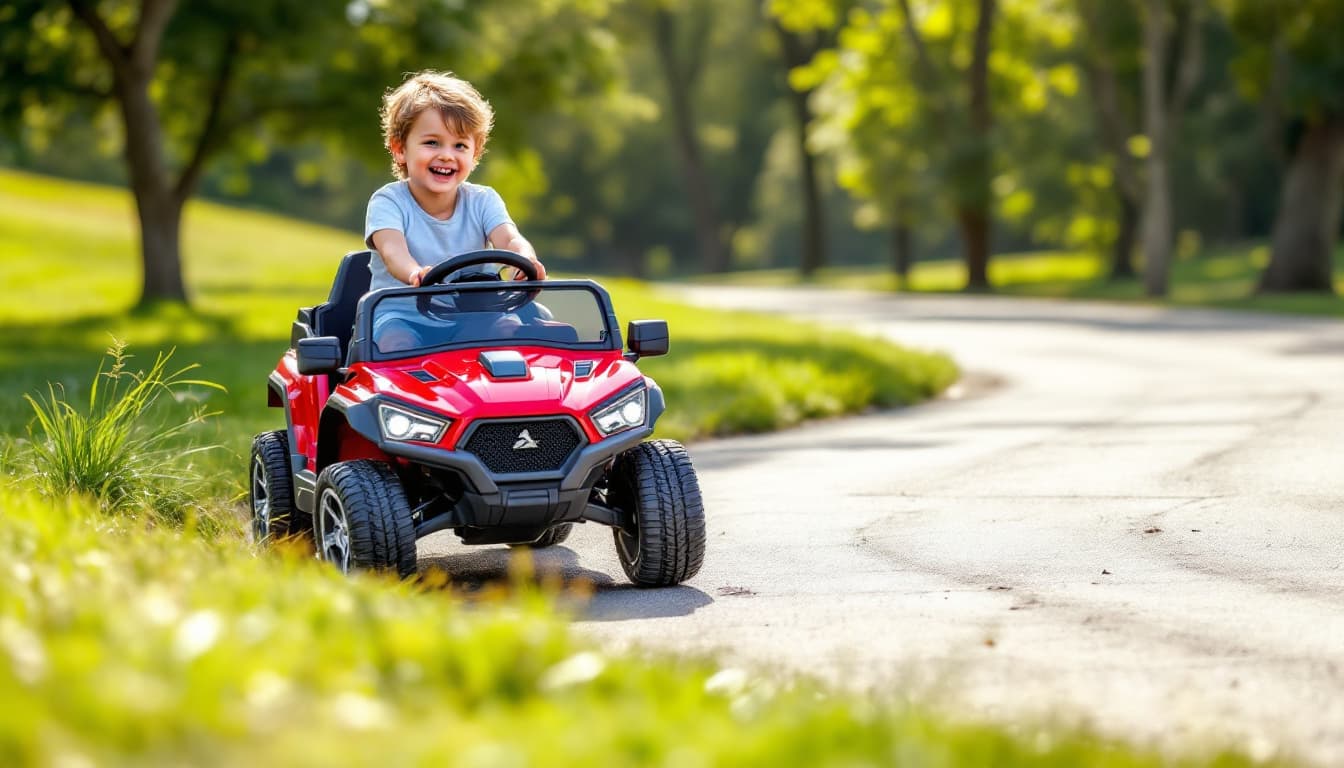 Image created with AI. A child taking a tight corner on mixed grass and pavement with EVA tires gripping securely.
Think of EVA tires like car tires made for kids’ adventures. The rubber-like texture bites into pavement and grass, so starts are steady and turns feel planted. Hard plastic behaves more like a grocery cart wheel on slick tile, it rolls fast, but it can slide when kids turn or stop. Parents want fewer skids, fewer “oops” moments, and more smiles. EVA delivers that with real grip, quiet rolling, and tougher wear, which adds up to safer, calmer playtime. For a quick primer on why EVA runs quieter and more controlled than hard plastic, see this balanced overview of best wheels for kids’ ride-on toys.
Noise Levels: Quiet Rides That Won’t Annoy the Neighborhood
EVA foam absorbs vibrations that plastic simply passes along. That soft core acts like a mini shock absorber between the wheel and the ground, so you hear a gentle thrum instead of a clack-clack on concrete. Parents describe a huge drop in rattle on driveways and patios, which keeps play peaceful during nap windows and early mornings.
In community groups and product reviews, EVA-equipped ride-ons get consistent praise for quiet operation. The reason is simple, less vibration means less sound. Independent guides echo this, noting EVA wheels run quieter and feel smoother across tile, hardwood, and pavement. For a straightforward explanation of how EVA foam cuts noise and maintenance, this breakdown of EVA foam vs. air tires is a helpful reference.
Lower noise does more than keep the peace. It also keeps kids playing longer. Reduced clatter means less sensory overload for little riders, and fewer “that’s too loud” warnings from neighbors. If you want longer, calmer sessions on sidewalks or in shared spaces, EVA is the smart upgrade.
Wear and Durability: Long-Lasting Tires That Save You Money
Hard plastic can chip, glaze, and crack after months of outdoor use, especially under sun and on rough concrete. EVA stands up better. The material resists cracking and scuffs, and it wears down evenly instead of splintering at the edges. Many retailers and guides report that EVA outlasts basic plastic in home use, sometimes two to three times longer, thanks to its elastic structure and impact resistance. As a general rule, EVA works best on pavement, tile, and trimmed grass, where it keeps shape and traction over years of play. See how experts frame the tradeoffs in this practical guide to kids’ ride-on car wheels.
Use these quick checks to buy EVA that lasts:
- Look for dense EVA, not spongy foam. Denser compounds resist flat spots and heat damage.
- Inspect the tread. Even shallow patterns add grip and slow wear on corners.
- Check hub quality. A solid hub and clean axle fit prevent wobble and premature scuffing.
- Favor brands that state UV resistance and material specs. Clear specs signal stronger compounds.
Bottom line, EVA pays you back. Fewer replacements, fewer cracked wheels, and more reliable grip for safe stops and turns. It is the “buy once, ride often” choice for worry-free adventures.
Picking the Right Tires: Safety Tips and Top Recommendations
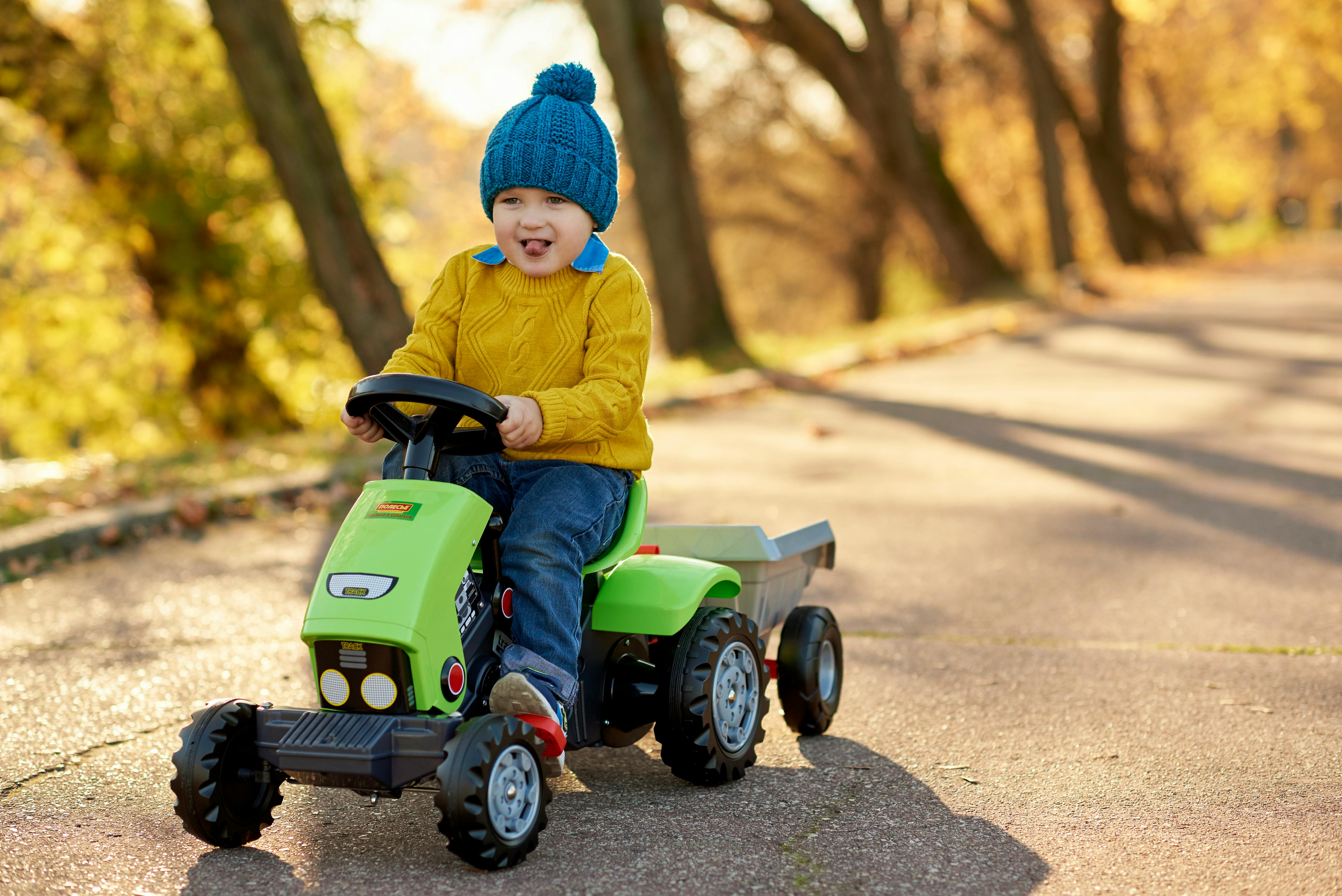 A child enjoying a smooth ride on a toy tractor, a good reminder that the right tire choice keeps play safe and fun. Photo by Polesie Toys
Tires decide how safe, quiet, and fun each ride feels. For most families, EVA wins on everyday grip, lower noise, and better wear on pavement and tile. Plastic still makes sense for simple indoor play on smooth floors and tight budgets. Use the notes below to match tires to your space, speed, and safety needs.
Quick Comparison: EVA vs Plastic at a Glance
| Factor | EVA Tires | Plastic Tires |
|---|---|---|
| Best surfaces | Pavement, tile, hardwood, short grass | Tile, vinyl, hardwood |
| Grip | Higher traction, steadier stops | Lower traction, can slide |
| Noise | Quieter on hard ground | Louder, more rattle |
| Wear | Resists chips and cracking | Can glaze or chip outdoors |
| Price | Mid-tier | Lowest cost |
For a broad wheel overview by surface and age, see this guide on best wheels for kids’ ride-on toys.
Safety Tips That Matter Right Away
- Check tread and edges: Smooth plastic edges slide on tile. Light tread on EVA helps starts and stops.
- Match tire to terrain: EVA for patios, driveways, and mixed indoor use. Plastic for short indoor laps.
- Keep speeds modest outdoors: Better grip can add load on parts. Sudden stops strain gears and hubs. Community mods often note this risk in high-traction setups, as discussed in this PowerWheels thread.
- Watch weight limits: Overloading flattens foam cores and warps plastic hubs.
- Inspect weekly: Look for cracks, flat spots, or wobble at the hub.
Top Picks Based on Your Setup
- Mostly outdoors on pavement or mixed surfaces: Pick EVA. You get safer grip, less noise, and longer life.
- Indoor apartments and smooth floors only: Plastic is fine and fast, with the best price.
- Split use, indoors and driveway: EVA still edges out for balance and comfort.
- Rough lawns or trails: Consider air or foam-filled options. If you stay with EVA, choose dense compounds with real tread.
Action Steps
- Flip the ride-on and inspect each wheel. Check tread depth, edges, and hub fit.
- Spin each wheel. Listen for scrape or wobble. Tighten hardware if needed.
- Note your main surface. Choose EVA for outdoor or mixed play, plastic for basic indoor laps.
- If buying new, favor dense EVA with a light tread and solid hubs. If keeping plastic, add traction bands for a quick grip boost.
- Do a short test ride in the space your child uses most. Check start grip, turning control, and noise.
Authentic pick: EVA suits most families who want safer grip, quieter rides, and strong value over time. Plastic still wins for simple, budget indoor fun.
- 2PCS 21.5CM/8.5in Rubber Tire for Ride On Car Aperture 1.2CM/0.47in Black PU Soft Solid Tire for DIY self-made Power Whe…
- High-Quality Bearings: We Have Installed 2 High-Quality Bearings On Each Tire To Reduce Friction and Noise, And We Have …
- High-Quality Materials: The Outer Layer is Made of High-Grade Solid Rubber and Plastic Materials. It is a Professional D…
- 2-Pack 10″x3.5″ Rubber Pneumatic Tire for Power Wheel Ride On Car, 10in Replacement Wheels with Bearings, Compatible wit…
- Smooth & Quiet Ride – Each wheel is equipped with a high-quality bearing, reducing friction and noise while increasing w…
- Perfect Size Fit – Each replacement wheel measures 10″ (26cm) in diameter, 3.5″ (9cm) in width, and 0.47″ (1.2cm) bore d…
- Very important: The Tire Size is Complex, We have Filmed a Video Measuring the Tire. Please Watch the Video and Follow t…
- Size: diameter 37CM/14.5in, aperture 1.6CM/0.63″, 370×130.The black tread has metal bearings, and the size is very compl…
- Material and Advantages: Made of EVA soft Material, Not Plastic or Rubber.Alligator Tread Pattern, Equipped with Soft EV…
Conclusion
The ride you pictured at the start tells the story. EVA tires grip better, run quieter, and wear slower, so kids stay steady and you hear less clatter. Plastic still works on smooth floors and tight budgets, but EVA brings safer stops, calmer turns, and fewer wheel issues over time. That means more smiles per charge and less money spent on replacements.
Small upgrades make a big difference. Moving to EVA reduces slips on pavement and tile, softens bumps on seams, and keeps noise in check around nap time. You get simple upkeep, reliable traction across common home surfaces, and a ride that feels confident to young drivers. Parents win on long-term value, kids win on comfort and control.
Ready to lock in smoother, safer fun? Choose EVA for everyday use on patios, driveways, and floors. If you already own a ride-on, upgrading the wheels is a fast path to better grip and lower noise. If you are buying new, pick a model that highlights durable EVA with a sensible tread.
Thank you for reading. Share what surfaces your child rides on most, then check out EVA options today and set up happier rides that last.
FAQs
1. What is the difference between EVA and plastic tires on kids ride-on toys?
EVA tires are made from soft foam material that offers better grip and quieter riding, while plastic tires are hard, rigid, and more durable but noisier. The main differences are traction, noise level, comfort, and wear rate.
2. Which tires provide better grip: EVA or plastic?
EVA tires provide better grip than plastic tires. Their soft, slightly flexible surface increases traction on tile, wood, concrete, and pavement, reducing slipping during turns and acceleration.
3. Are EVA tires safer than plastic tires for kids ride-on cars?
Yes, EVA tires are generally safer because they offer improved traction, smoother handling, and less vibration, which helps children maintain better control, especially on smooth indoor floors and outdoor sidewalks.
4. Which kids ride-on tires are quieter?
EVA tires are significantly quieter than plastic tires. EVA foam absorbs vibration and reduces rolling noise, making them ideal for indoor use and shared living spaces.
5. Do plastic tires last longer than EVA tires?
Yes, plastic tires typically last longer than EVA tires because they are hard and resistant to abrasion. However, they trade durability for lower grip, higher noise, and reduced comfort.
6. Do EVA tires wear out quickly?
EVA tires wear at a moderate rate with regular use. While they do not crack or puncture, heavy use on rough surfaces may cause gradual flattening or compression over time.
7. Which tires are better for indoor use?
EVA tires are better for indoor use due to their quiet operation and non-slip surface. Plastic tires can slide on smooth floors and create loud rolling or scraping noise.
8. Are EVA tires good for outdoor riding?
Yes, EVA tires perform well outdoors on pavement, sidewalks, and driveways. They provide better grip and shock absorption than plastic tires, though plastic tires may last longer on very rough terrain.
9. Are plastic tires bad for kids ride-on toys?
Plastic tires are not bad, but they are basic. They are best suited for budget ride-ons and flat indoor surfaces. Parents should be aware of increased noise, reduced grip, and stiffer ride quality.
10. Which tires should parents choose for kids ride-on cars?
Parents should choose EVA tires for better grip, lower noise, and improved safety. Plastic tires are suitable for low-cost ride-ons or heavy-duty use where durability matters more than comfort.
Add a Comment